Analytical Strategies for Tocopherols in Vegetable Oils: Advances in Extraction and Detection
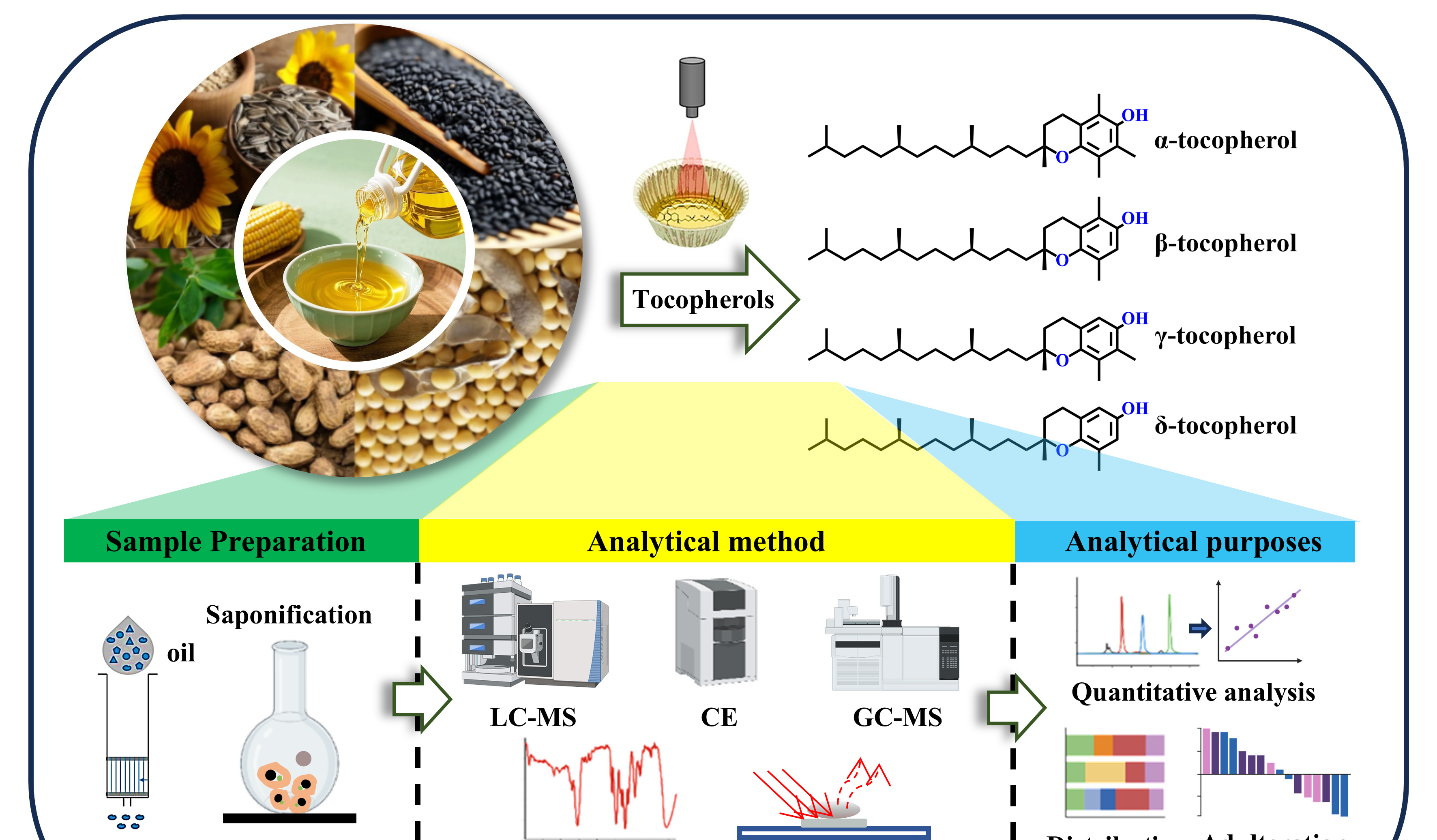
Hidden in every drop of vegetable oil lies a family of molecules that could fight fraud and protect your health—if only we could track them perfectly. Now, science is getting closer.
Tocopherols, the lipid-soluble stars of vitamin E, are more than just nutrients—they're chemical fingerprints. Their uneven distribution across vegetable oils makes them key markers for quality control and authenticity testing, especially as food fraud grows. But analyzing them is no easy task: complex oil matrices and the high cost of green extraction methods create real hurdles.
Recent advances are changing the game. Green techniques like supercritical fluid extraction and deep eutectic solvents offer sustainability and selectivity, though they come with a price tag. On the detection side, hyphenated methods such as SFC-MS push sensitivity to limits as low as 0.05 ng/mL, while LC-MS/MS provides robust, reliable analysis. For rapid screening, spectroscopic and electrochemical sensors step in as cost-effective alternatives.
The future looks even sharper. Chemometric tools and miniaturized systems promise scalable workflows, and artificial intelligence is poised to transform oil authentication with greater accuracy and efficiency. These innovations could redefine how we verify nutritional value and product authenticity—one drop at a time.
Key Points
- Green extraction: supercritical fluids and deep eutectic solvents, though costlier.
- SFC-MS detects tocopherols down to 0.05 ng/mL sensitivity.
- AI integration promises enhanced oil authentication accuracy.
Comments
No comments yet — be the first.