Bioactive compounds from tropical fruit by-products: Extraction, characterization and therapeutic potential
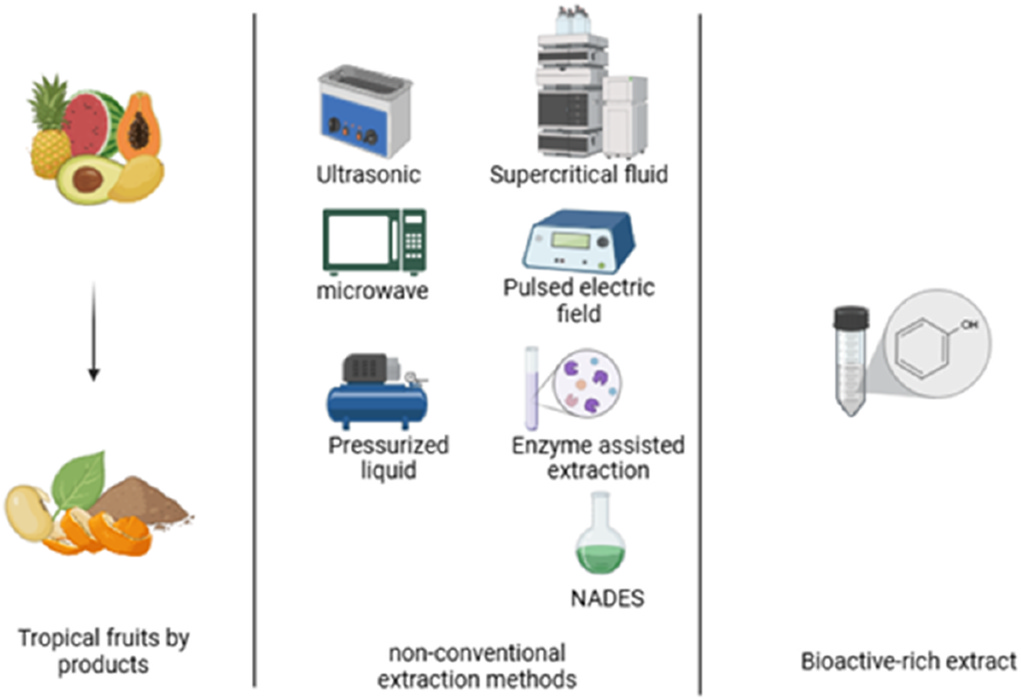
Turns out, the peels and seeds you toss from your mango, pineapple, or avocado could be a goldmine of health-boosting compounds—and scientists are just beginning to unlock their power.
Every year, tropical fruit processing creates mountains of waste—peels, seeds, and other residues. But these leftovers are far from useless. Packed with polyphenols, carotenoids, anthocyanins, flavonoids, tannins, and phenolic acids, they offer antioxidant, anti-inflammatory, antimicrobial, anticancer, and anti-obesity properties. In short, they could become natural powerhouses for health and nutrition.
Yet, extracting these valuable compounds is no easy feat. Plant matrices are complex, and compounds vary widely in polarity. To preserve their bioactivity, scientists need scalable, eco-friendly methods. The good news? Research is booming. A review of studies from the last five years shows a 67.6% jump in research activity, with a growing focus on green technologies like ultrasound-assisted, microwave-assisted, and supercritical fluid extraction. Emerging solvents, such as natural deep eutectic solvents, are also gaining traction.
Beyond extraction, researchers are now optimizing conditions and testing how these compounds behave in the body—through in vitro digestion and bioavailability assays. This shift toward validation is crucial. It moves us from simply identifying compounds to proving their real-world functional potential.
This review highlights the bioactive composition and therapeutic promise of by-products from mango, pineapple, and avocado. It underscores their strategic value as a sustainable source of functional ingredients. By integrating clean technologies, optimization strategies, and advanced analytics, we can turn waste into high-value nutraceuticals—supporting both public health and the circular economy.
Key Points
- Tropical fruit waste is rich in bioactive compounds.
- Green extraction technologies are gaining momentum.
- Research activity surged 67.6% in five years.
Comments
No comments yet — be the first.