Bioactive Compounds, Technological Advances, and Sustainable Applications of Avocado (Persea americana Mill.): A Critical Review
Did you know that the avocado, a humble fruit from Mesoamerica, packs more than two-thirds of its fat as heart-healthy oleic acid? It's not just guacamole—it's a scientific powerhouse.
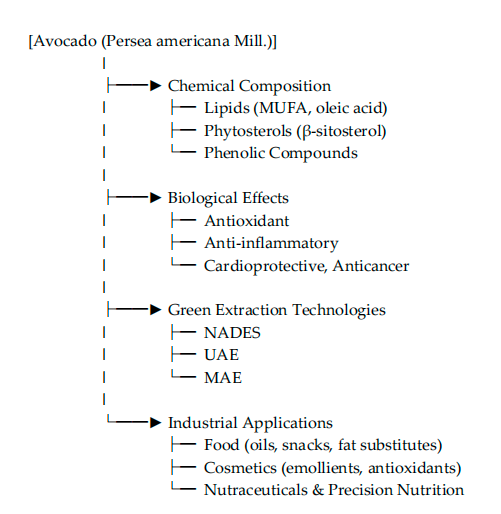
The avocado, originally from Mesoamerica, has become a star in both science and industry. Its creamy pulp is loaded with monounsaturated fats, especially oleic acid, which can make up over two-thirds of its lipid content. But that's not all—it also brings dietary fiber, fat-soluble vitamins A, D, E, and K, carotenoids, tocopherols, and phytosterols like β-sitosterol. These compounds are linked to antioxidant, anti-inflammatory, glycemic-regulating, and heart-protective effects, backed by growing evidence.
This critical review dives deep into the avocado's chemical makeup, focusing on its lipids, phenolics, and phytosterols. It also highlights cutting-edge, eco-friendly extraction methods, such as ultrasound-assisted and microwave-assisted techniques, along with natural deep eutectic solvents. These green technologies boost efficiency while aligning with sustainable chemistry principles.
The review also explores how avocado ingredients are used in nanostructured delivery systems, functional foods, cosmetics, and health products. Looking ahead, native cultivars and precision nutrition are promising paths for innovation. But there's homework to do: optimizing extraction, understanding pharmacokinetics, and ensuring long-term safety. The avocado, it turns out, is a high-value matrix for sustainable development.
Key Points
- Avocado's oleic acid exceeds two-thirds of its fat.
- Green extraction uses ultrasound, microwaves, and NADES.
- Future needs: optimize extraction, safety, pharmacokinetics.
Comments
No comments yet — be the first.