Butylene Glycol Used as a Sustainable Solvent for Extracting Bioactive Compounds from Camellia sinensis Flowers with Ultrasound-Assisted Extraction
What if the secret to greener, more powerful antioxidants was hiding in your moisturizer? Butylene glycol, a common cosmetic ingredient, just proved itself as a surprising solvent for extracting health-boosting compounds from tea flowers.
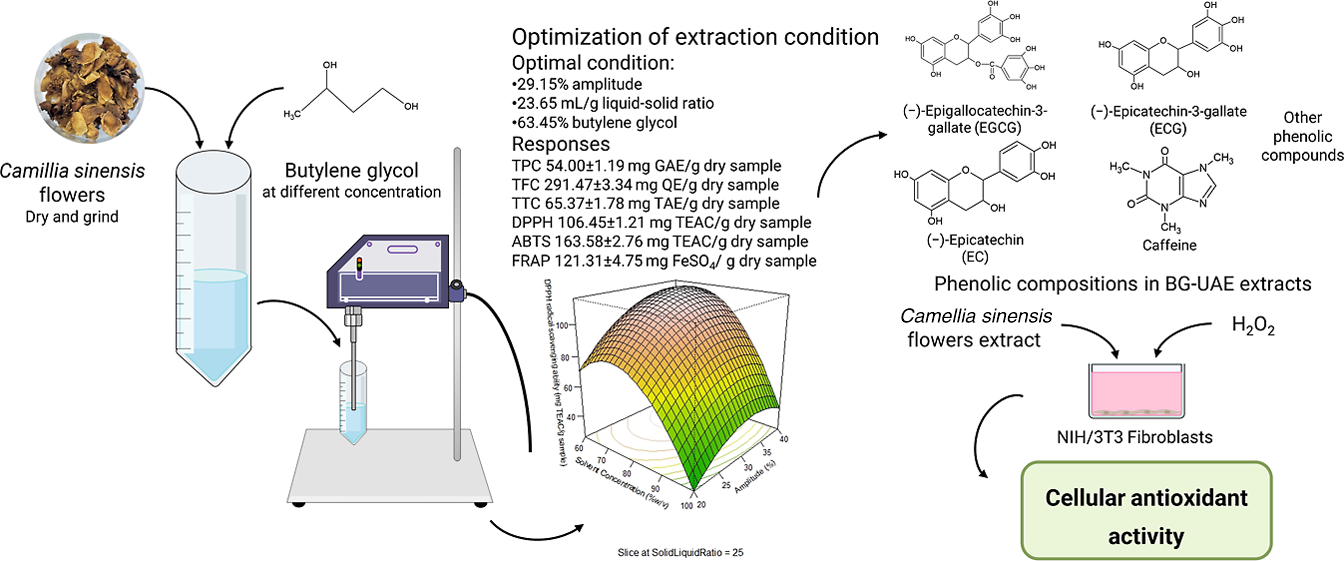
Tea flowers are often overlooked, but they're packed with bioactive compounds. A recent study used ultrasound-assisted extraction with butylene glycol (BG-UAE) to unlock their potential. By optimizing the process with a Box-Behnken design, researchers measured total phenolic, flavonoid, and tannin contents, along with antioxidant activity using several assays. The BG-UAE extract achieved impressive numbers: 54.00 mg GAE/g for phenolics, 291.47 mg QE/g for flavonoids, and 65.37 mg TAE/g for tannins. It also excelled in radical scavenging and reducing power tests, outperforming other methods except in one assay. Catechins and caffeine were the stars, detected in high amounts. Remarkably, BG-UAE showed better cell viability and cellular antioxidant activity than ethanol-based extraction. This green technique promises economic and environmental benefits, using fewer chemicals and less energy while delivering more functional components.
Key Points
- BG-UAE outperformed other methods in most antioxidant tests.
- Catechins and caffeine dominated tea flower extracts via UAE.
- Green extraction: fewer chemicals, more bioactives, better cell activity.
Comments
No comments yet — be the first.