Characterization of Nutmeg Mace Extract (Myristica fragrans Houtt.) Obtained Using Green Solvents and Its Antioxidant and Antifungal Potential
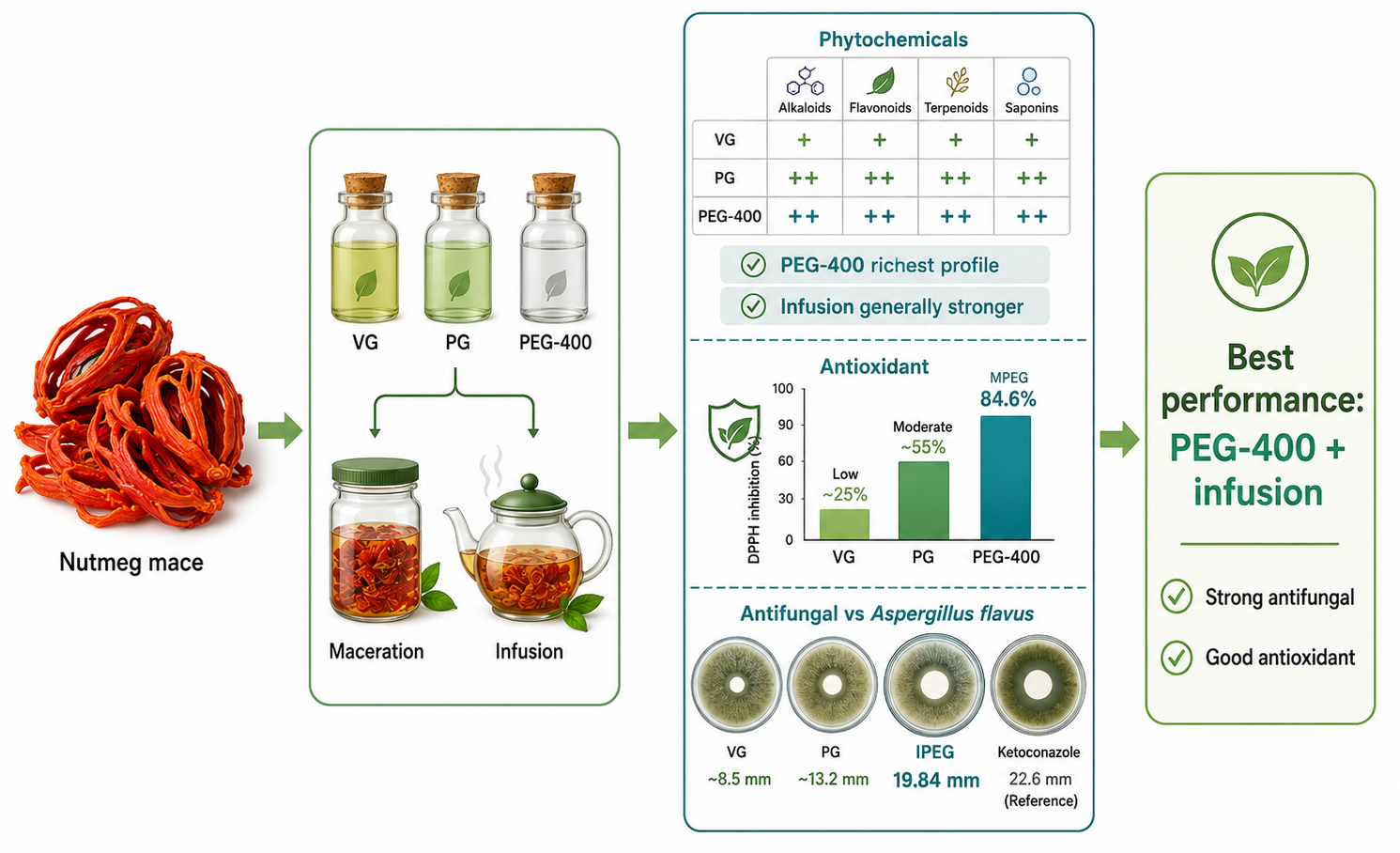
A humble spice could be a powerful weapon against a toxin-producing fungus. New research shows that nutmeg mace, extracted with everyday green solvents, can stop Aspergillus flavus in its tracks.
Food contamination by Aspergillus flavus is a silent threat: this common fungus can produce aflatoxins, toxic compounds that pose serious health risks. But nature may hold an answer. Nutmeg mace, the aromatic lace-like covering of the nutmeg seed, is packed with bioactive compounds that could fight back.
A new study tested how different green solvents—glycerol, propylene glycol, and polyethylene glycol 400—and two extraction methods, maceration and infusion, affect the mace's defensive powers. The results are striking. Extracts made with PEG-400 showed the strongest antifungal activity, creating inhibition zones of 15.41 to 19.84 mm against A. flavus. Meanwhile, propylene glycol delivered the highest antioxidant punch, with 63.09% DPPH radical-scavenging activity.
Interestingly, infusion generally outperformed maceration in producing biologically active extracts. In contrast, glycerol lagged behind in both antioxidant and antifungal tests. These findings confirm that choosing the right solvent and method is crucial for maximizing the extract's potential.
The takeaway? Green extraction isn't just environmentally friendly—it's functionally superior. This work paves the way for developing natural, sustainable antifungal products to protect our food.
Key Points
- PEG-400 extracts showed strongest antifungal effect (15.41–19.84 mm zones).
- Propylene glycol achieved highest antioxidant activity (63.09% DPPH).
- Infusion method generally outperformed maceration for bioactivity.
Comments
No comments yet — be the first.