Chemical-Functional Analysis of Extracts Obtained from Zuccagnia punctata Powder Using Green Solvents (NaDESs) in Conjunction with Traditional and Non-Traditional Techniques
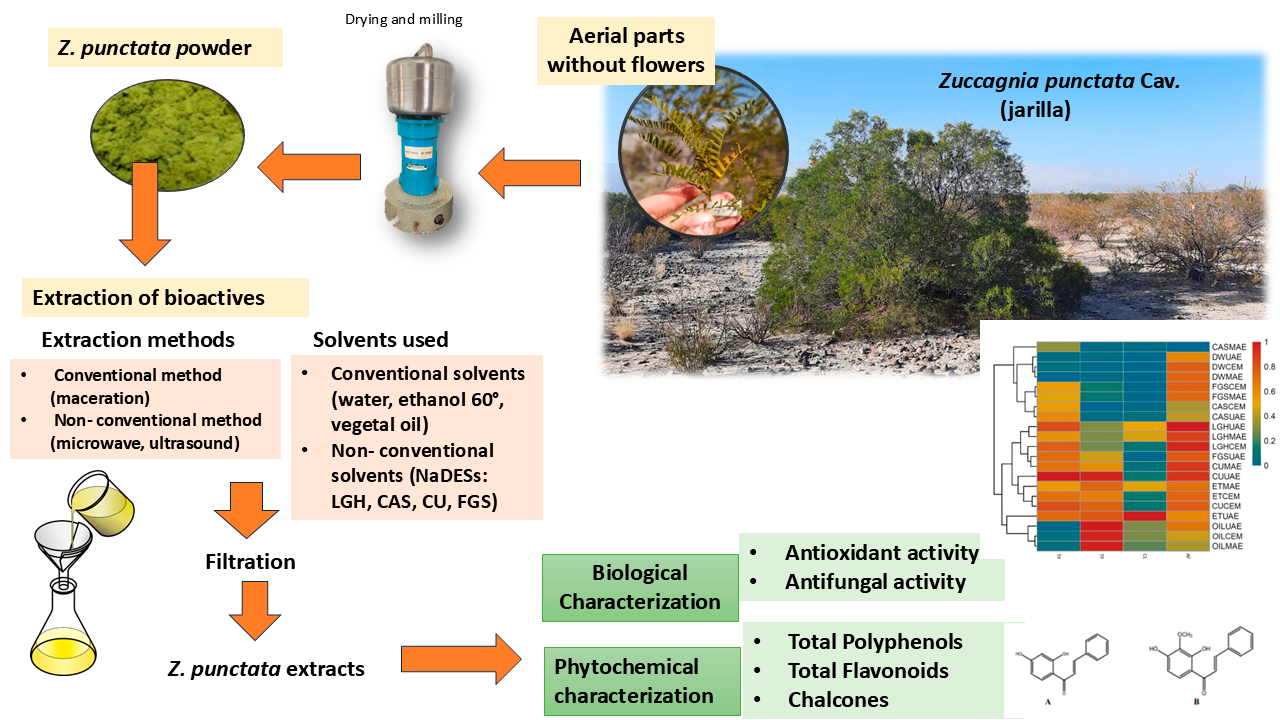
What if the secret to unlocking a plant's healing power lies in a simple sugar and lactic acid mixture? A new study shows that green solvents can outperform traditional ones in extracting bioactive compounds from an Argentine medicinal plant.
Deep in Argentina, a native plant called Zuccagnia punctata has been a trusted remedy for generations. But scientists have now found a modern, eco-friendly way to unlock its potential. Instead of relying on harsh chemicals, they turned to natural deep eutectic solvents (NaDESs)—green mixtures made from everyday ingredients like sugars, acids, and urea.
The team compared these green solvents with conventional ones, using both traditional stirring and advanced techniques like ultrasound and microwave assistance. The results were striking: two NaDESs, glucose-lactic acid (LGH) and choline chloride-urea (CU), extracted phenolic compounds at levels comparable to ethanol—reaching up to 7140 µg GAE/mL. They also pulled out high amounts of two key chemical markers, 2′,4′-dihydroxychalcone and its methoxy derivative, especially when aided by ultrasound.
But the green solvents didn't stop there. Extracts from LGH and CU showed impressive antioxidant activity, with SC50 values below 1.1 µg GAE/mL. Meanwhile, the vegetable oil extract proved the most potent antifungal, with ethanol, LGH, and CU following close behind.
This research highlights a win-win: NaDESs are not only kinder to the environment but also highly effective at extracting valuable bioactive compounds. For an endemic plant like Z. punctata, this could open doors to new applications in food, cosmetics, and pharmaceuticals—all while keeping sustainability at the core.
Key Points
- NaDESs (LGH, CU) match ethanol in phenolic extraction.
- Ultrasound boosts chalcone extraction with green solvents.
- LGH and CU show strong antioxidant activity.
Comments
No comments yet — be the first.