Circular agriculture design: Integrated biorefinery to convert agri-residues into novel opportunities
While the world's fields yield more food than ever, most of the leftover stalks, husks, and peels remain unused—yet they hold the key to a fossil-free future.
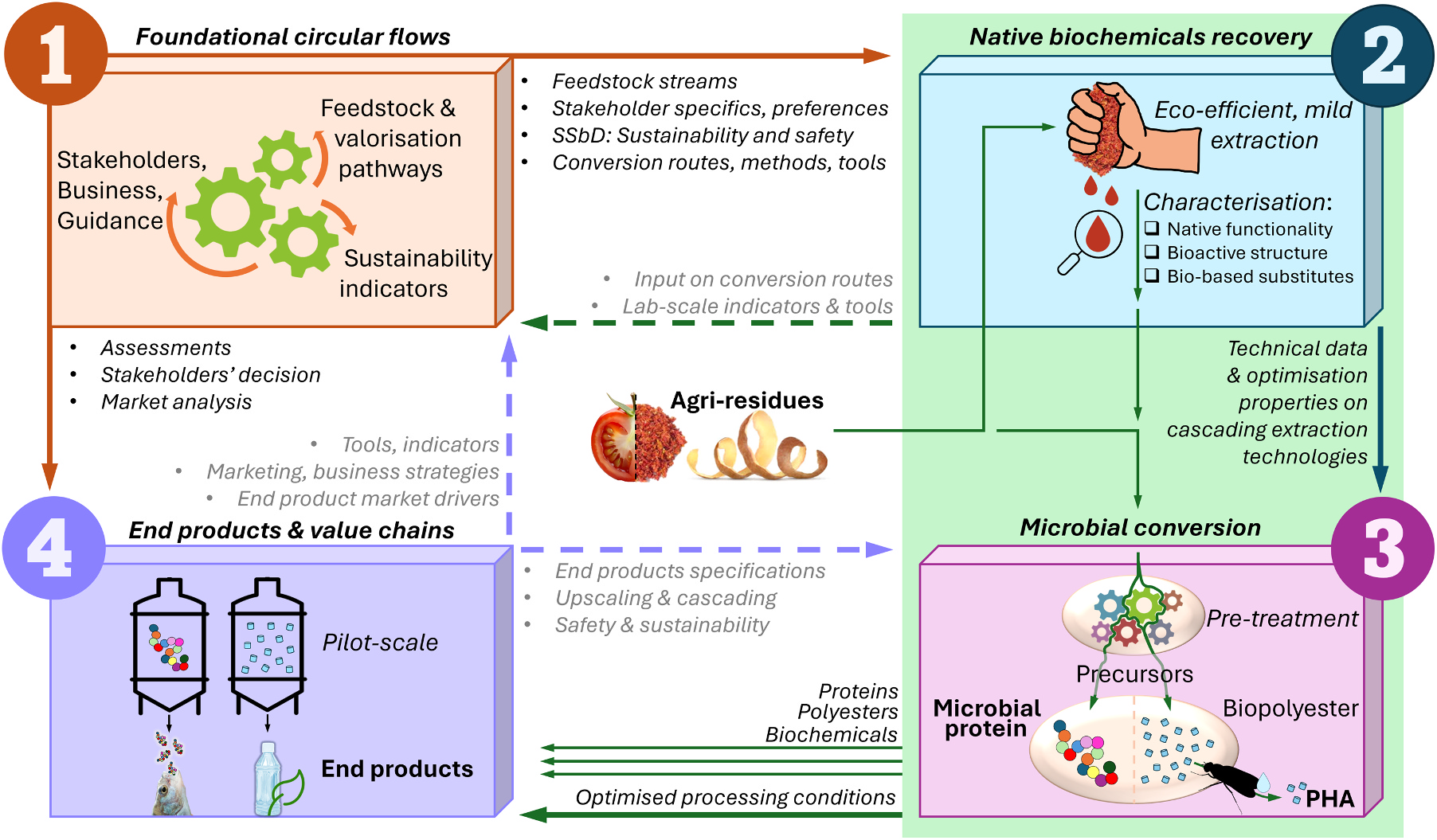
As the global population swells, so does the mountain of agricultural residues. Biorefineries were supposed to turn this waste into valuable bioproducts, but most residues still go unused, and the promised markets never fully materialized. Now, an international team of experts has mapped the gaps and interdependencies in integrated biorefinery systems, proposing strategies to boost their efficiency, compatibility, and scalability.
Their focus zeroes in on two pressing issues: the overlooked global protein deficit and persistent plastic pollution. By prioritizing protein and polyester production, the researchers aim to address both challenges simultaneously. They emphasize early-stage guidance on embedding complex circularities to ensure safety and sustainability from the start.
A dedicated Safe-and-Sustainable-by-Design (SSbD) framework is proposed, integrated into a decision-support tool to prevent, for example, the enrichment cycles of biological and chemical contaminants. Among the technical hurdles, they highlight improving bioactive compound recovery through eco-friendly extraction processes and the use of specific enzymes and natural deep eutectic solvents (NADES) as green alternatives.
This work is a call to rethink agricultural waste not as an endpoint, but as a starting point for a truly circular economy.
Key Points
- International experts identify gaps in integrated biorefinery systems.
- Focus on protein and polyester to tackle global deficits.
- SSbD framework and eco-friendly extraction are key strategies.
Comments
No comments yet — be the first.