Comparison of ultrasound and microwave assisted extraction of diosgenin from Trigonella foenum graceum seed
Can ancient medicinal spices team up with modern green technology to tackle modern health challenges? Researchers are putting two advanced extraction methods to the test to find out.
Modern markets are hungry for bioactive compounds that combat everyday health issues. Enter fenugreek, an ancient medicinal spice valued for centuries, and its prized compound, diosgenin. To efficiently extract this treasure, researchers evaluated two green techniques: microwave-assisted extraction (MAE) and ultrasound-assisted extraction (UAE).
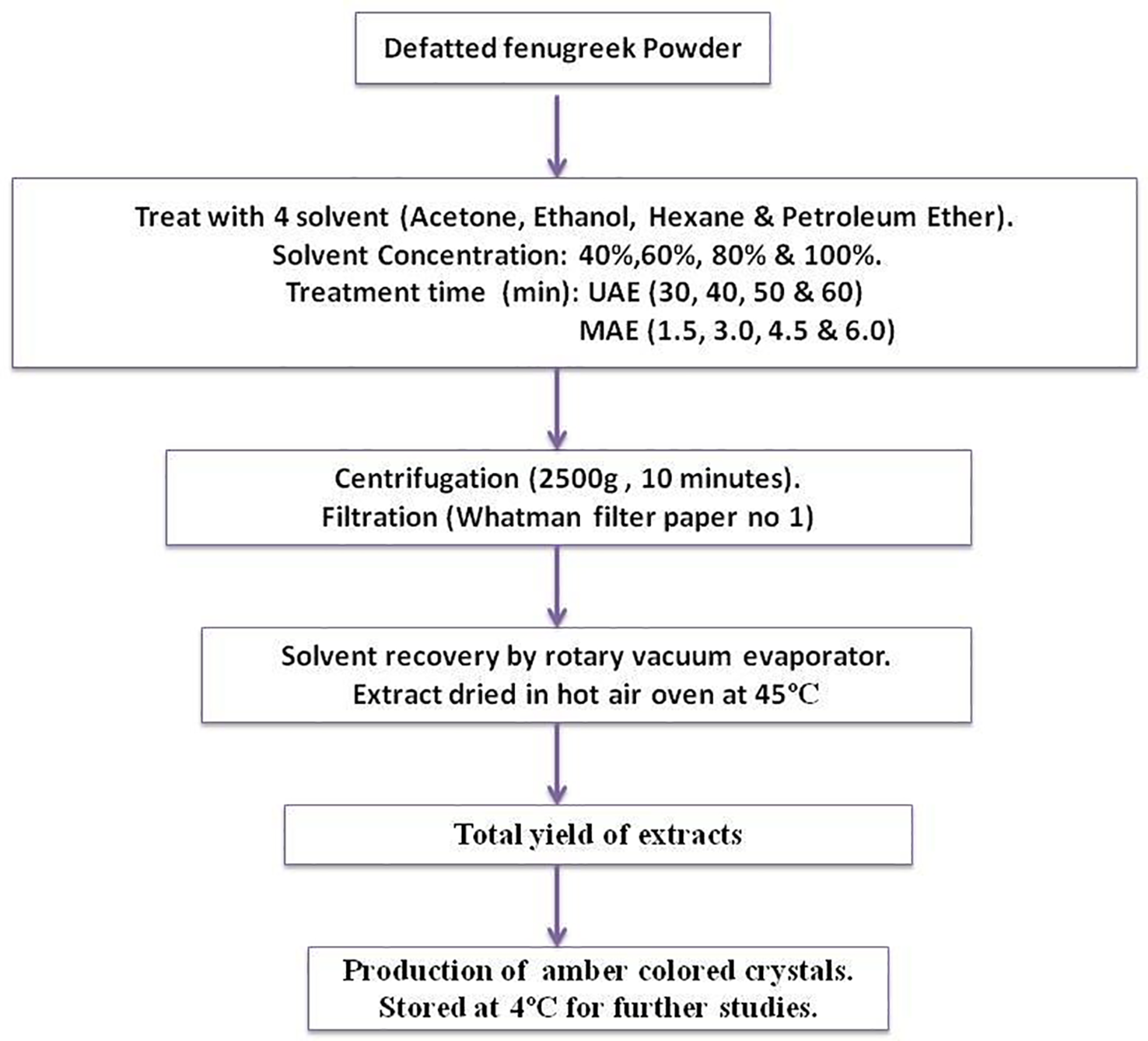
By testing various solvents including acetone, ethanol, hexane, and petroleum ether across different concentrations and treatment times, the team mapped out what drives extraction success. The variables—solvent type, concentration, treatment time, and method choice—all proved to have a significant impact on both extract yield and diosgenin content.
So, which technique came out on top? While MAE yielded a 7.83% extract with 35.50 mg/100 g of diosgenin at 6 minutes, UAE delivered a 21.48% extract yield and 40.37 mg/100 g of diosgenin at 60 minutes. Both methods used an 80% ethanol concentration. Ultimately, the data points to ultrasound as the superior route for preparing potent fenugreek extracts.
Key Points
- Ultrasound-assisted extraction outperformed microwave extraction in yield and diosgenin content
- Etanol 80% concentration proved optimal for both extraction methods
- UAE achieved a maximum diosgenin content of 40.37 mg/100 g
Comments
No comments yet — be the first.