Coumarins in the Flavedo of Citrus limon Varieties—Ethanol and Natural Deep Eutectic Solvent Extractions With HPLC-DAD Quantification
Lemon peels are often tossed aside, but they hide a chemical treasure trove that could fight fat cells. Scientists just found a greener way to unlock it.
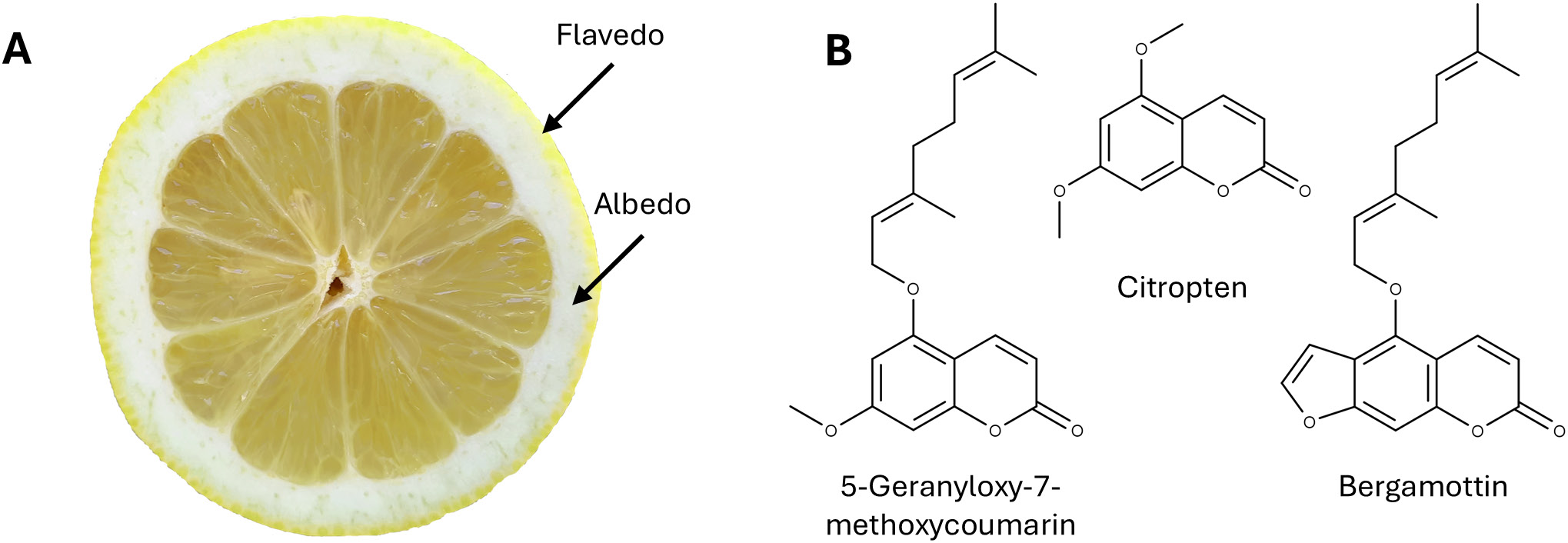
Citrus peels are the food industry's massive, underrated waste. But inside the colorful outer layer, called flavedo, lurk coumarins—natural compounds with antiadipogenic potential, meaning they might help curb fat accumulation. A new study zeroed in on three of these compounds: citropten, bergamottin, and 5-geranyloxy-7-methoxycoumarin (5G7MC).
Researchers extracted these from lemon peels of different commercial varieties using two solvents: classic ethanol and a greener alternative called natural deep eutectic solvents (NADES), made from choline chloride mixed with various hydrogen bond donors. They found the coumarins almost exclusively in the flavedo, not the spongy white albedo layer below. Varieties 'Verdelli' from Spain and 'Lisbon' from South Africa stood out with high concentrations in ethanol extracts.
Switching to NADES, the team discovered that certain formulations—especially with malonic acid, 1,2-propanediol, or citric acid—outperformed ethanol for citropten extraction. For bergamottin and 5G7MC, 1,2-propanediol showed promise but didn't beat ethanol. They also spotted a chemical twist: in acidic NADES, some coumarin epoxides could undergo chlorination, a reaction worth watching.
This work turns a common waste product into a valuable source of bioactive compounds. With both ethanol and NADES as tools, lemon peels could soon have a second life in nutraceuticals or cosmetics—proving that one person's trash is truly another's treasure.
Key Points
- Coumarins found mainly in flavedo, not albedo
- NADES with malonic acid boosts citropten yield
- Acidic NADES can chlorinate coumarin epoxides
Comments
No comments yet — be the first.