Date pomace polysaccharide: ultrasonic-assisted deep eutectic solvent extraction, physicochemical properties, biological activities, gut microbiota modulation, and rheological properties
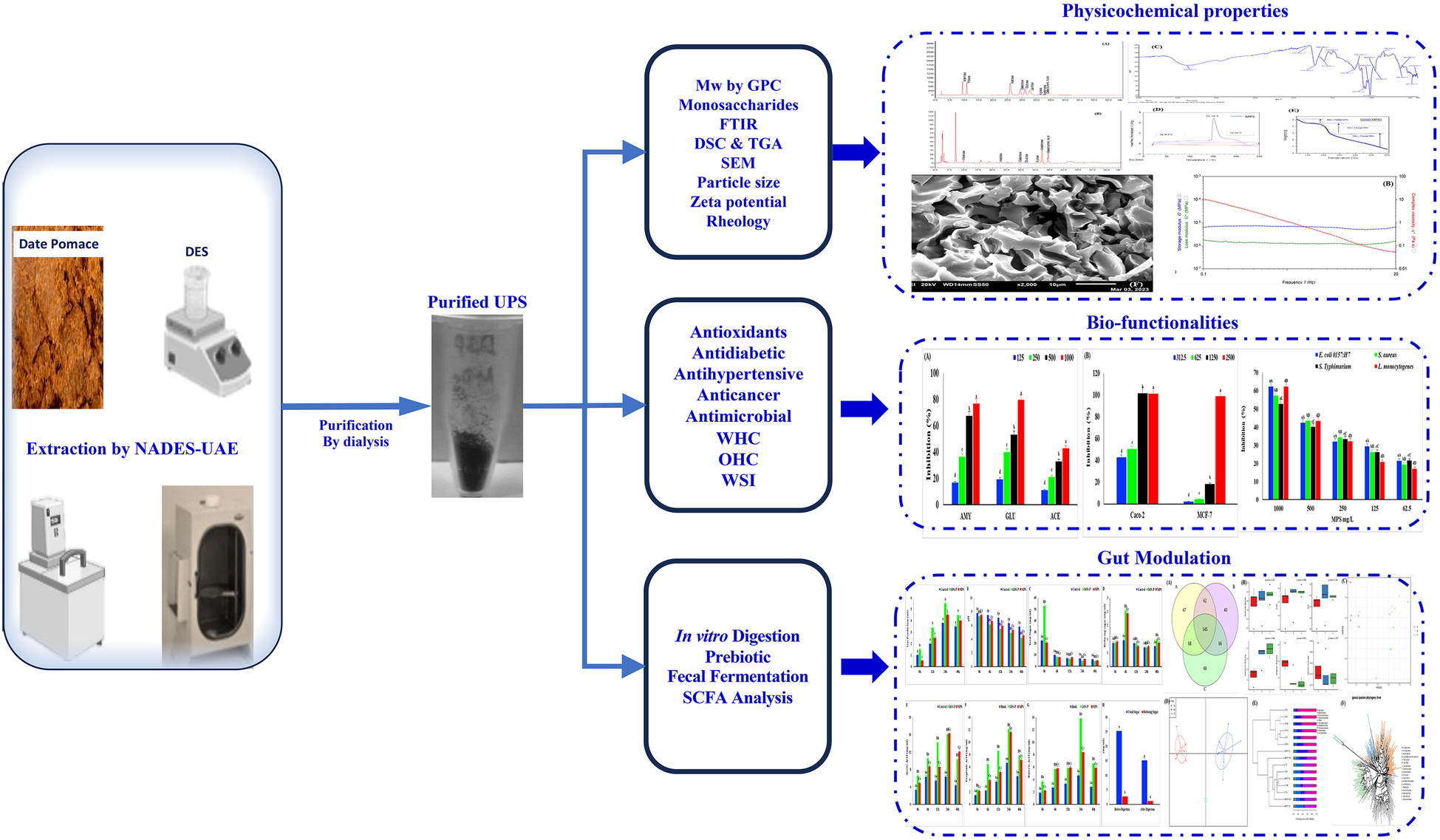
What if the date pits you toss away could become a powerhouse of health-boosting compounds? Scientists just unlocked a treasure trove of bioactive polysaccharides from date pomace using a green, ultrasound-assisted method.
Date pomace, the often-discarded by-product of date processing, is quietly hiding a remarkable secret. Researchers have now extracted novel polysaccharides from it using an ultrasonic-assisted deep eutectic solvent—a green technique that avoids harsh chemicals. The result? A high-molecular-weight compound (537.7 kDa) packed with galacturonic acid, galactose, glucose, arabinose, and fructose.
These polysaccharides, dubbed UPS, are no ordinary fiber. They showed impressive antioxidant activity, scavenging free radicals at rates between 59% and 82% at 1000 mg/L. They also inhibited key digestive enzymes—α-amylase by 83% and α-glucosidase by 81%—and blocked ACE by 45%, suggesting potential for managing diabetes and hypertension.
But the benefits don't stop there. UPS displayed strong antiproliferative effects against Caco-2 and MCF-7 cancer cell lines and broad-spectrum antimicrobial action. In lab simulations of gut fermentation, UPS boosted beneficial bacteria like Actinobacteria, Firmicutes, and Proteobacteria, while enhancing production of short-chain fatty acids. It even enriched metabolic pathways for vitamins and cofactors.
This research turns a waste product into a promising functional food ingredient. While more studies are needed to confirm effects in living organisms, the potential is clear: date pomace could be a sustainable, health-promoting resource for the food industry.
Key Points
- Green ultrasonic extraction yields 537.7 kDa polysaccharides.
- UPS shows 59–82% antioxidant and 83% α-amylase inhibition.
- Enhances beneficial gut bacteria and short-chain fatty acids.
Comments
No comments yet — be the first.