Effective asymmetric preparation of (R)-1-[3-(trifluoromethyl)phenyl]ethanol with recombinant E. coli whole cells in an aqueous Tween-20/natural deep eutectic solvent solution
What if a tiny biological factory could produce a key ingredient for a neuroprotective drug with near-perfect precision?
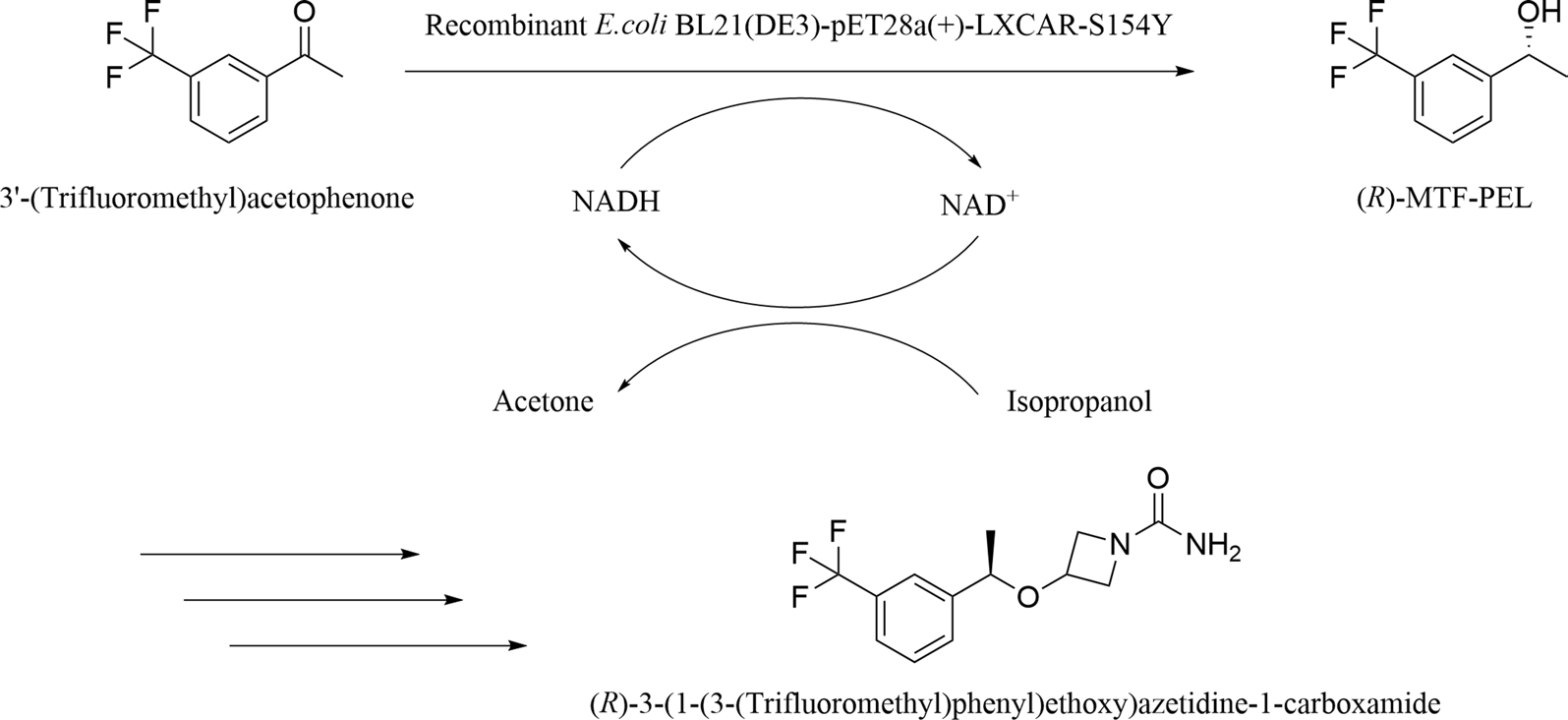
Imagine a molecular assembly line where a single enzyme, tucked inside a bacterial cell, transforms a simple ketone into a valuable chiral alcohol. That's exactly what researchers achieved with recombinant E. coli. They engineered a variant, BL21(DE3)-pET28a(+)-LXCAR-S154Y, to carry out the reduction of 3'-(trifluoromethyl)acetophenone into (R)-MTF-PEL, a crucial building block for a neuroprotective compound. The result? An enantiomeric excess above 99.9%—meaning the product is almost perfectly single-handed, a feat that's both elegant and essential for pharmaceutical synthesis.
But the real magic happened when they tweaked the environment. Adding just 0.6% Tween-20, a mild surfactant, boosted the reaction by allowing four times more substrate to dissolve in the aqueous solution. Then, they introduced a natural deep eutectic solvent (NADES) made from choline chloride and lysine. This dynamic duo pushed the yield to 91.5% at a substrate concentration of 200 mM—the highest ever reported for this compound. The optimal conditions were simple: 4% NADES, 12.6 g/L of cells, pH 7.0, 30°C, and a gentle shake for 18 hours.
This isn't just a lab curiosity. By combining a surfactant with a green solvent, the researchers have unlocked a more efficient, eco-friendly route to chiral alcohols. It's a testament to how small tweaks—both in biology and chemistry—can lead to big leaps in biocatalysis.
Key Points
- Recombinant E. coli produces (R)-MTF-PEL with >99.9% ee.
- Tween-20 boosts substrate concentration 4-fold.
- ChCl:Lys NADES achieves 91.5% yield at 200 mM.
Comments
No comments yet — be the first.