Experiment-confirmed machine learning optimization of NADES extraction with ultrasound assistance and Mendelian randomization evidence on antioxidant effects of ferulic acid and ligustilide from Angelicae Sinensis Radix
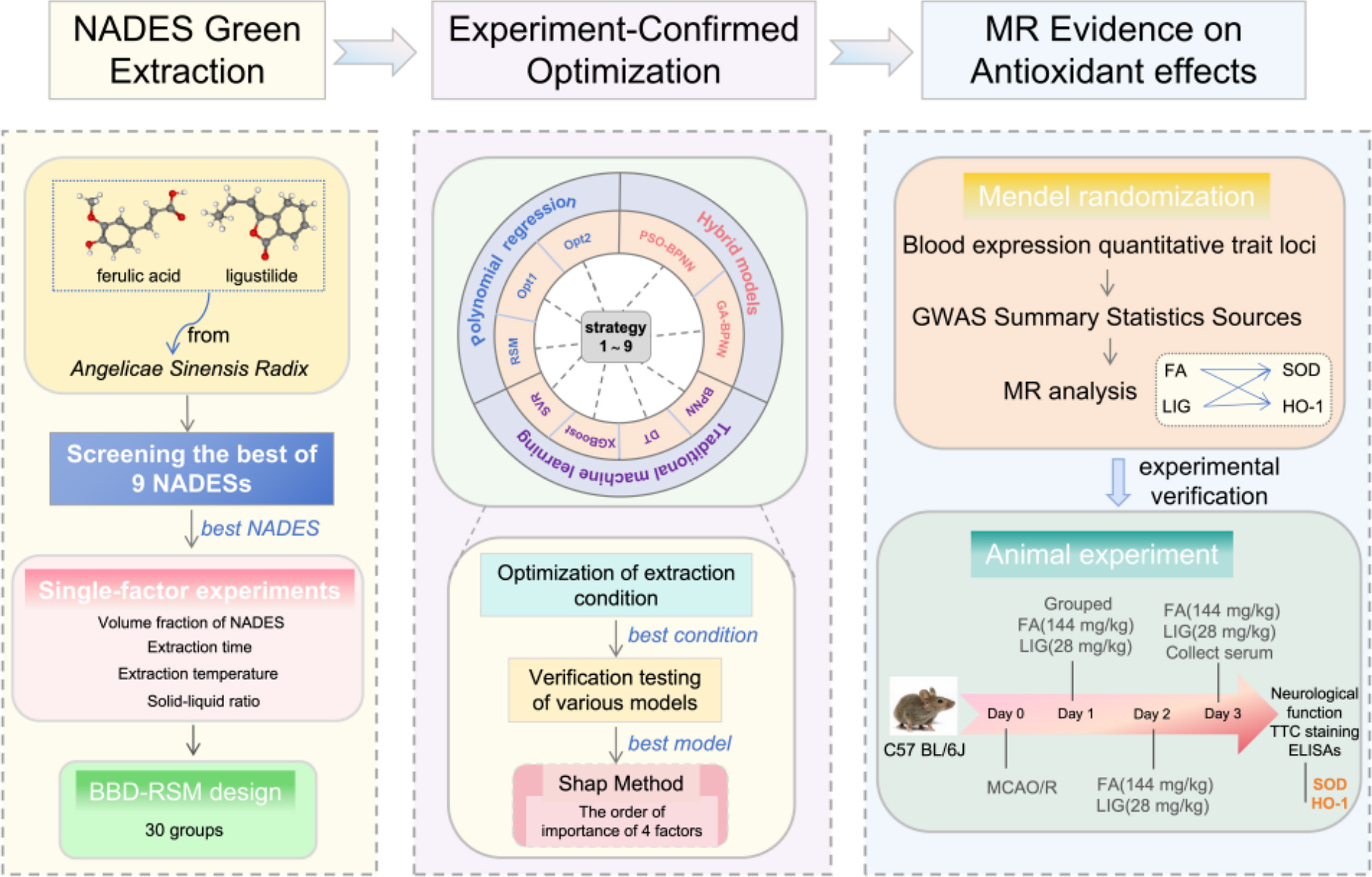
What if a computer model could predict the perfect green recipe for extracting nature's most potent antioxidants? This study used machine learning to unlock the secrets of a traditional Chinese herb—and then proved it in the lab.
In the quest for sustainable extraction, researchers turned to natural deep eutectic solvents (NADESs)—green alternatives to toxic organic solvents. They aimed to pull out two bioactive compounds, ferulic acid (FA) and ligustilide (LIG), from Angelica sinensis Radix (ASR), a herb long used in traditional Chinese medicine.
To find the best conditions, they employed a genetic algorithm optimized back-propagation neural network (GA-BPNN). This model outperformed traditional methods, achieving a high predictive accuracy (MSE = 1.7 × 10^5, R² = 0.9860). The optimal extraction conditions—NADES volume fraction 67.44%, ultrasonic time 25.556 minutes, temperature 59.791 °C, and solid–liquid ratio 7.610 mg/mL—yielded a predicted extraction yield of 0.149, nearly matching the experimental 0.151.
Shapley Additive Explanations (SHAP) analysis revealed that NADES volume fraction was the most critical factor. But the story didn't end at extraction. In animal models of stroke (MCAO/R), both FA and LIG improved neurological function and reduced brain damage. Mendelian randomization analysis suggested a causal link between FA and increased superoxide dismutase (SOD) expression—a key antioxidant enzyme—while LIG showed no such association. These findings were confirmed in mice, where FA significantly boosted plasma SOD levels.
This integrated approach—machine learning-guided green extraction plus genetic evidence—paves the way for more efficient and sustainable production of bioactive compounds, with potential therapeutic implications for oxidative stress-related conditions.
Key Points
- NADES extraction optimized by GA-BPNN, MSE 1.7e5, R² 0.9860
- Predicted yield 0.149 vs experimental 0.151 under optimal conditions
- FA increases SOD, causal link via Mendelian randomization
Comments
No comments yet — be the first.