Exploring pilot scale ultrasound-microwave assisted extraction of organic acids and phytochemicals from brown seaweed Alaria esculenta
What if the key to unlocking seaweed's hidden treasures lies in a kitchen microwave and an ultrasound cleaner? A new study shows how these everyday technologies can extract valuable compounds from brown seaweed—without drying it first.
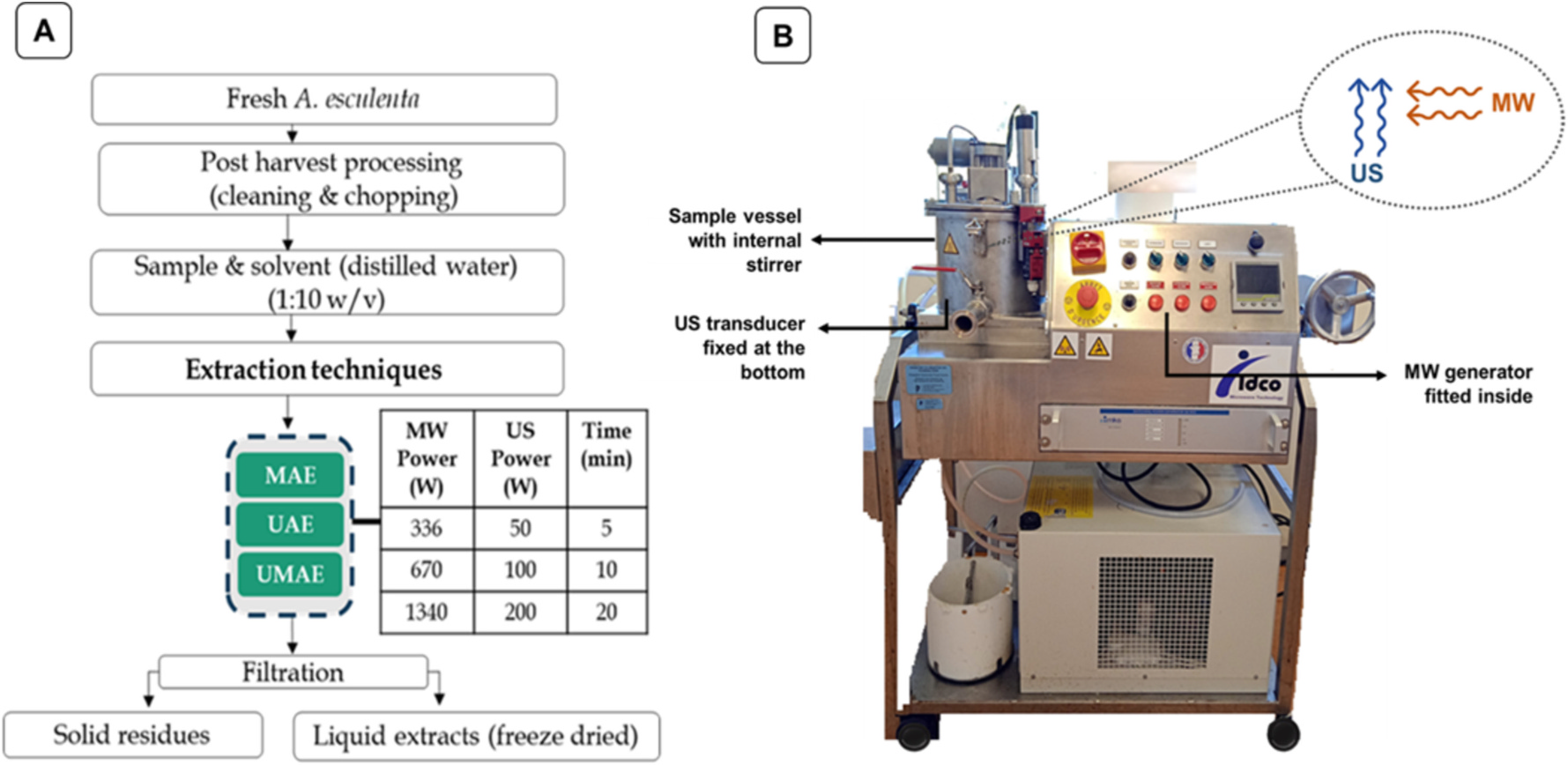
Brown seaweed, Alaria esculenta, is a nutritional powerhouse, but extracting its beneficial compounds usually requires drying and harsh solvents. Researchers at University College Dublin and Teagasc wanted a greener approach. They tested ultrasound, microwaves, and their combination to pull out phytochemicals from wet biomass using only water as the solvent.
The team varied power (50–200 W for ultrasound, 336–1340 W for microwaves) and time (5–20 minutes). They found that ultrasound alone (200 W, 20 min) yielded the most soluble carbohydrates—32.68 mg glucose equivalents per 100 mg of extract. Meanwhile, a combined ultrasound-microwave approach (50 W US, 1340 W MW, 10 min) gave the highest total phenolic content (2.07 mg GAE/100 mg) and antioxidant capacity (FRAP 38.36 μM TE/mg).
When it came to organic acids, microwaves alone (1340 W, 20 min) excelled at producing succinic acid (7.52 mg/g) and lactic acid (39.08 mg/g), while the combined method (670 W MW, 100 W US, 5 min) extracted the most malic acid (3.02 mg/g) and α-ketoglutaric acid (2.41 mg/g). Lactic acid was the dominant organic acid in all extracts.
Microscopy images revealed why these methods work so well: the treatments increased cell damage, with the combined method causing the most surface roughness and enlarged pores. This study is among the first to show that sustainable, solvent-free extraction can be scaled up, making seaweed a viable source of bioactive compounds for food and health industries.
Key Points
- Ultrasound alone: highest carbohydrates (32.68 mg GE/100 mg).
- Combined US-MW: best phenolics and antioxidant (2.07 mg GAE/100 mg).
- Microwaves: top succinic and lactic acids (7.52 & 39.08 mg/g).
Comments
No comments yet — be the first.