From waste to resource: technologies for the sustainable use of açaí (Euterpe oleracea) byproducts
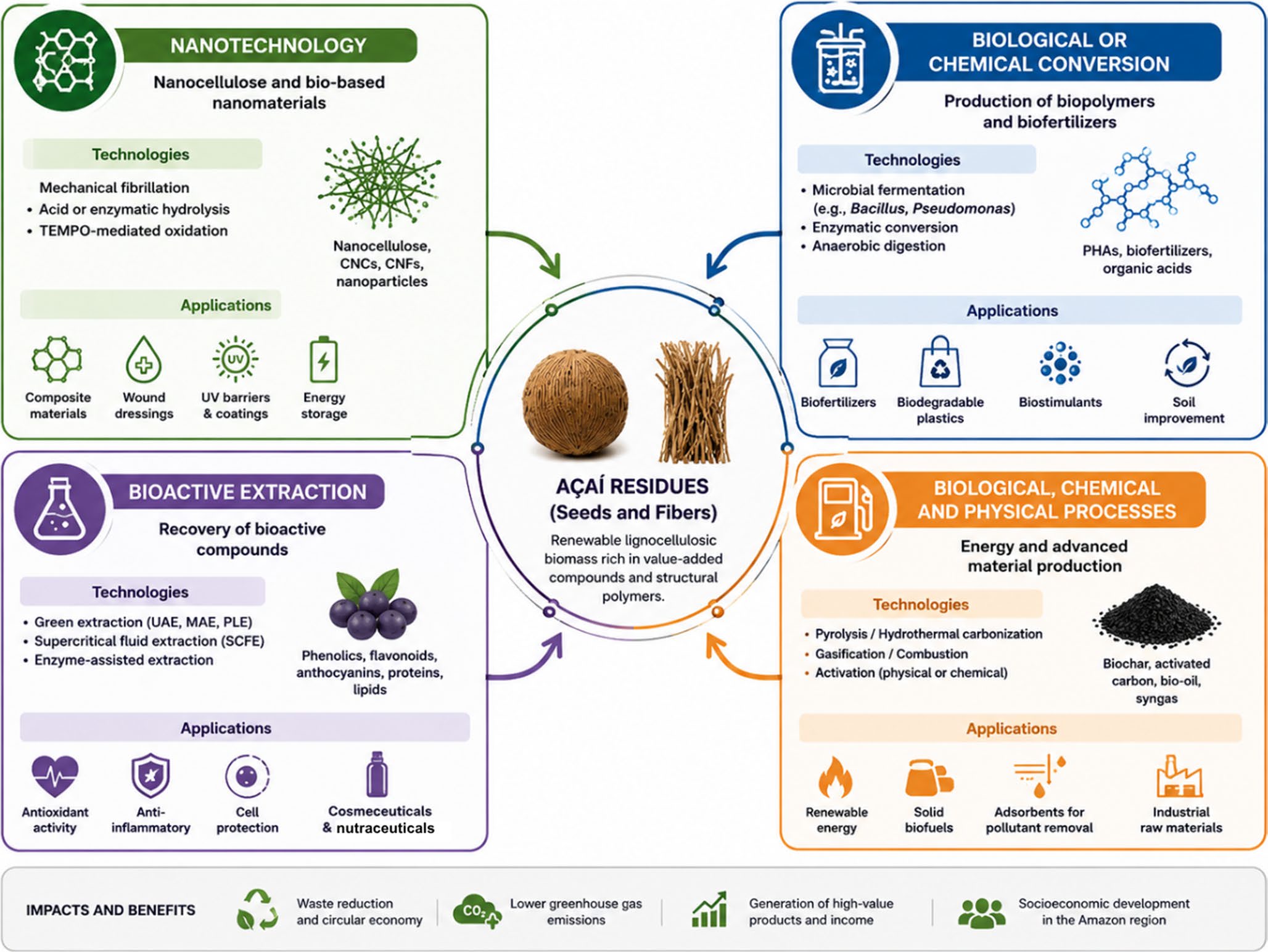
The global açaí boom is creating a mountain of waste—seeds and fibers—that threatens the environment. But what if this trash could become treasure?
Açaí berries are a superfood sensation, but their skyrocketing popularity comes at a cost: massive amounts of seeds and fibers are discarded, piling up as environmental hazards. This review dives into the clever ways scientists are turning these byproducts into valuable resources.
Nanotechnology is being used to extract nanocellulose from the fibers, while microbial fermentation transforms the waste into biopolymers. Green extraction methods are also unlocking bioactive compounds, all of which can be used to create biodegradable plastics, biomaterials, and even renewable energy.
These innovations align perfectly with the circular economy, reducing waste while generating high-value products. Beyond the environmental benefits, the review highlights the socioeconomic potential, especially for the Amazon region, where açaí is a cultural and economic cornerstone.
But challenges remain: technological and economic barriers must be overcome, and policy support is crucial. The review calls for sustainable practices and policy-driven initiatives to fully realize the potential of açaí waste, turning a local problem into a global solution.
Key Points
- Açaí waste turns into nanocellulose, biopolymers, and bioactive compounds
- Innovations support circular economy and reduce environmental impact
- Barriers and policies need addressing for Amazon sustainability
Comments
No comments yet — be the first.