Green extraction, chemical composition, and in vitro antioxidant activity of theabrownins from Kangzhuan dark tea
Hidden inside a dark tea brick is a golden-brown molecule with serious antioxidant muscle—and scientists just found a greener way to pull it out. Using ultrasound and eco-friendly solvents, they unlocked a 12.59% yield of these health-boosting compounds.
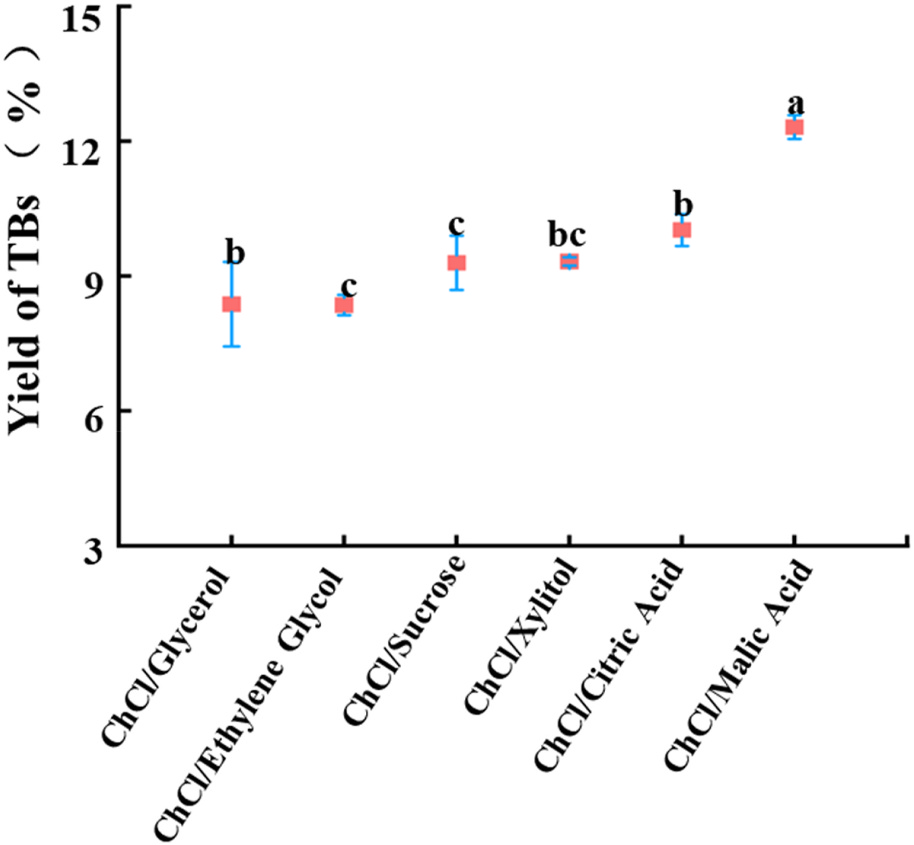
Theabrownins (TBs) are the dark, mysterious pigments in dark tea that have been linked to multiple health benefits. But extracting them often requires harsh chemicals and high energy. In this study, researchers developed a gentler approach: ultrasound-assisted extraction with a deep eutectic solvent (UAE-DES), a mixture of choline chloride and malic acid that acts as a green, biodegradable solvent. With a liquid-to-solid ratio of 20:1 (v/w), ultrasonic power of 577 W, a 25-minute sonication, and 30% water content, they achieved the highest TB yield of 12.59% from Kangzhuan dark tea (KZDT).
After extraction, the team fractionated the TBs using silica gel, yielding six distinct fractions (TBFs1–6). Using LC-MS/MS, they identified the major components: flavonoids, terpenes, phenolic acids, alkaloids, lipids, and amino acids. Among the fractions, TBF4 stood out with the strongest antioxidant activity, showing DPPH, ABTS, and FRAP values of 45.08 ± 0.42 μM ascorbic acid/g DW, 178.52 ± 0.29 μM Trolox/g DW, and 370.85 ± 6.00 μM Fe(II)/g DW, respectively.
This study is the first to show that combining UAE-ChCl/MA with silica gel is an effective, eco-friendly strategy for extracting TBs from KZDT. Notably, 6,7-dihydroxycoumarin-6-glucoside and neohesperidin emerged as the leading compounds in the fractions, offering a roadmap for future chemical research and broader utilization of dark tea's hidden treasures.
Key Points
- Green UAE-DES method yields 12.59% theabrownins from dark tea
- Six fractions isolated; TBF4 shows highest antioxidant activity
- Leading compounds: 6,7-dihydroxycoumarin-6-glucoside and neohesperidin
Comments
No comments yet — be the first.