Green Extraction of Bioactive Compounds from Sweet Potato (Ipomoea batatas L.) Peels and Comparative In Vitro and Biological Model Antioxidant Evaluation
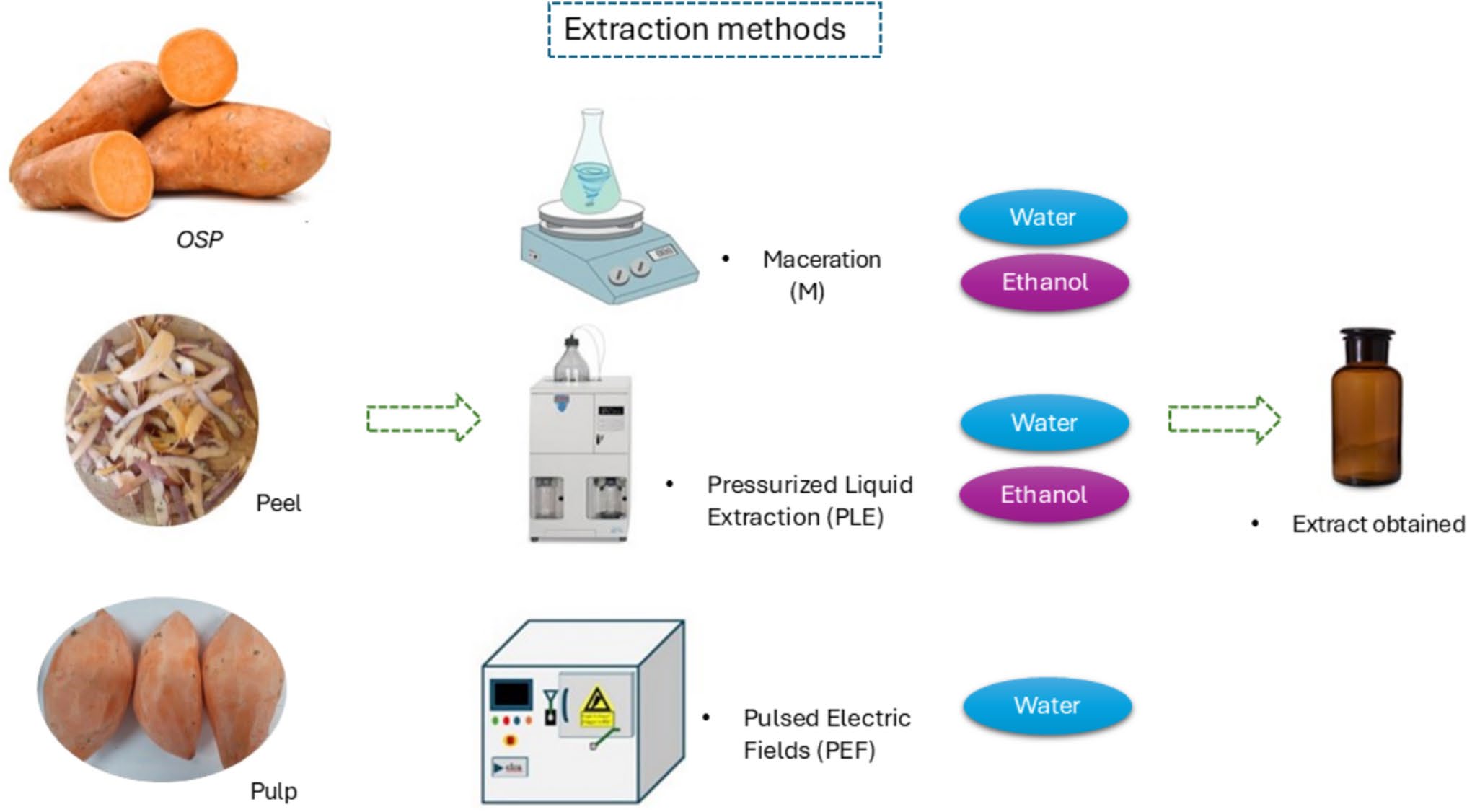
What if the secret to powerful antioxidants was hiding in the peel of an orange sweet potato? New green technologies are unlocking it—without the usual chemical waste.
Orange sweet potato peels, often discarded, are a goldmine of phenolic antioxidants. But extracting them sustainably has been a challenge. Now, scientists have compared two green techniques—pulsed electric fields (PEF) and pressurized liquid extraction (PLE)—against the old-school maceration method. The results are striking: PEF-water extracts tripled the FRAP value (1.79 vs 0.54 µM Trolox/g), while PLE-ethanol soared to 6.30 µM/g in ABTS and an impressive 16,782.8 µM/g in ORAC. Even better, these chemical tests aligned perfectly with a yeast-based biological model (Saccharomyces cerevisiae). Under oxidative stress from hydrogen peroxide, the extracts protected yeast cells—ethanol extracts worked at lower concentrations (1 and 10 mg GAE/mL) than PEF-water (10 and 20 mg GAE/mL). This agreement between in vitro and cellular assays means we can trust faster, cheaper chemical tests. And because these green methods use less solvent and energy, they're eco-friendlier too. The takeaway: sweet potato peels aren't waste—they're a sustainable source of antioxidants for future food and pharma products.
Key Points
- PEF and PLE boost antioxidant recovery vs maceration.
- PLE-ethanol hits top ORAC value: 16,782.8 µM/g.
- In vitro and yeast model results align perfectly.
Comments
No comments yet — be the first.