Green Extraction of Forsythoside A, Phillyrin and Phillygenol from Forsythia suspensa Leaves Using a β-Cyclodextrin-Assisted Method
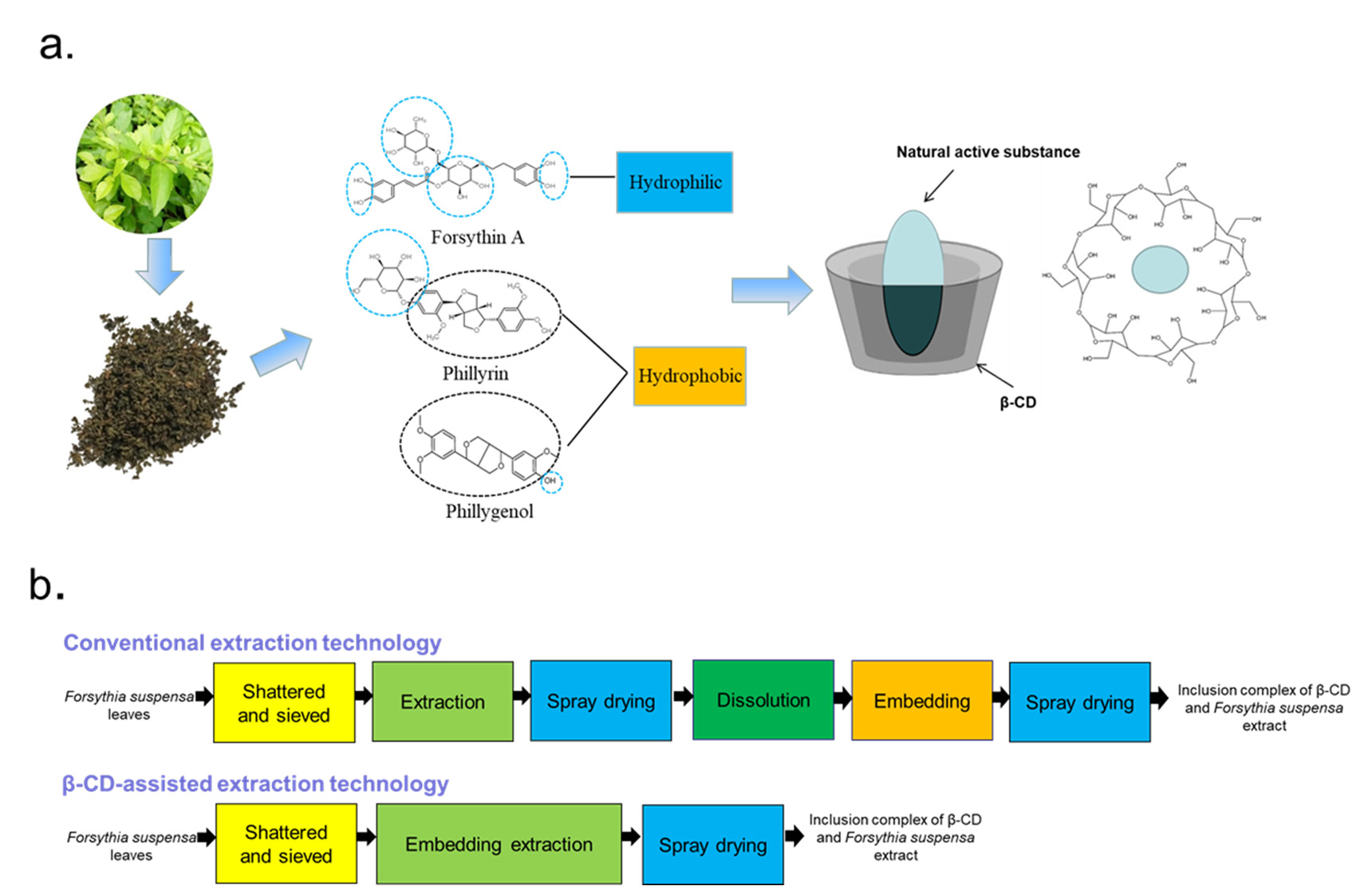
What if the key to unlocking nature's pharmacy lies in a sugar molecule? A new green method uses β-cyclodextrin to extract potent compounds from forsythia leaves—boosting solubility and stability while keeping the process eco-friendly.
Forsythia suspensa, a flowering plant long used in traditional medicine, hides a treasure trove of bioactive compounds in its leaves. But extracting them efficiently and sustainably has been a challenge. Enter β-cyclodextrin (β-CD), a cyclic sugar that acts like a molecular cage, trapping and stabilizing these delicate molecules. In a new study, researchers optimized a green extraction process using β-CD, achieving impressive yields of forsythoside A (11.80%), phillyrin (5.49%), and phillygenol (0.319%) under mild conditions: a 3.61:5 leaf-to-β-CD ratio, a solid-liquid ratio of 1:36.3, 75.25°C, and pH 3.94. But the benefits didn't stop at extraction. The team used advanced techniques like X-ray diffraction and molecular docking to confirm that β-CD truly interacts with the active compounds, forming stable complexes. This interaction paid off: the aqueous solubility of the extract jumped to 70.2 g/L, and the loss of forsythoside A at 80°C was reduced to just 12%, compared to 13% without β-CD. Even better, the antioxidant activity improved—the EC50 values for DPPH and ABTS radical scavenging dropped to 28.98 μg/mL and 25.54 μg/mL, respectively. This β-CD-assisted method isn't just greener; it's smarter, offering a promising path for extracting bioactive compounds from plants with enhanced stability and efficacy.
Key Points
- Green β-CD extraction yields 11.80% forsythoside A from leaves.
- β-CD boosts aqueous solubility to 70.2 g/L.
- Antioxidant activity improved: EC50 below 29 μg/mL.
Comments
No comments yet — be the first.