Green extraction of plant antioxidants: Supercritical methods and industrial applications – A review
What if the secret to unlocking more of a powerful plant antioxidant lies not in a high-tech lab, but in a simple mix of natural compounds? This review reveals how a green solvent could dramatically boost the yield of emodin from Cassia alata leaves.
Emodin, a bioactive compound in Cassia alata leaves, is a pharmacological powerhouse. Yet traditional extraction methods have been stingy, yielding disappointingly low amounts. Enter deep eutectic solvents (DES)—a green alternative that may just outsmart conventional approaches.
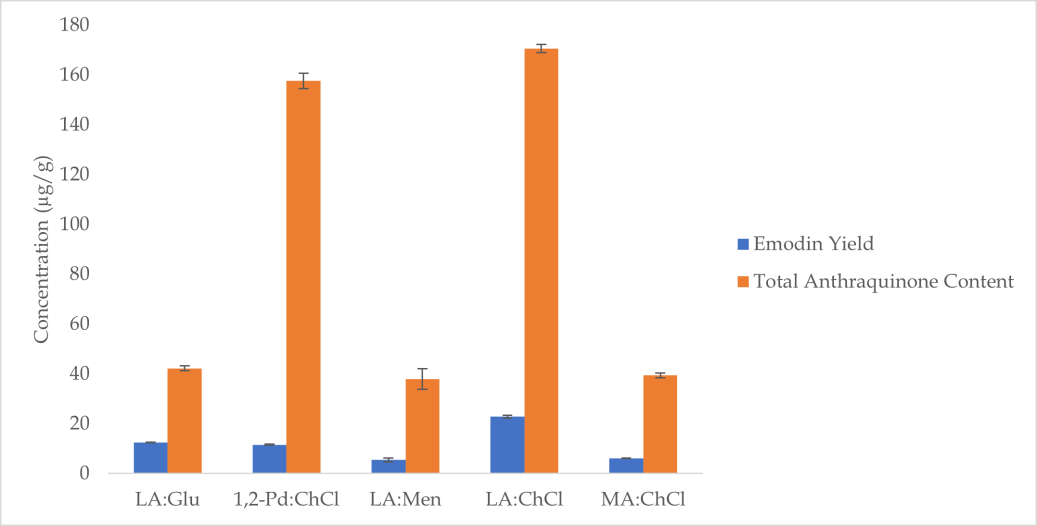
Researchers tested various DES combinations and found a winning pair: lactic acid and choline chloride in a 2:1 ratio. Using response surface methodology with Box-Behnken Design, they pinpointed optimal conditions: 53°C, 19 minutes, and a solid-to-solvent ratio of 1:20 g/mL. The result? The highest total anthraquinone content, a key marker of antioxidant activity.
To ensure accuracy, the team validated a method for quantifying emodin using LC-UV. With an isocratic mobile phase of 2% acetic acid:methanol (30:70), a flow rate of 0.8 mL/min, detection at 288 nm, and a C-18 column, they achieved reliable measurements.
Compared to ethanol extraction, the DES approach yielded higher emodin and total anthraquinone content. This green solvent isn't just eco-friendly—it's more effective and efficient, offering a promising path for industrial applications.
Key Points
- DES (lactic acid:choline chloride 2:1) boosts emodin yield.
- Optimal conditions: 53°C, 19 min, 1:20 g/mL.
- DES outperforms ethanol in extraction efficiency.
Comments
No comments yet — be the first.