Green extraction of six phenolic compounds from rattan (Calamoideae faberii) with deep eutectic solvent by homogenate-assisted vacuum-cavitation method
What if the key to unlocking nature's pharmacy lies in a humble rattan vine and a solvent made from everyday compounds? Scientists have found a green way to extract six phenolic compounds with remarkable efficiency.
Deep eutectic solvents (DES) are the new darlings of green chemistry—non-toxic, biodegradable, and often made from cheap, renewable materials. Here, researchers paired choline chloride with ethylene glycol in a 1:3 molar ratio, then diluted it with water (6:4 by volume) to create a solvent that could gently pull phenolic compounds from rattan (Calamoideae faberii).
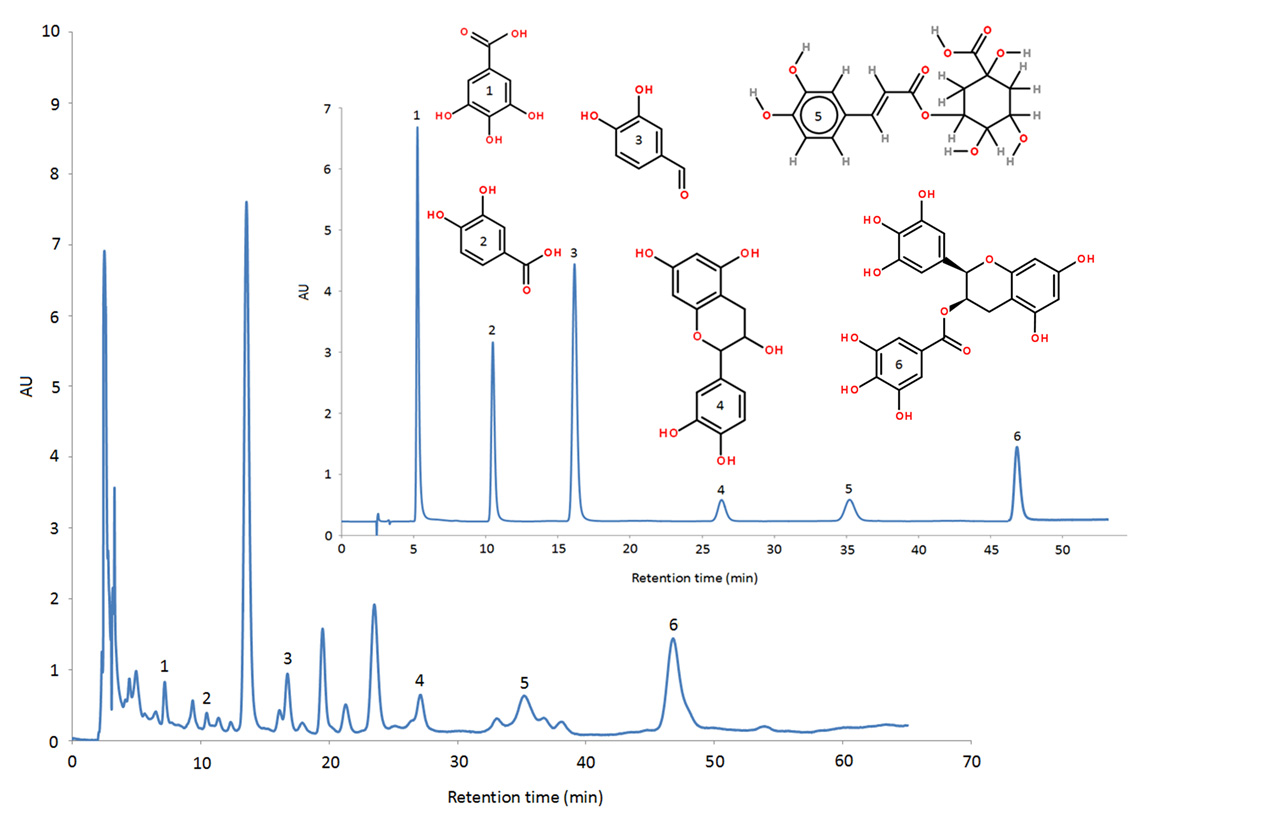
The extraction method, called homogenate-assisted vacuum-cavitation (HVE), combines rapid homogenization (2 minutes) with vacuum-cavitation (25 minutes) at a solid-liquid ratio of 1:15. This optimized process yielded 6.82 mg/g of total phenolics from the plant material—a solid result for a green approach.
But the story gets more interesting when you look at where these compounds hide. Seeds packed the highest phenolic content (81.24 mg/g), followed by episperm and arillus, while leaves trailed behind. Chlorogenic acid dominated most organs, but each phenolic had its favorite spot: gallic acid in the arillus, protocatechuic acid in arillus and leaves, and (+)-catechins in the episperm and seeds.
Finally, the team tested recovery rates using AB-8 resin, achieving impressive returns—from 92.47% for epigallocatechin gallate up to 97.83% for (+)-catechins. This green pipeline could make extracting valuable bioactives from agricultural waste both eco-friendly and economically viable.
Key Points
- Green DES (ChCl:EG 1:3) extracts phenolics from rattan.
- HVE method yields 6.82 mg/g total phenolics.
- AB-8 resin recovers 92–98% of six compounds.
Comments
No comments yet — be the first.