Green Extracts and UPLC-TQS-MS/MS Profiling of Flavonoids from Mexican Oregano (Lippia graveolens) Using Natural Deep Eutectic Solvents/Ultrasound-Assisted and Supercritical Fluids
What if the key to unlocking oregano's full antioxidant power lies not in traditional solvents, but in green, eco-friendly alternatives? A new study reveals that natural deep eutectic solvents, paired with ultrasound, outperform conventional methods—yet the old-fashioned approach still holds a surprising secret.
Mexican oregano, or Lippia graveolens, is more than a culinary staple—it's a treasure trove of bioactive flavonoids with antioxidant and anti-inflammatory powers. But these benefits hinge on how we extract them. A team of scientists set out to compare six different extraction methods, from traditional maceration with methanol and water to cutting-edge ultrasound-assisted extraction using natural deep eutectic solvents (NADES) like choline chloride combined with ethylene glycol, glycerol, or lactic acid. They even explored supercritical fluid extraction with CO2.
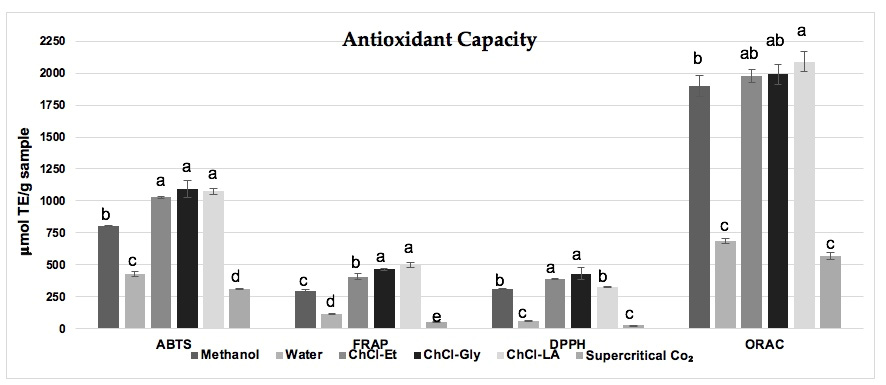
After obtaining six distinct extracts, the researchers measured total reducing capacity, flavonoid content, and antioxidant activity using four assays: ABTS, DPPH, FRAP, and ORAC. The results were striking: ultrasound-assisted NADES extraction delivered the best overall extraction efficiency and antioxidant capacity in colorimetric tests. However, when it came to sheer compound quantity, maceration with methanol won, with naringenin and phloridzin emerging as the major flavonoids.
But the story doesn't end there. The methanol extract was microencapsulated via spray drying, creating tiny protective spheres that preserved its antioxidant potential. This suggests that while green methods shine in efficiency, traditional extracts can be stabilized for future applications. The findings highlight the promise of NADES as sustainable alternatives, while reminding us that conventional methods still have valuable roles—especially when combined with modern encapsulation techniques.
Key Points
- UAE-NADES showed best extraction and antioxidant capacity.
- Maceration-methanol yielded highest flavonoid content, with naringenin and phloridzin dominant.
- Spray-dried microcapsules preserved antioxidant potential for future use.
Comments
No comments yet — be the first.