HPLC-MS based metabolomics & chemometrics studies of Cassia absus seeds extracted through green extraction technology
What if the greenest way to extract healing plant compounds also happens to be the most powerful? New research on Cassia absus seeds suggests exactly that.
For centuries, the seeds of Cassia absus, a member of the Fabaceae family, have been a staple in Indian traditional medicine. Now, scientists are giving this ancient remedy a 21st-century upgrade, swapping harsh organic solvents for eco-friendly deep eutectic solvents (DESs). This 'green extraction' isn't just kinder to the planet—it appears to be more effective too.
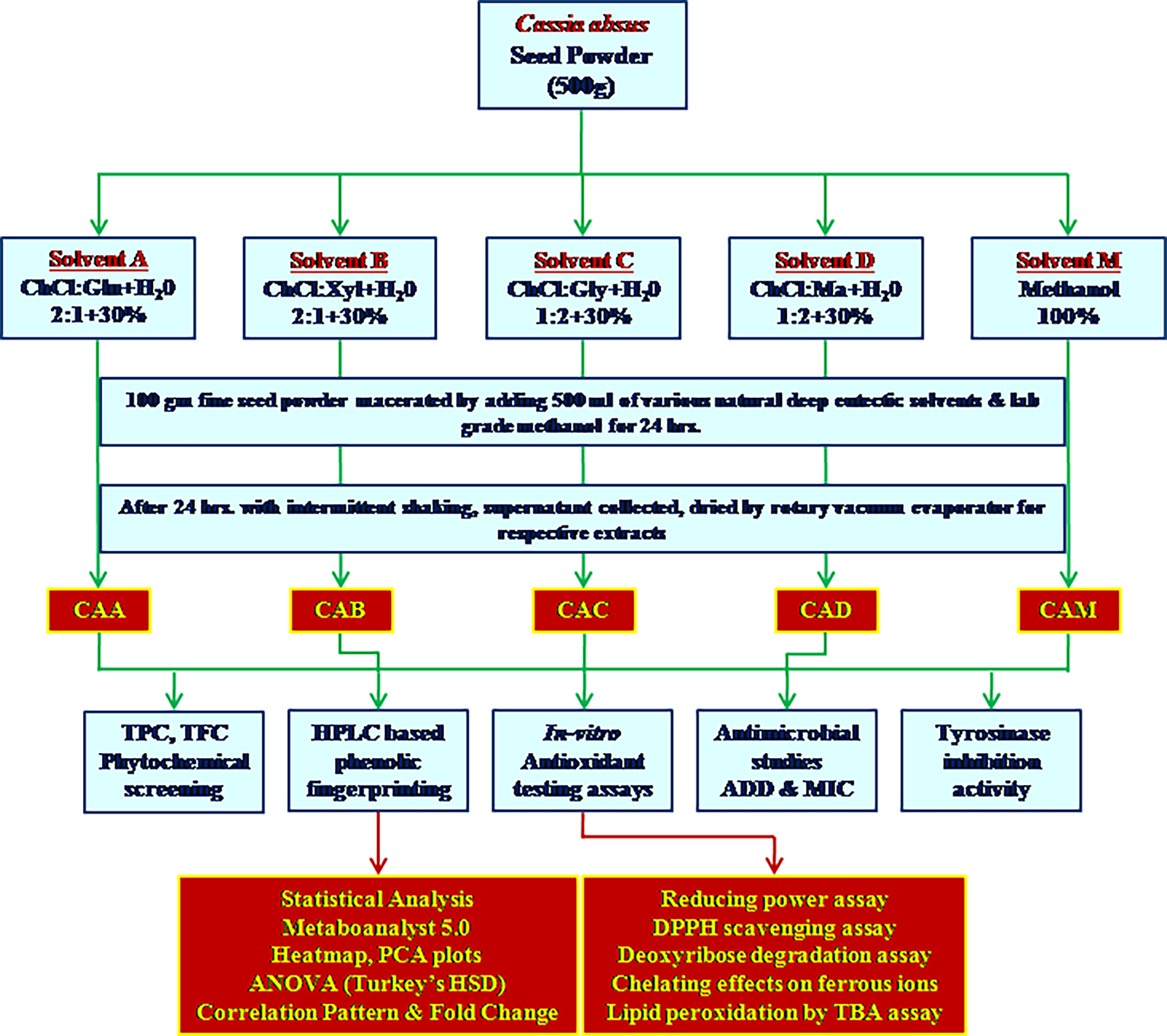
The study compared four different DES-based extracts (CAA, CAB, CAC, CAD) against a traditional methanol extract. Using HPLC-MS-based metabolomics and chemometrics, they found that all green extracts were enriched with phenolic compounds. This wasn't just a chemical curiosity; these green extracts also outperformed the methanol extract across a battery of biological assays.
The team tested antioxidant activity using five different in-vitro methods, including DPPH and lipid peroxidation assays. They also screened for antimicrobial and tyrosinase-inhibitory effects. In every single test, the green extracts came out ahead. Advanced analysis with Metaboanalyst 5.0 revealed clear dysregulation of major phenolic compounds, with heatmaps and PCA plots showing distinct separation between the different extract groups, highlighting the unique phytochemical profiles of each green solvent.
Key Points
- Green DES extracts beat methanol in all bioassays.
- Phenolic compounds enriched in all green extracts.
- Metabolomics shows clear phytochemical separation between extracts.
Comments
No comments yet — be the first.