In vitro antioxidant and antibacterial activities with polyphenolic profiling of wild cherry, the European larch and sweet chestnut tree bark
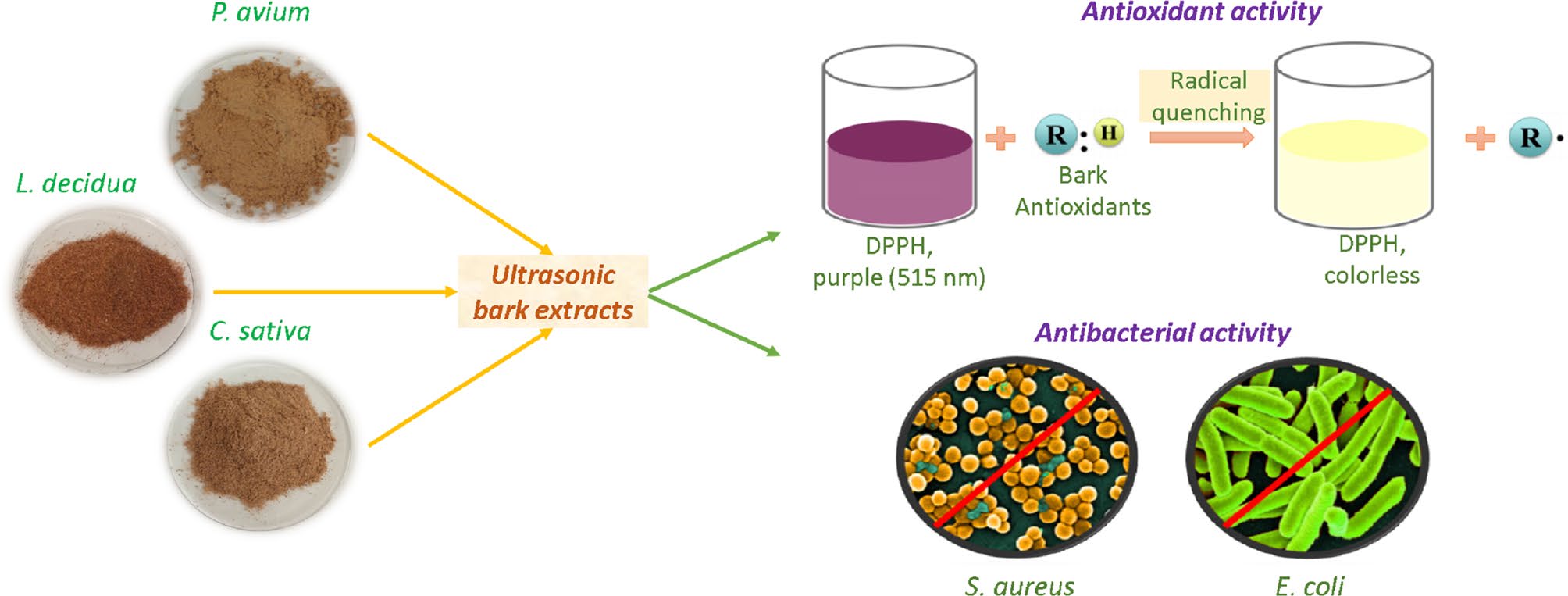
Forget the apple a day—what if tree bark holds the next big antioxidant secret? Sweet chestnut bark just outshone its European neighbors in a head-to-head battle against free radicals.
Three common European trees—wild cherry, European larch, and sweet chestnut—have shed their bark for science. Researchers extracted bioactive compounds using a green method: ultrasound-assisted 80% aqueous ethanol. No harsh chemicals, just sound waves and water-based solvent.
Sweet chestnut bark emerged as the star performer. It boasted a total phenol content of 174.25 mg GAE per gram dry weight, and its DPPH IC50 was a mere 2.69 μg/mL—meaning it neutralized free radicals at remarkably low concentrations. In ABTS and FRAP assays, it also led the pack, showing robust reducing power.
But the bark didn't stop at antioxidants. In antibacterial tests, sweet chestnut extract inhibited E. coli at 0.25 mg/mL and S. aureus at 1.00 mg/mL (IC50 values). The team used disk diffusion, MIC assays, and growth curves to confirm the effect.
Finally, HPLC–MS/MS profiling identified the polyphenolic compounds responsible for these activities. The extracts are rich in natural antioxidants, positioning them as promising natural additives for the food industry. Who knew tree bark could be so valuable?
Key Points
- Sweet chestnut bark showed highest antioxidant activity.
- Antibacterial: IC50 0.25 mg/mL against E. coli.
- Green ultrasound extraction with 80% ethanol.
Comments
No comments yet — be the first.