In Vitro Study of the Blood–Brain Barrier Transport of Natural Compounds Recovered from Agrifood By-Products and Microalgae
Can compounds from food waste and algae actually reach the brain? A new study shows they might, crossing the brain's protective barrier to unlock neuroprotective potential.
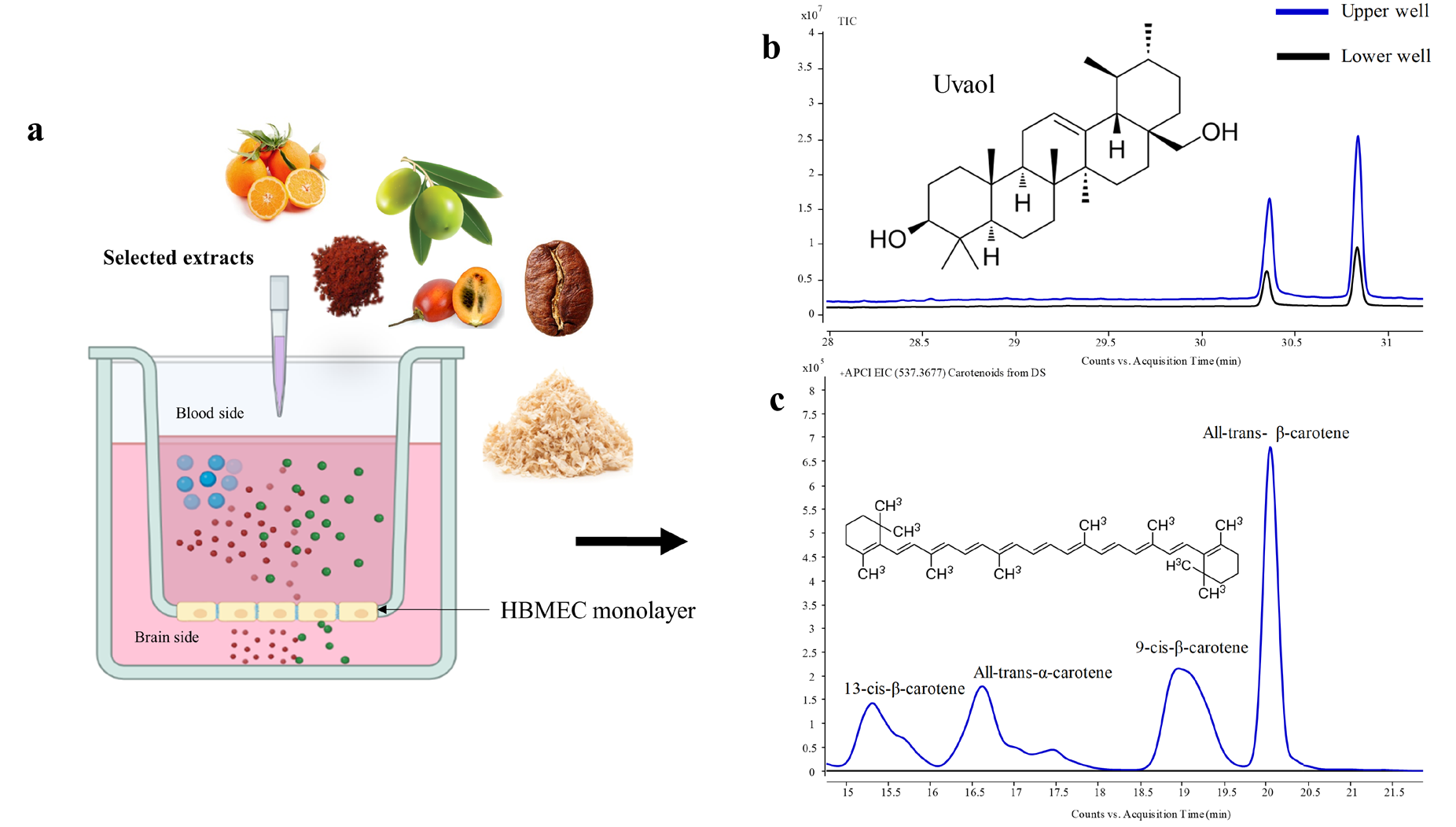
Every year, tons of agrifood by-products and microalgae are discarded, yet they harbor a treasure trove of bioactive compounds with neuroprotective properties. But there's a catch: for these molecules to do any good in the brain, they must first cross the blood–brain barrier (BBB), a selective gatekeeper that blocks most substances. Researchers put this to the test using an in vitro model of human brain endothelial cells, exposing them to green extracts from Robinia pseudoacacia, Cyphomandra betacea, Coffea arabica, Olea europaea, Citrus sinensis, and the microalgae Dunaliella salina. After checking toxicity and barrier integrity, they tracked the transport of key compounds after 2 and 4 hours using advanced chromatography-mass spectrometry. The results were striking: mono- and sesquiterpenoids, phytosterols, and some phenolic compounds showed high permeability across the BBB. This suggests these natural extracts could indeed deliver neuroprotective benefits, paving the way for functional foods or nutraceuticals with scientifically backed brain health claims.
Key Points
- Green extracts from agrifood by-products and microalgae show neuroprotective potential.
- In vitro BBB assay reveals high permeability for terpenoids, phytosterols, and phenolics.
- Natural extracts could become functional ingredients in supplements and nutraceuticals.
Comments
No comments yet — be the first.