Insights into chestnut (Castanea spp.) graft incompatibility through the monitoring of chemical and physiological parameters
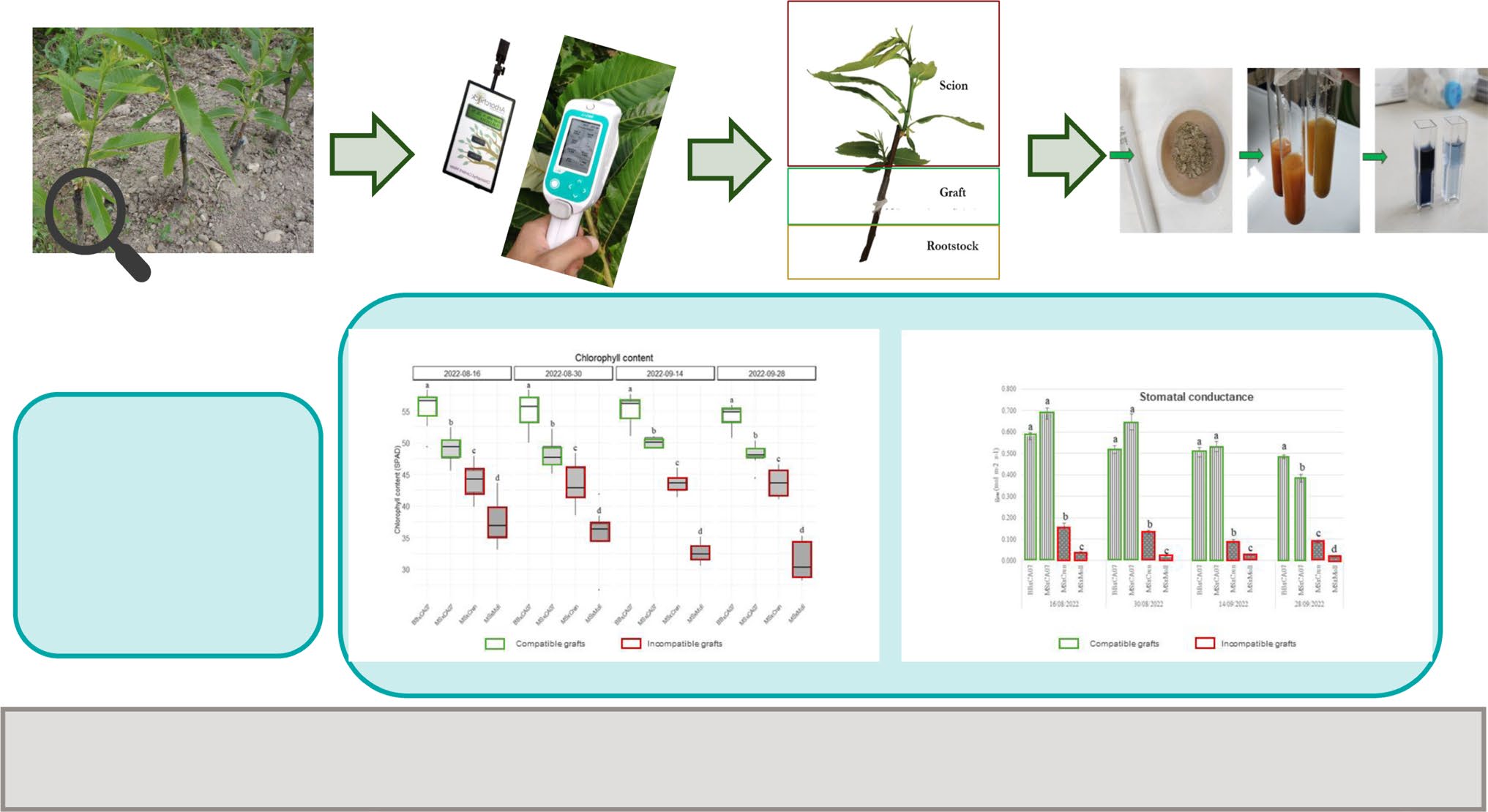
When chestnut grafts fail, the trees whisper their distress through their leaves—by closing their stomata and fading their green. Now, scientists have found a way to listen.
Grafting is a horticultural art, but when the union fails, the tree pays the price. For chestnuts, a minor species in grafting research, the mechanisms behind incompatibility have remained largely unexplored. In a new study, researchers monitored chemical and physiological parameters across compatible and incompatible chestnut grafts, aiming for early detection of failure.
Their findings reveal a clear physiological divide. Compatible grafts boasted higher leaf chlorophyll content and stomatal conductance (Gsw) throughout the growing season—signs of robust water balance and photosynthetic health. Incompatible grafts, by contrast, showed notably reduced stomatal conductance and chlorophyll, mirroring each other in a consistent, season-long trend.
At the graft interface, chemical analysis told a complementary story. Total phenolic content (TPC) rose significantly from the callusing stage to the end of the vegetative cycle, with the greatest accumulation in the inner woody tissues of incompatible unions. The phenolic fingerprint identified castalagin as the dominant compound, alongside increases in benzoic acids, catechins, and tannins over time. Yet, gallic acid and catechin as markers of incompatibility remain uncertain.
This multidisciplinary approach—combining non-destructive physiological tools with phytochemical profiling—offers a promising path to discriminate graft compatibility early, potentially saving orchards from silent decline.
Key Points
- Incompatible grafts show lower stomatal conductance and chlorophyll.
- Phenolic content rises in inner woody tissues of incompatible unions.
- Castalagin dominates; gallic acid and catechin markers uncertain.
Comments
No comments yet — be the first.