Microwave-assisted deep eutectic solvent extraction and quantification of six bioactive compounds from Vaccinium vitis-idaea L. Leaves
What if the key to unlocking nature's medicine cabinet lies in a simple, green solvent? A new study reveals that natural deep eutectic solvents (NADES) can extract more saponins from a traditional Chinese medicinal plant than conventional methods—and with greater diversity.
For centuries, the bulb of Lilium lancifolium has been prized in traditional Chinese medicine. But extracting its beneficial saponins has always been a challenge—single solvents are inefficient, costly, and flammable. Enter natural deep eutectic solvents, or NADES, a new class of green solvents that are turning heads in the world of natural product chemistry.
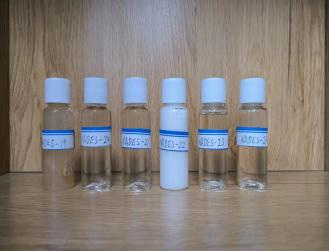
In this study, researchers synthesized 24 NADES and screened them for stability, narrowing the field to 14 candidates. After optimization, one formulation—NADES-15, a 2:1 mix of choline chloride and anhydrous citric acid—emerged as the star performer. It delivered a total saponin content of 46.6 mg/g, significantly outpacing traditional ethanol extraction.
But the benefits didn't stop at quantity. Using UHPLC-MS/MS, the team identified 31 compounds in the NADES-15 extract, including all nine target steroidal saponins (lily saponin A–I). In contrast, ethanol extraction yielded only 17 compounds and six saponins. The green solvent not only extracted more, but also captured a wider chemical variety.
This work highlights NADES as a powerful, eco-friendly alternative for extracting bioactive compounds. It's a step toward more sustainable practices in natural product research—one that could reshape how we harness the healing power of plants.
Key Points
- NADES-15 (choline chloride:citric acid 2:1) extracted 46.6 mg/g saponins.
- 31 compounds identified in NADES extract vs. 17 in ethanol.
- All nine target saponins (A–I) found only with NADES.
Comments
No comments yet — be the first.