Microwave-Assisted Extraction of Secondary Metabolites Using Ethyl Lactate Green Solvent from Ambrosia arborescens: LC/ESI-MS/MS and Antioxidant Activity
What if the key to greener chemistry was hiding in a common food additive? Ethyl lactate, a solvent derived from corn, just outperformed traditional methanol in extracting medicinal compounds from a Peruvian plant—using microwaves, no less.
For decades, laboratories have relied on harsh organic solvents like methanol to pull out valuable secondary metabolites from plants. But these solvents come with an environmental price tag. Now, scientists are turning to greener alternatives, and ethyl lactate—a biodegradable solvent already used in food and cosmetics—is stepping into the spotlight.
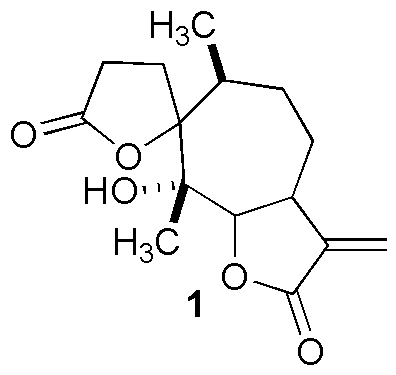
In a new study, researchers used ethyl lactate combined with microwave-assisted extraction (MAE) on Ambrosia arborescens, a medicinal plant from Peru. The results were striking: this green duo extracted 15.07% yield, beating the traditional methanol/maceration method's 12.6%. Even the isolation of a key compound, psilostachyin, was comparable (0.44% vs 0.40%).
Chemical analysis via UHPLC-ESI-MS/MS revealed 28 compounds in both extracts, with only two extra amino acids in the methanol version. And when it came to antioxidant power, the ethyl lactate extract actually showed slightly higher activity in both ORAC and DPPH assays.
This isn't just a lab curiosity. It's proof that green chemistry can match—and sometimes exceed—conventional methods. By swapping methanol for ethyl lactate and maceration for microwaves, we're one step closer to sustainable extraction processes that don't sacrifice efficiency.
Key Points
- Ethyl lactate/MAE yields 15.07% vs methanol/maceration 12.6%
- 28 compounds identified in both extracts via UHPLC-ESI-MS/MS
- Ethyl lactate shows slightly higher antioxidant activity in ORAC/DPPH
Comments
No comments yet — be the first.