Monte Carlo simulations and advanced modeling of bioactive compound yields in red grapes using green natural deep eutectic solvents
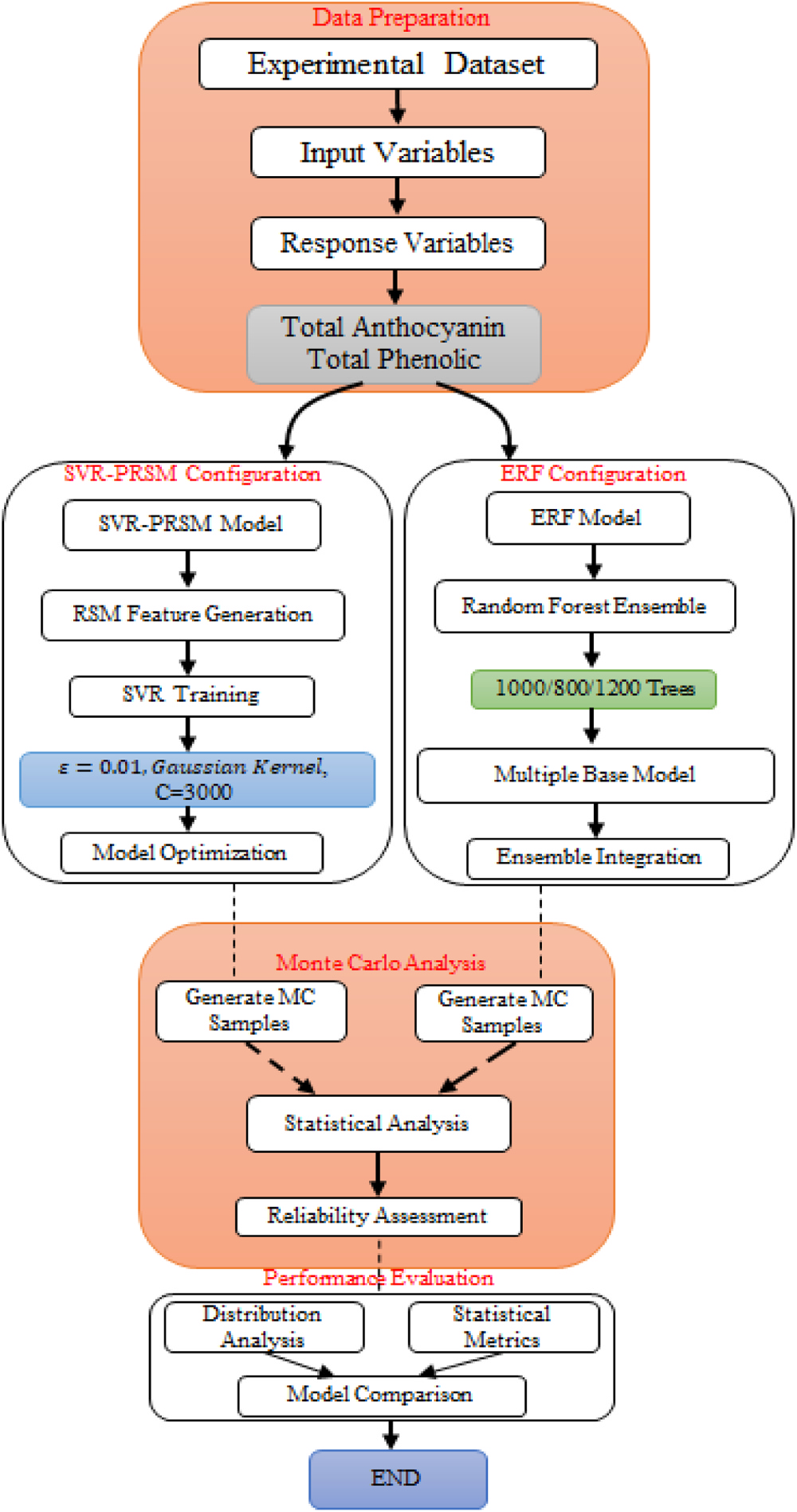
What if the key to unlocking grape's health secrets lies in sugar and Monte Carlo simulations? A new hybrid model predicts bioactive yields with remarkable precision, turning green chemistry into a data-driven science.
Red grapes are more than a tasty snack—they're packed with bioactive compounds linked to heart health and beyond. But extracting these treasures efficiently is a challenge. Enter natural deep eutectic solvents (NADES), sugar-based green solvents that promise a sustainable alternative to traditional methods.
In this study, researchers used microwave-assisted extraction with NADES on red grapes, varying power (700–900 W), temperature (50–70°C), time (10–30 min), sample mass (0.5–1.0 g), and ramping rate (0.5–2.5°C/min) across 40 runs. They then built two predictive models—support vector regression with response surface methodology (SVR-PRSM) and extreme random forest (ERF)—validated using Monte Carlo simulations with 500 and 5000 synthetic samples.
The SVR-PRSM model excelled: for total anthocyanin content, the RMSE was just 0.15 mg/g with an RPD of 2.82; for total phenolic content, RMSE was 0.76 mg/g and RPD 1.88. Kernel density estimation confirmed the models matched actual data patterns, showcasing the power of data-driven optimization for green extraction.
This approach could revolutionize nutraceutical and pharmaceutical industries, making extraction both eco-friendly and precise.
Key Points
- Hybrid SVR-PRSM model predicts anthocyanin yield with RMSE 0.15 mg/g
- Monte Carlo validation used 500 and 5000 synthetic samples
- Green NADES extraction optimized for red grape bioactives
Comments
No comments yet — be the first.