Novel Co-rendering Process for Enhancing Lard Quality-focusing on Oxidative Stability and Fatty Acid Composition of the Co-rendered Oils
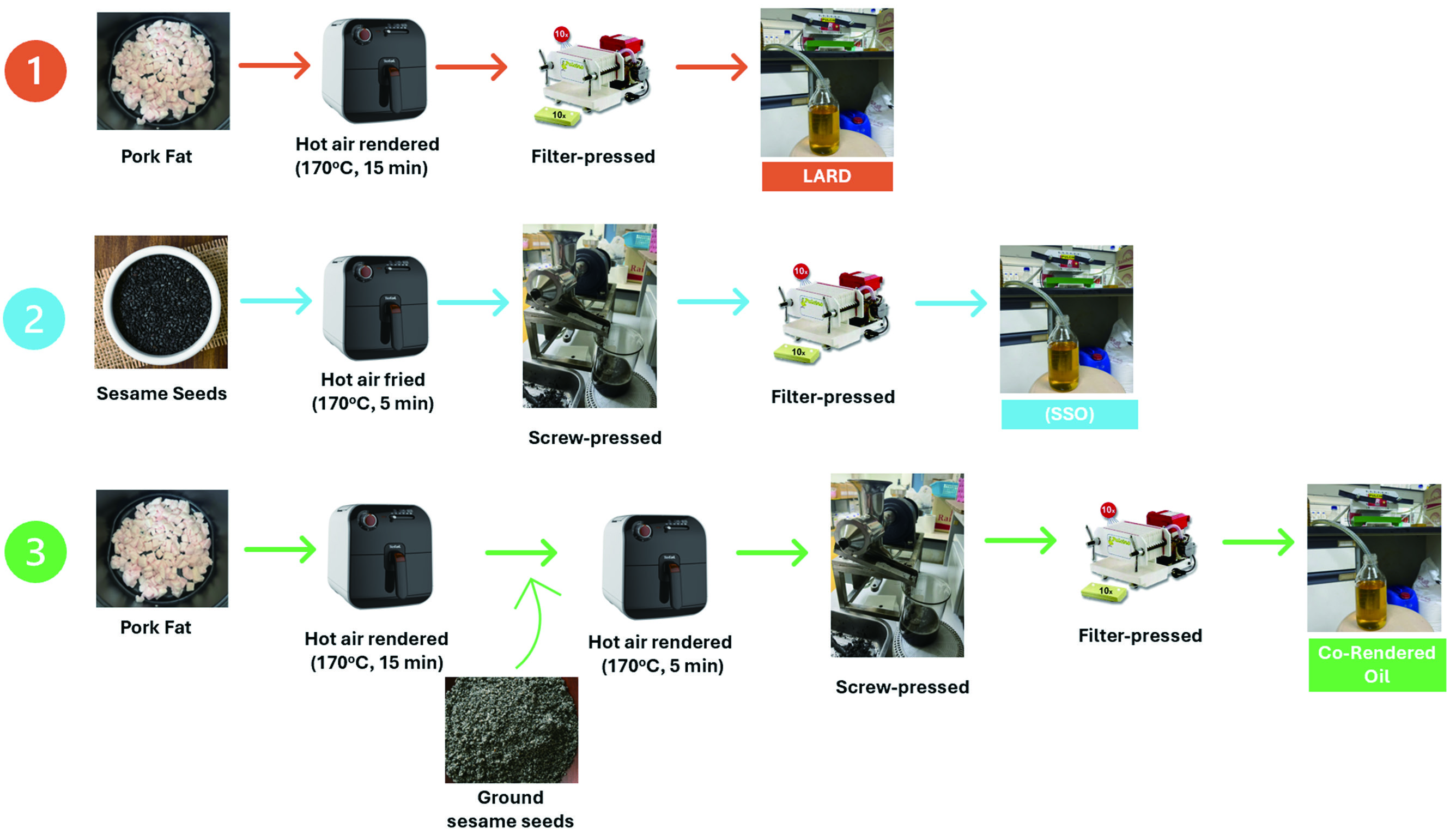
What if the secret to healthier lard was hiding in a tiny sesame seed? A new study shows that co-rendering pork fat with sesame seeds transforms ordinary lard into a nutritionally superior oil.
Lard has a reputation problem: it's delicious but packed with saturated fats. Scientists are now rewriting its story. In a clever twist, researchers used lard as a green solvent to extract oil from sesame seeds at 170°C in an air fryer, creating co-rendered oils with a dramatically improved fatty acid profile. As the proportion of sesame seeds increased, the oils became healthier, with the atherogenic index dropping from 0.51 to 0.29 and the thrombogenic index from 1.27 to 0.84—both markers of cardiovascular risk. The best results came from a 40:60 fat-to-seed ratio.
But the benefits didn't stop there. Sesame seeds brought their antioxidant arsenal—tocopherols, polyphenols, and lignans—into the mix. DPPH values more than doubled (from 54.03 to 118.91 µg GEAC/100 g oil), and ABTS values nearly tripled (from 18.81 to 51.15 µg GEAC/100 g oil), indicating a significant boost in free radical scavenging activity. All co-rendered oils met Codex Alimentarius standards for quality, with acid values between 0.99 and 2.02 mg KOH/g oil and peroxide values from 0.27 to 0.60 meqO2/kg oil.
Using principal component analysis, the team found that sesame content correlated positively with antioxidant activity, oxidative stability, and polyunsaturated fats, while higher pork fat content meant more saturated fats and higher oil yield. This co-rendering approach offers a healthier alternative to conventional lard, with enhanced nutritional value and stability—without sacrificing the rich flavor we love.
Key Points
- Co-rendered oils show improved fatty acid profile vs lard.
- Sesame seeds boost antioxidants and lower cardiovascular indices.
- All oils meet Codex standards for quality and stability.
Comments
No comments yet — be the first.