Potential use of Sargassum muticum as source of plant biostimulants after three different drying methods
What if an invasive seaweed could become a farmer's best friend? New research turns a coastal nuisance into a sustainable agricultural asset.
Sargassum muticum, an invasive brown seaweed, is often a headache for coastal ecosystems. But scientists see gold in this green tide. By extracting valuable compounds from its biomass, they aim to create plant biostimulants—a step toward more sustainable agriculture.
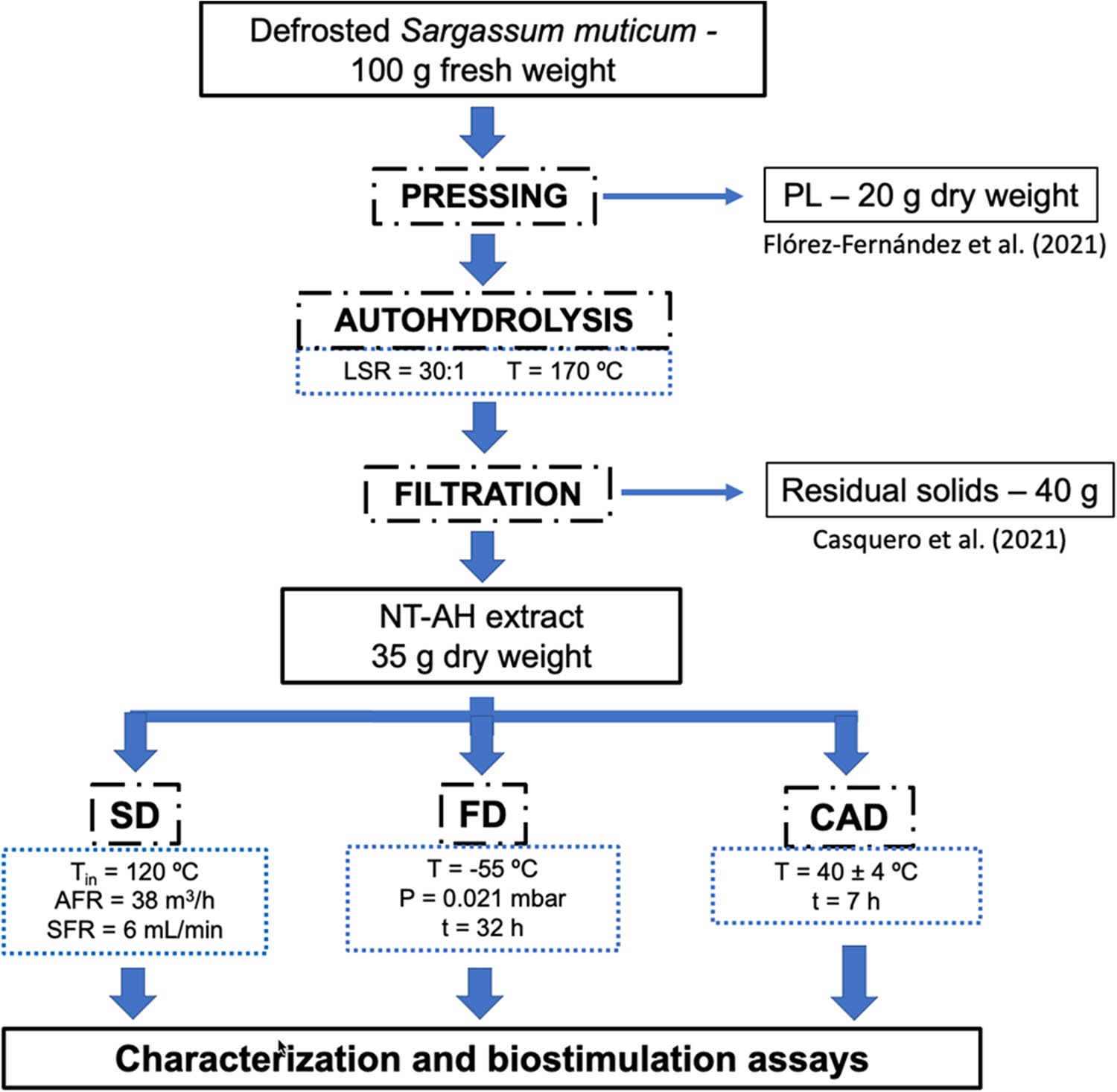
The process starts with pressed solids from the seaweed, treated via autohydrolysis, a green extraction method. Then, researchers compared three drying techniques: spray-drying, freeze-drying, and convective air-drying. Spray-drying, a low-stress method, preserved bioactive compounds best, showing superior biostimulant potential.
In bioassays with watercress (Nasturtium officinale), no phytotoxic effects appeared, even with high electric conductivity in most extracts. The dried extracts were mostly amorphous, though spray-drying at 50°C or convective drying at 40°C occasionally formed crystals.
Root development improved significantly with 5 mg/L of spray-dried extracts and 50 mg/L of freeze-dried ones. The Munoo-Liisa vitality index peaked at 50 mg/L freeze-dried, highlighting the impact of drying choices. This research paves the way for turning an ecological problem into a resource, one root at a time.
Key Points
- Spray-drying preserves bioactive compounds best.
- No phytotoxic effects on watercress bioassays.
- Root growth boosted at 5 mg/L spray-dried.
Comments
No comments yet — be the first.