Qualitative Analysis of Caulerpa racemosa Chlorophyll Extract in Natural Deep Eutectic Solvent (glucose-glycerol) using FTIR
What if the key to greener, safer chlorophyll extraction was hiding in your kitchen? A seaweed and a sugar-glycerol mix just proved it.
Chlorophyll, the green pigment that powers photosynthesis, is also a prized ingredient in pharmaceuticals, food, and cosmetics. But conventional extraction often relies on harsh, toxic solvents. Now, scientists are turning to Natural Deep Eutectic Solvents, or NADES, made from glucose and glycerol—compounds as benign as they are abundant.
In this study, researchers tested three glucose-to-glycerol ratios—1:1, 1:2, and 1:3—to extract chlorophyll from the seaweed Caulerpa racemosa. After preparing the seaweed as a fine powder, they mixed it with each NADES, shook it in an incubator, and separated the liquid using filtration and centrifugation. The resulting extracts were analyzed with FTIR-ATR, a technique that identifies molecular functional groups.
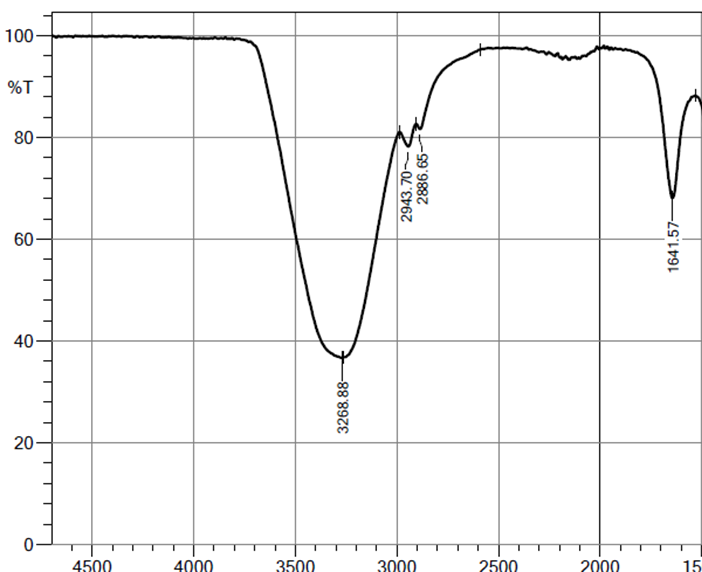
The FTIR spectra confirmed the presence of key chlorophyll signatures—O-H, C-H, and C=O groups—proving the extraction was successful. Among the ratios, the 1:2 mixture worked best, yielding the highest efficiency. The authors conclude that NADES are not only effective but also environmentally friendly, non-toxic, and biodegradable, offering a promising path for large-scale chlorophyll production.
This isn't just a lab curiosity. It's a step toward sustainable chemistry that could replace toxic solvents in industries that touch our daily lives. Future work may fine-tune these mixtures and expand their use to other bioactive compounds.
Key Points
- NADES (glucose-glycerol) effectively extracts chlorophyll from Caulerpa racemosa.
- 1:2 ratio shows highest extraction efficiency among tested ratios.
- FTIR confirms O-H, C-H, C=O groups; NADES is eco-friendly and non-toxic.
Comments
No comments yet — be the first.