Root vegetable side streams as sources of functional ingredients for food, nutraceutical and pharmaceutical applications: The current status and future prospects
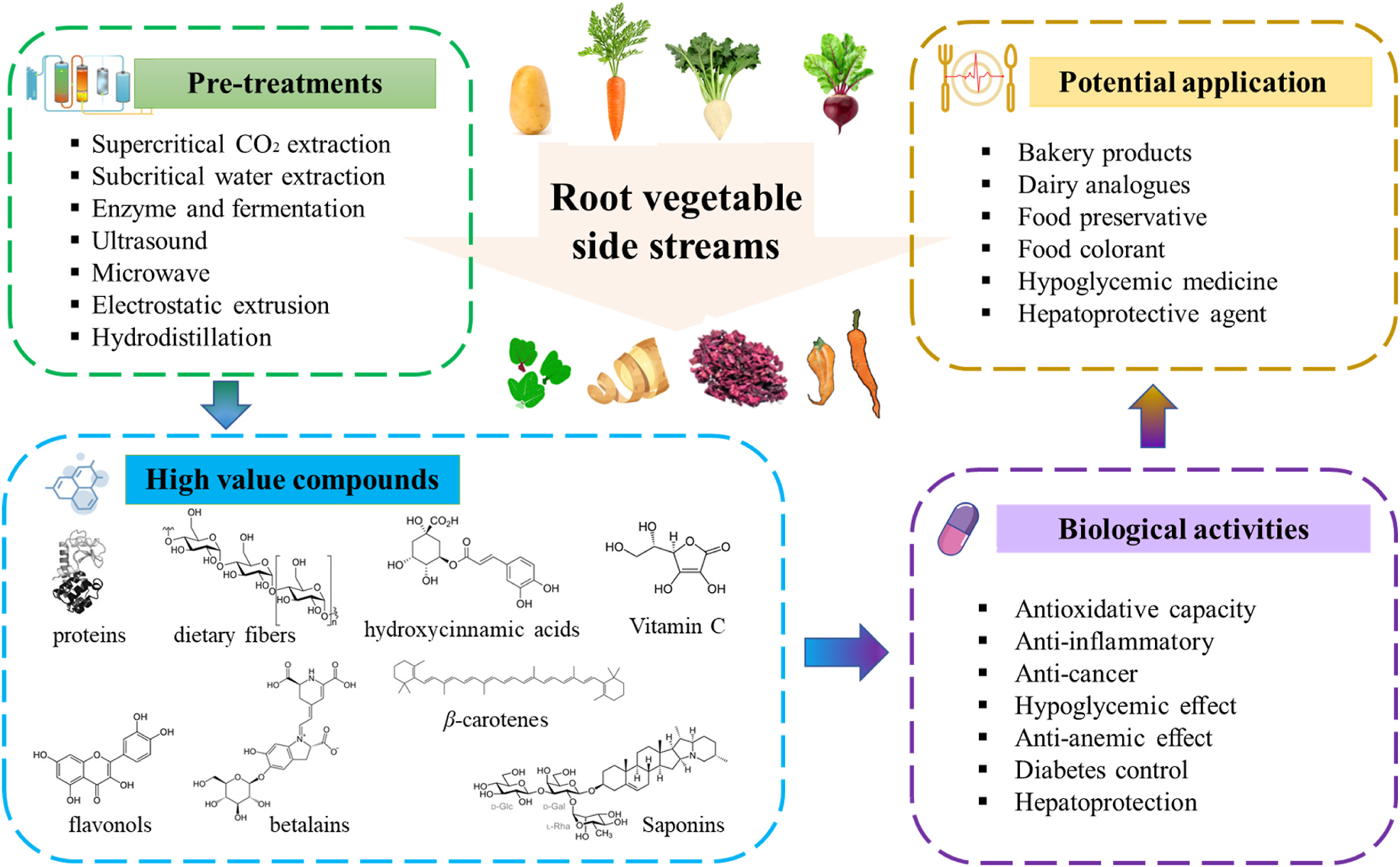
Every year, millions of tons of root vegetable scraps—peels, leaves, and pomaces—are thrown away or fed to animals, yet they hide a treasure trove of health-boosting compounds. What if these 'wastes' could become the next superfood ingredient or even a source of new medicines?
Root vegetables like carrots, beets, and potatoes leave behind a mountain of peels, leaves, and pulps after processing. These side streams are nutrient-dense, packed with proteins, fibers, and bioactive compounds, yet they are typically discarded. But a new wave of research is turning this waste into gold.
Using both conventional and green extraction methods, scientists can now isolate fractions rich in proteins, fibers, and antioxidants from these scraps. Adding leaf proteins to food boosts its nutritional value, while fibers from peels and pomaces enhance texture and health benefits. The bioactive compounds—phenolic acids, carotenoids, and others—show promising antioxidant, antimicrobial, and even anticancer activities.
This review systematically maps the current state of the art in valorizing root vegetable side streams, covering processing technologies, high-value compounds, and potential applications in food, nutraceuticals, and pharmaceuticals. The authors also highlight key challenges, such as the need for deeper understanding of the composition and bioavailability of these components, and call for safety assessments before these ingredients can reach the market.
With the global population growing, turning waste into functional ingredients is not just an opportunity—it's a necessity. The future of food and medicine might just be hiding in your compost bin.
Key Points
- Root vegetable scraps are nutrient-rich but often wasted.
- Green extraction yields proteins, fibers, and bioactive compounds.
- These compounds show antioxidant, antimicrobial, and anticancer potential.
Comments
No comments yet — be the first.