Rutin extraction from Tartary buckwheat and extraction mechanisms using surface-active ionic liquids with different cations and anions
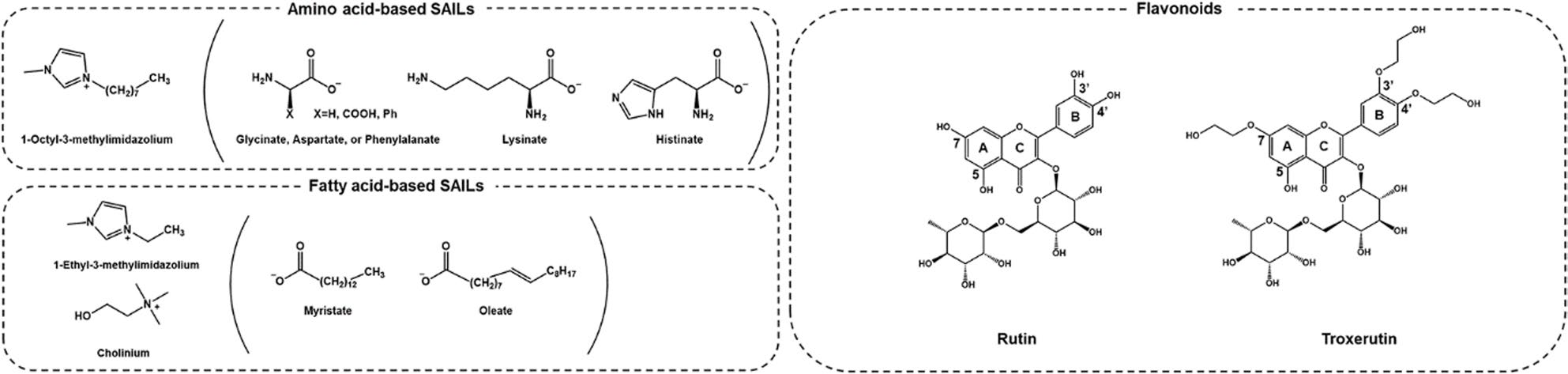
What if the key to unlocking a powerful antioxidant from buckwheat lies in a liquid that's both green and surprisingly smart? Meet the surface-active ionic liquids (SAILs) that could revolutionize extraction.
Rutin, a potent flavonoid found in Tartary buckwheat, has long been a target for natural product extraction. Traditional methods often rely on organic solvents, but a new class of green solvents—surface-active ionic liquids (SAILs)—offers a promising alternative. In this study, nine SAILs with different cation and anion combinations were tested for their ability to extract rutin from buckwheat flour using ultrasound.
Among these, cholinium myristate ([Cho][Myr]) stood out, achieving an extraction efficiency of about 14 mg/g—comparable to the conventional 80% aqueous methanol method. The researchers used advanced techniques like TEM and SEM to confirm that micelles formed by the SAILs were key to the extraction process. HPLC analysis showed that rutin solubility was significantly enhanced in these micellar solutions.
But what makes [Cho][Myr] so effective? The answer lies in the micelle's structure. UV-Vis and 1H NMR analyses revealed that rutin is solubilized in the outer core of the micelles, stabilized by electrostatic and hydrogen bonding interactions with the SAIL's cations and anions. Chemical calculations further showed that the binding energy between [Myr] and rutin (−52.54 kJ/mol) is lower than that of [C8mim]-rutin (−39.33 kJ/mol), explaining the superior performance of fatty acid-based SAILs.
This research not only highlights the potential of SAILs for green extraction but also provides a roadmap for selecting and optimizing SAIL structures for efficient rutin recovery. It's a step toward more sustainable natural product processing, with implications for pharmaceuticals and nutraceuticals.
Key Points
- Cholinium myristate achieves 14 mg/g rutin extraction, matching methanol.
- Micellar extraction confirmed by TEM, SEM, and HPLC analyses.
- Lower binding energy of [Myr]-rutin explains better fatty acid SAIL performance.
Comments
No comments yet — be the first.