Sequential pressurized fluid extraction for selective fractionation of biomass: concepts, mechanisms and biorefinery applications
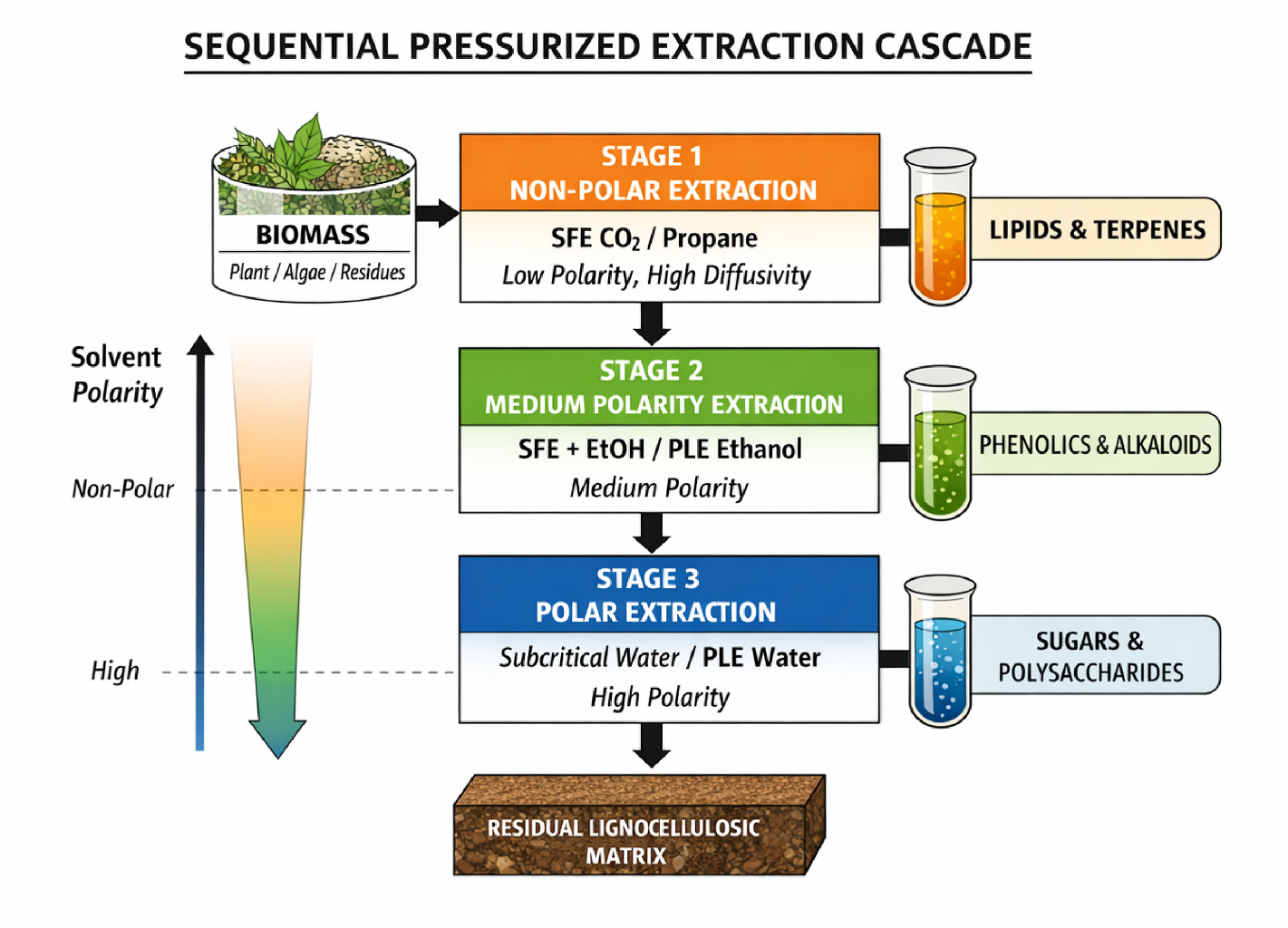
What if one biomass could yield multiple high-value compounds in a single, green process? Sequential pressurized fluid extraction is turning that idea into reality.
Extracting valuable compounds from plants, algae, and agro-industrial waste is like picking gold from a complex mine. Traditional single-step methods often miss the full treasure. Enter sequential pressurized fluid extraction (SPFE), a multi-stage strategy that uses controlled solvents and thermodynamic conditions to fractionate biomass based on each compound's physicochemical properties.
This review unpacks the science behind SPFE, covering supercritical fluid extraction (SFE), pressurized liquid extraction (PLE), and subcritical water extraction (SWE). The key lies in molecular selectivity—driven by solvent polarity, solvating power, and matrix transformations during consecutive stages. These mechanisms allow the recovery of lipids, phenolic compounds, pigments, and polysaccharides from a single feedstock.
Recent applications span plant materials, agro-industrial residues, microalgae, and emerging biorefinery systems. The payoff? Improved resource efficiency and reduced solvent consumption. But challenges remain: better mechanistic understanding, predictive modeling, and scalable integration are needed. SPFE is poised to become a cornerstone of sustainable extraction platforms.
Key Points
- Multi-stage extraction boosts selectivity for bioactive compounds.
- Covers SFE, PLE, and SWE mechanisms.
- Recovers lipids, phenolics, pigments, polysaccharides from one feedstock.
Comments
No comments yet — be the first.