Sequential Supercritical CO2 and Subcritical Water Extraction for the Valorisation of Pomegranate (Punica granatum L.) By-Products: A Response Surface Methodology Approach
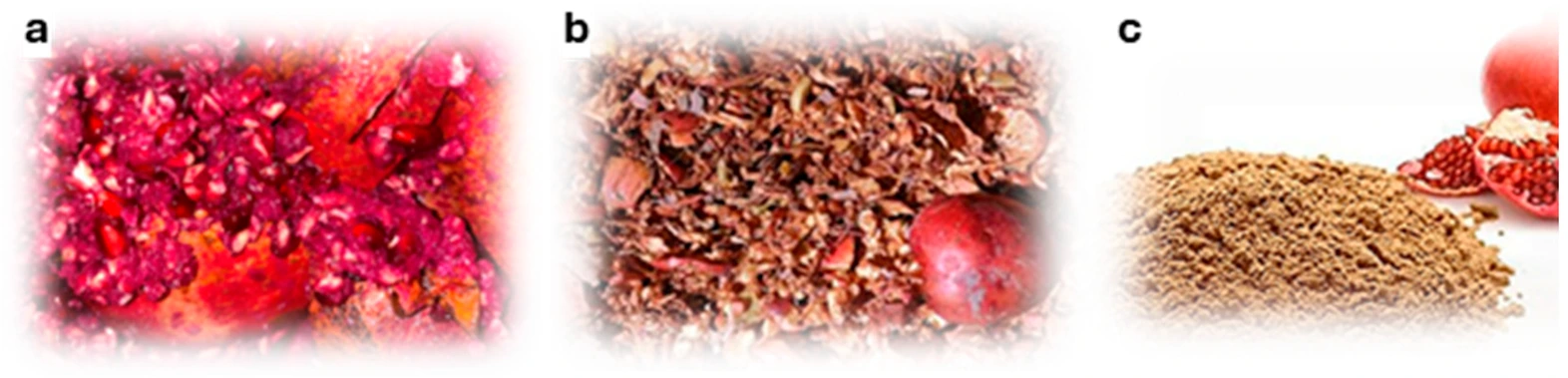
Pomegranate marc, the overlooked leftover of juice production, hides a treasure trove of health-boosting compounds. Now, a clever two-step extraction process is turning this waste into a goldmine of bioactives.
The juice industry leaves behind mountains of pomegranate marc, a by-product rich in both oil-soluble and water-soluble bioactives. This study introduces a novel, sequential extraction method using supercritical CO2 followed by subcritical water to recover these valuable fractions in one in-line process. Each step was fine-tuned using Response Surface Methodology, a statistical technique for optimization.
The supercritical CO2 step, optimized at 43 MPa and 76°C, recovered 68% of the total oil, yielding 30 grams of oleoresin per kilogram of dry weight. The subsequent subcritical water step, performed at 149°C, then extracted 47 grams of total phenolics per kilogram, representing a 58% recovery. The process produced a diverse phytocomplex, including fatty acids, tocopherols, and flavonoids, with antioxidant assays confirming the significant role of both γ-tocopherol and polyphenols.
To improve handling, the aqueous extracts were transformed into solid dispersions via spray drying with maltodextrin. Initial cell studies on HEK-293 and MCF-7 lines suggested that these formulations may modulate the extracts' cytotoxic profile, with results showing dosage-dependent effects on cell viability. This research lays the groundwork for a scalable and sustainable biorefinery approach, turning a waste stream into a source of solvent-free bioactives for nutraceutical and cosmetic applications.
Key Points
- Sequential ScCO2 and subcritical water extraction maximizes pomegranate marc valorisation.
- Optimized process yields 68% oil and 58% phenolic recovery.
- Spray-dried formulations show dosage-dependent effects on cell viability.
Comments
No comments yet — be the first.