Single-step extraction of allicin from Allium sativum L. using subcritical water extraction: optimization, solubility and kinetic studies
What if the key to garlic's powerful health benefits could be unlocked with nothing but hot water and pressure—no toxic solvents, no messy steps?
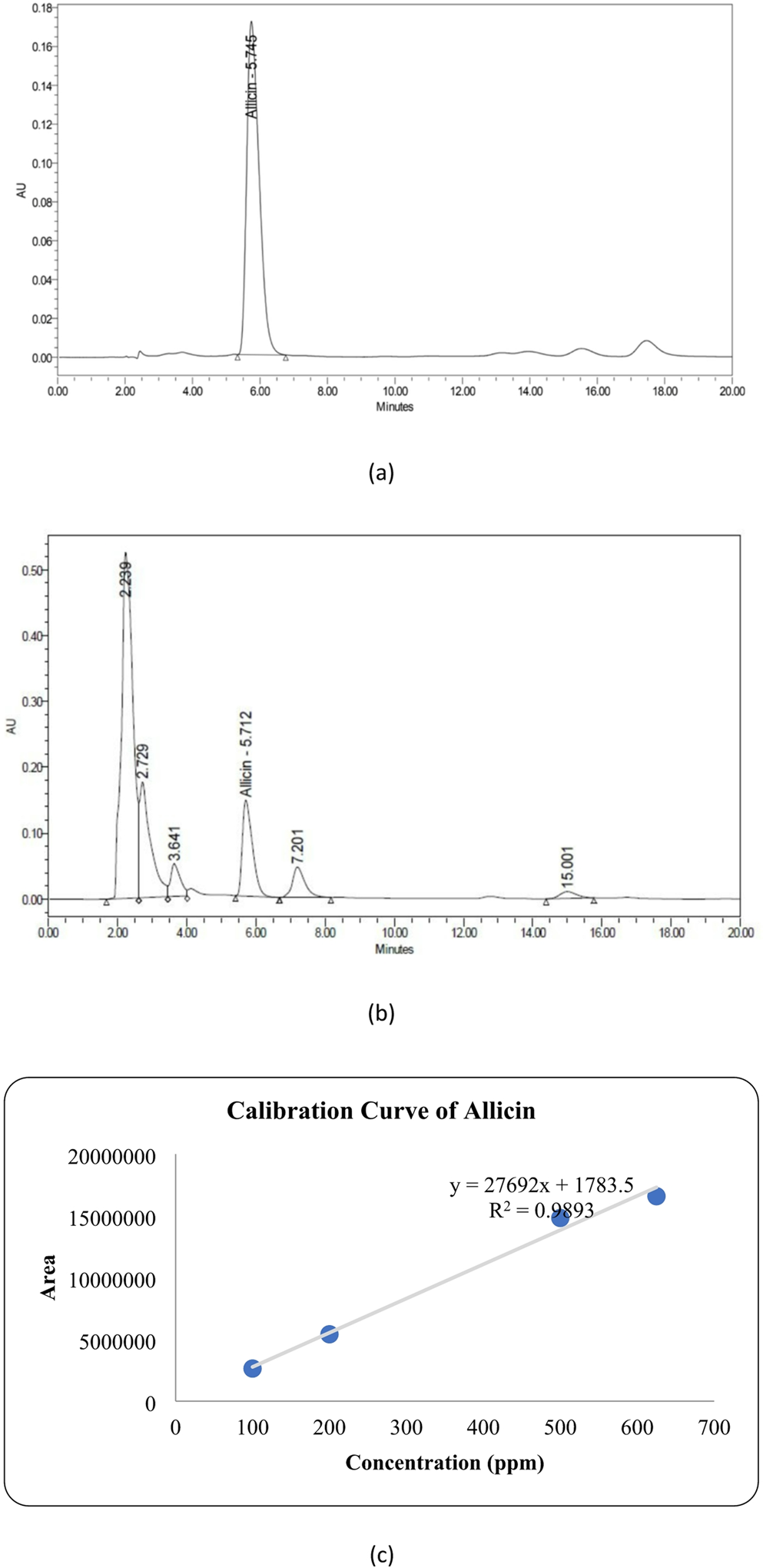
Garlic has been a kitchen staple for centuries, but its real magic lies in allicin—a compound with potent bioactivity. Now, scientists have found a way to extract it in a single, eco-friendly step using subcritical water extraction (SWE). Unlike traditional methods that rely on organic solvents, SWE uses hot, pressurized water to both release and convert alliin into allicin within a closed system, simplifying the process and reducing environmental impact.
To perfect the method, researchers optimized temperature, flow rate, and extraction time using Response Surface Methodology. The sweet spot was 150°C, 4 mL/min, and 30 minutes, yielding the highest allicin concentration (2.548 mg/g) and extract yield (1.695 g). Solubility studies revealed that subcritical conditions boost mass transfer, with maximum values for extract yield (0.045 g/mL), alliin (6.841 mg·mL/g), and allicin (0.082 mg·mL/g), highlighting the role of solvent polarity.
Kinetic modeling with Esquivel and Brunner models showed excellent fit (R² = 0.984–0.999), confirming that diffusion controls the process. The Brunner model proved superior, offering accurate predictions for scaling up. This single-step, solvent-free approach could revolutionize how we recover bioactive compounds from natural sources, making it both greener and more efficient.
Key Points
- Single-step subcritical water extraction replaces organic solvents.
- Optimal conditions: 150°C, 4 mL/min, 30 min.
- Brunner model predicts diffusion-controlled kinetics (R² up to 0.999).
Comments
No comments yet — be the first.