Stabilization of dhurrin biosynthetic enzymes from Sorghum bicolor using a natural deep eutectic solvent
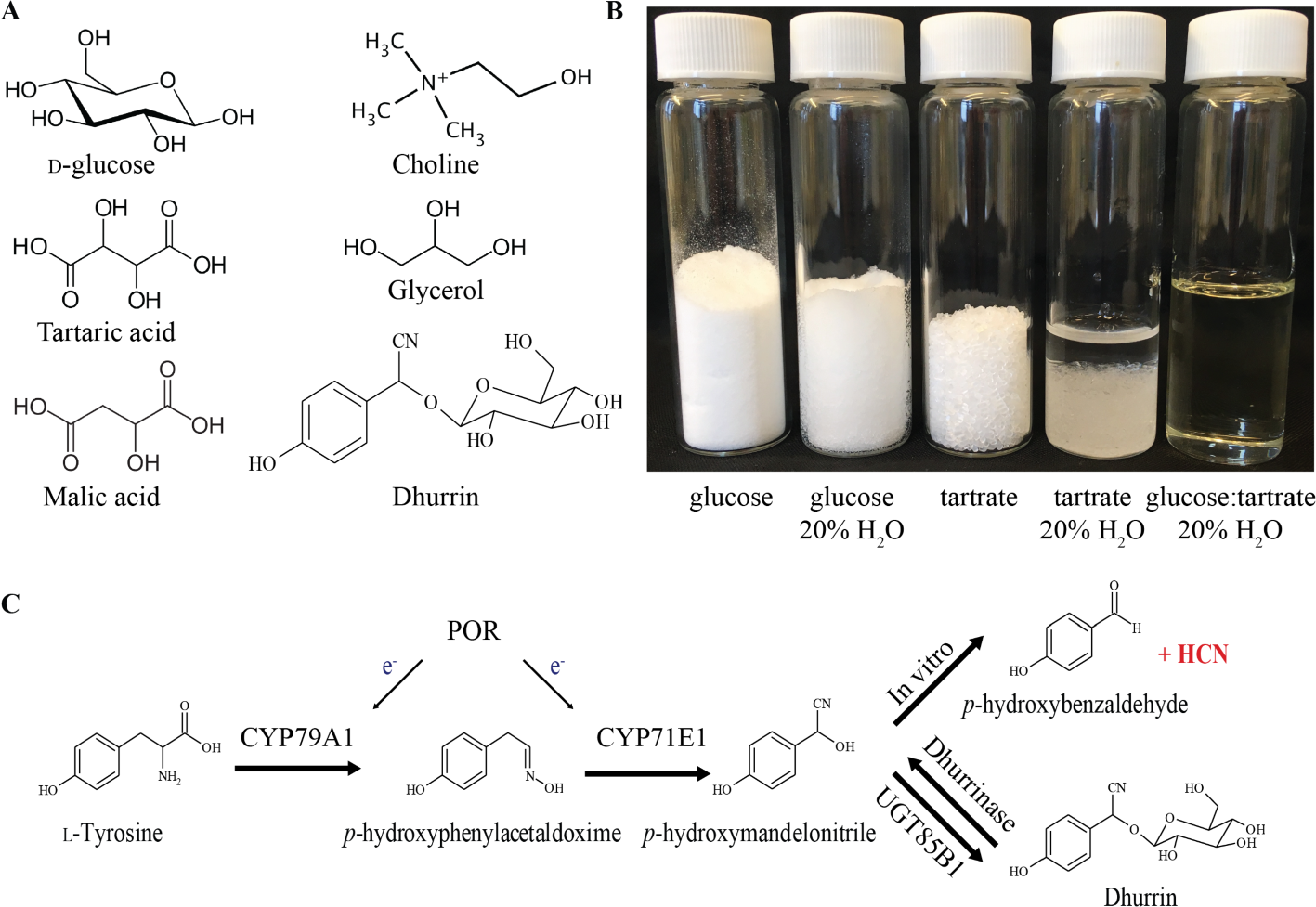
What if the secret to storing enzymes for drought survival lies not in water, but in a natural honey-like goo? Scientists discovered that a natural deep eutectic solvent can stabilize key plant enzymes better than water itself.
In the cellular world, water and lipids were long thought to be the only phases. But a third player has emerged: natural deep eutectic solvents (NADES), formed from metabolites that can shift into a gel-like state. This discovery hints that plants might use NADES as a protective cocoon during dehydration.
Scientists tested this idea using sorghum's defense compound dhurrin and its biosynthetic enzymes. They found that these enzymes, including membrane-anchored ones, are more stable in NADES than in watery buffers. Even better, their activity returns once rehydrated—like a metabolic resurrection after drought.
This isn't just a plant trick. It opens a biotechnological door: storing entire biosynthetic pathways in NADES for long-term use, without the fuss of delicate aqueous solutions. Inspired by nature, this could green up industrial production, replacing petrochemicals with sustainable bio-factories.
So next time you see a dried-up plant, remember: it might be quietly preserving its chemical machinery in a natural deep eutectic solvent, waiting for the rain.
Key Points
- NADES stabilizes dhurrin enzymes better than aqueous buffers.
- Enzyme activity returns after rehydration from NADES.
- NADES enables storage of entire biosynthetic pathways.
Comments
No comments yet — be the first.