Stress-Induced Plant Specialized Metabolism: Signaling, Multi-Omics Integration, and Plant-Derived Antimicrobial Metabolites to Combat Antimicrobial Resistance
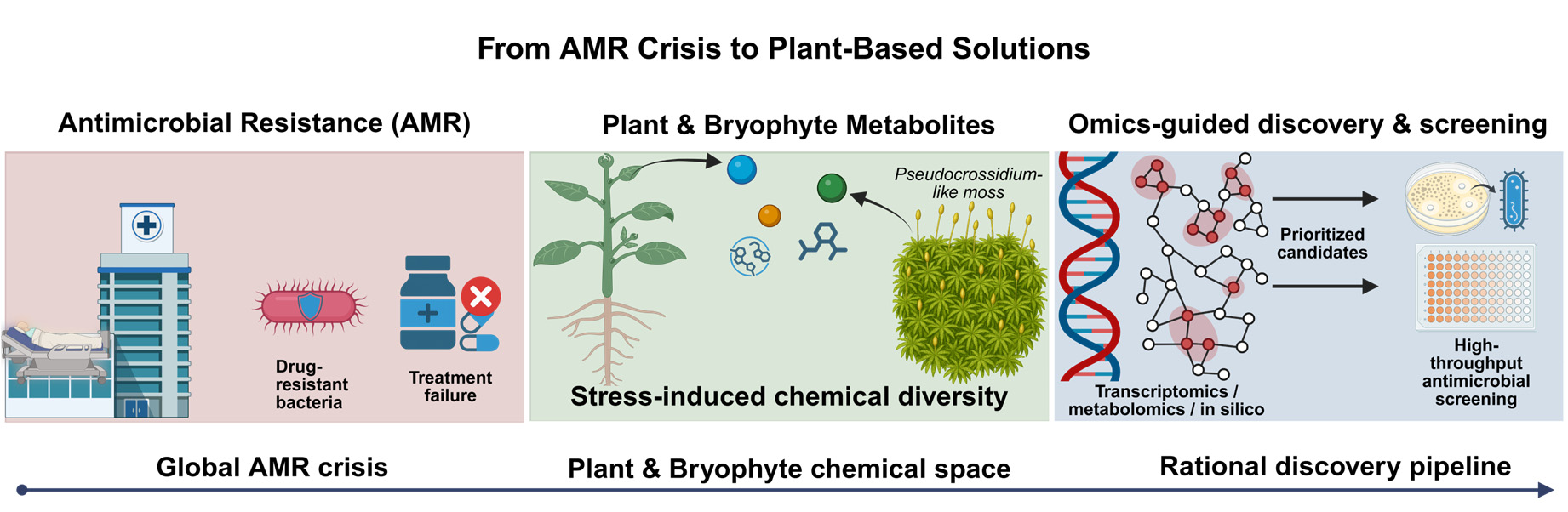
In 2019, drug-resistant bacteria killed 1.27 million people directly—and contributed to nearly 5 million more deaths. Could stressed plants hold a key to fighting back?
Antimicrobial resistance (AMR) is a quiet pandemic, claiming millions of lives each year. The numbers are staggering: 1.27 million direct deaths in 2019 alone, with 4.95 million more linked to resistant infections. We need new weapons, and nature may be hiding them in plain sight—inside stressed plants.
When plants face stress—whether from pests, drought, or pathogens—they don't just suffer. They fight back chemically. Stress triggers a surge of reactive oxygen species, activating signaling cascades like MAPKs and hormones such as salicylic acid, jasmonic acid, ethylene, and abscisic acid. These pathways switch on genes that produce antimicrobial metabolites—natural compounds that can kill bacteria.
This review, covering 2020–2025 research, connects stress physiology to metabolite production. It proposes a multi-omics pipeline combining RNA sequencing and LC/GC-MS metabolomics with bioinformatics to pinpoint the most promising antimicrobial candidates. It also highlights elicitation strategies, green extraction, and unusual sources like the moss Pseudocrossidium replicatum, plus citrus Huanglongbing as a real-world test case.
The message is clear: by understanding how stress boosts plant chemistry, we can accelerate the discovery of sustainable, scalable antimicrobials—turning a plant's defense into our own.
Key Points
- 1.27M direct deaths from resistant bacteria in 2019.
- Stress boosts plant antimicrobial metabolites via ROS, MAPKs, hormones.
- Multi-omics pipeline prioritizes candidates; moss and citrus show promise.
Comments
No comments yet — be the first.