Sustainability assessment of pectin extraction from Citrus paradisi peel to support the encapsulation of lactic acid bacteria
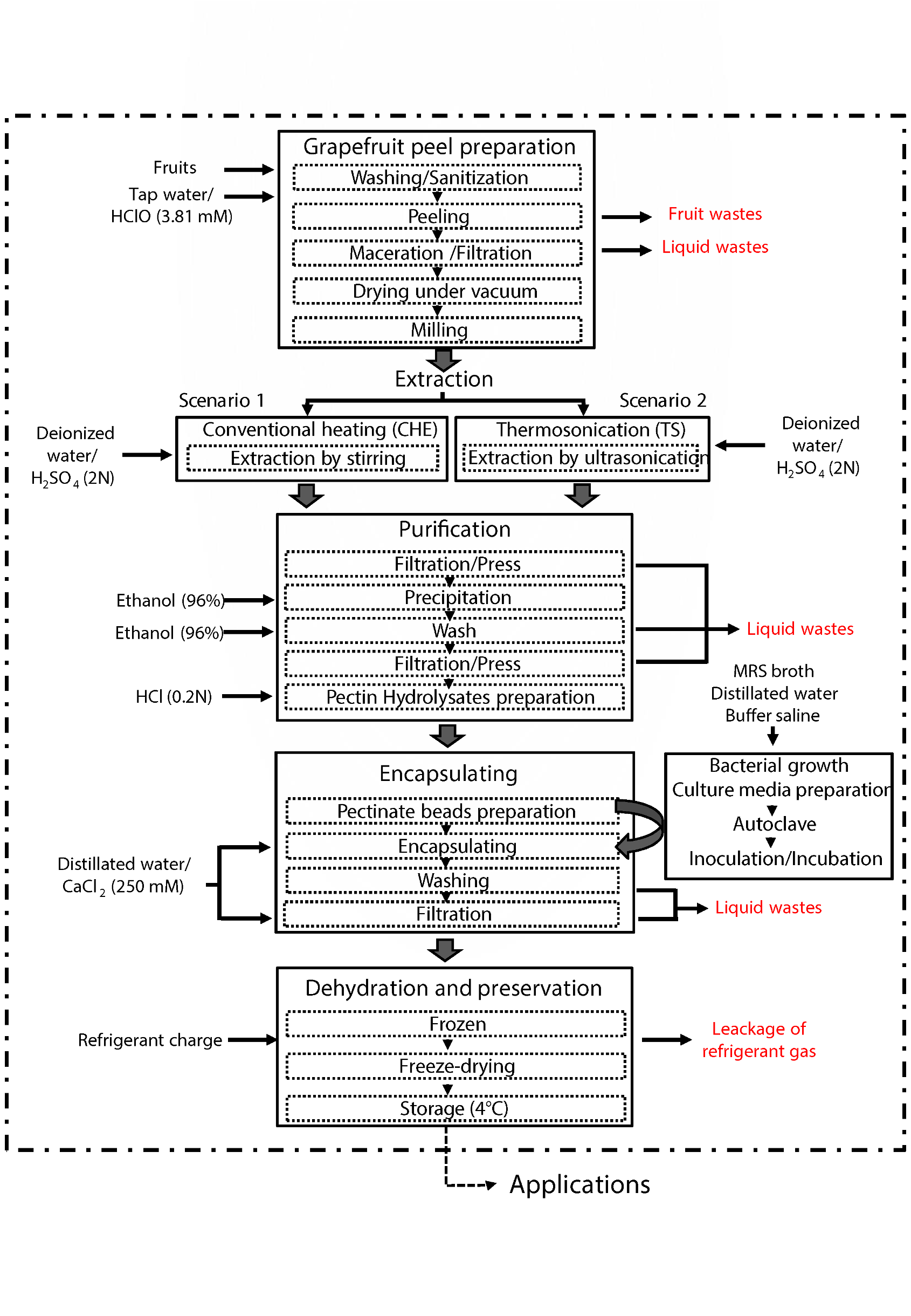
Grapefruit peels are more than just waste—they could become tiny eco-friendly shields for beneficial bacteria. But is the 'green' extraction process truly green?
Every year, tons of fruit peels, pulps, and seeds are thrown away, creating a massive environmental headache. But scientists see treasure in this trash: pectin, a natural compound that can wrap and protect probiotics like Lactiplantibacillus plantarum. The challenge? Extracting pectin usually requires harsh methods that consume time and energy.
In this study, researchers compared two extraction techniques: conventional heating (CHE) and a newer, supposedly greener method called thermosonication (TS), which uses sound waves. They conducted a Life Cycle Assessment (LCA) to measure the real environmental impact of each method, from lab bench to final product—1 kg of freeze-dried encapsulated bacteria.
The verdict? Both methods performed almost identically, with TS scoring 18.9 mPt and CHE scoring 19.1 mPt. The main environmental costs came from electricity and deionized water, driving climate change, human toxicity, and water depletion. So, the 'green' method isn't a clear winner—yet.
This study is a crucial reminder that sustainability must be measured, not assumed. While thermosonication may save time, its environmental footprint is similar to traditional heating. Future economic analyses will help complete the picture, guiding smarter choices in food technology.
Key Points
- Thermosonication and conventional heating show similar environmental impact
- Electricity and deionized water drive main impact categories
- LCA guides lab-scale pectin extraction decisions
Comments
No comments yet — be the first.