Sustainable extraction and use of natural bioactive compounds from the waste management process of castanea spp. Bud-derivatives: The finnover project
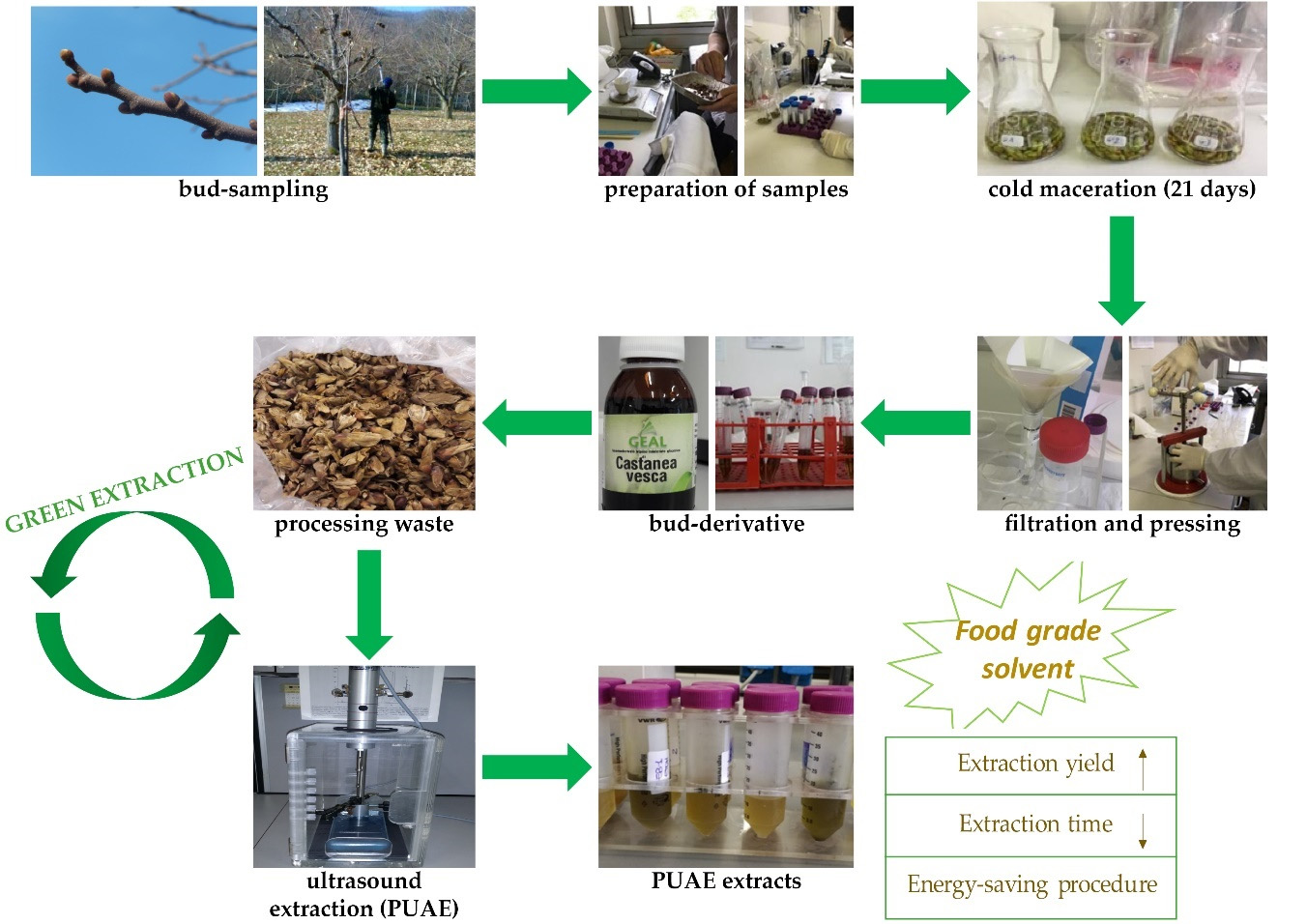
What if the waste from making herbal supplements could become a treasure trove of bioactive compounds? The FINNOVER project turns this idea into a sustainable reality.
The FINNOVER project is forging a new path for industry: transforming botanical by-products into valuable products instead of burning or composting them. Researchers focused on Castanea spp. (chestnut) bud-derivatives, a type of food supplement, and their waste. They compared the phytochemical profiles of the commercial bud preparations with extracts from the waste material.
Using a green extraction technique called Pulsed Ultrasound-Assisted Extraction (PUAE), they pulled out bioactive compounds from the waste. The results were striking: PUAE yielded 160.42 mg per 100 g fresh weight, a substantial amount compared to the commercial product's 1276.17 mg per 100 g. Even better, about 13% of the original chemical content survived in the by-product extracts.
This means that waste from bud-derivative processing still holds a significant chemical treasure. The study suggests that PUAE offers a sustainable alternative to incineration or composting, giving industries a chance to create new market products from what was once discarded. It's a win-win for both economy and environment.
Key Points
- PUAE extracts 160.42 mg/100g FW from waste.
- 13% of chemical content remains in by-products.
- Green alternative to incineration or composting.
Comments
No comments yet — be the first.