Sustainable Extraction of Alkaloids from Worsleya procera: Improving the Method with Green Chemistry
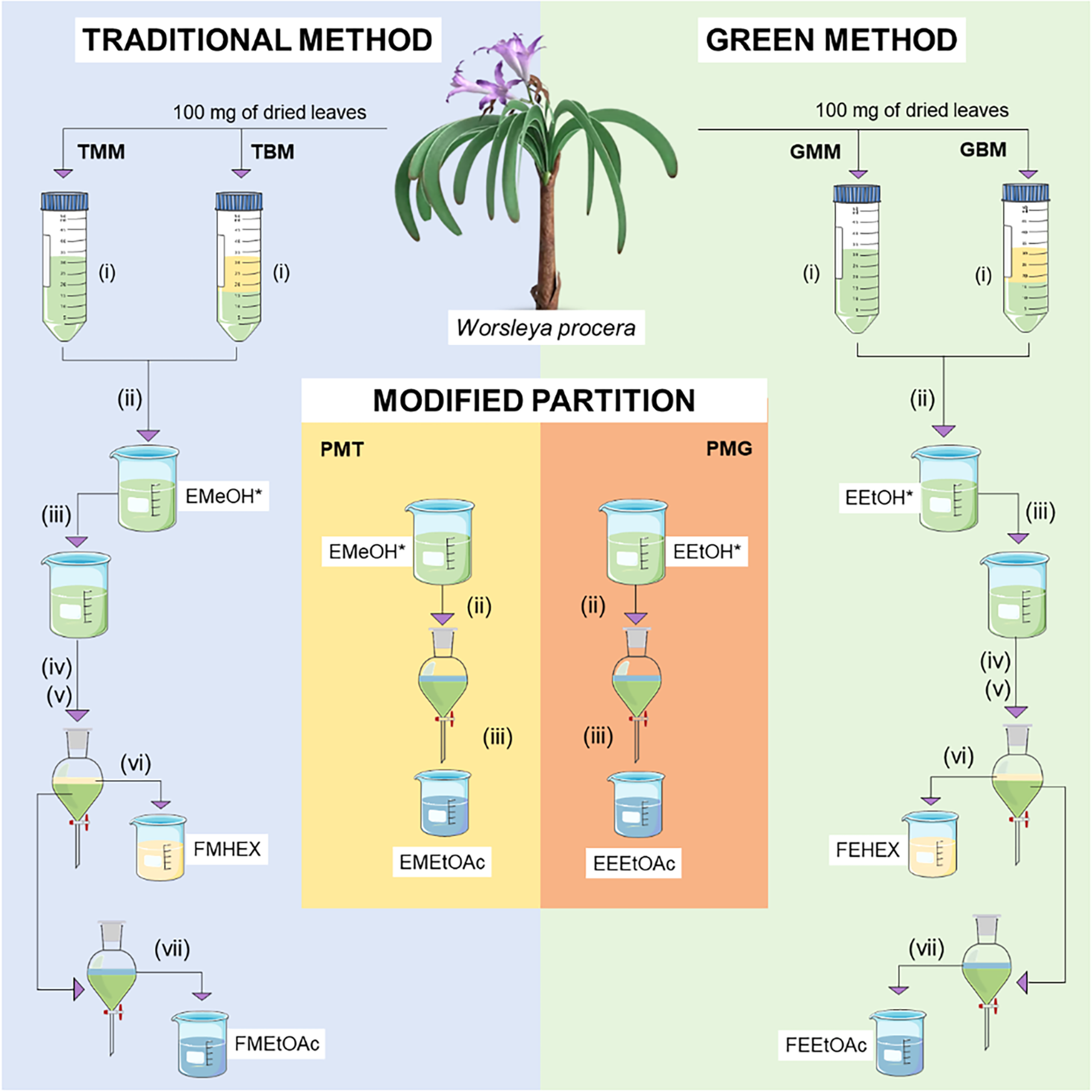
What if the greenest way to extract medicine from a rare flower also works better than the old, harsh methods? This study on Worsleya procera says yes.
Deep in the Amaryllidaceae family, Worsleya procera has been hiding its chemical secrets—until now. Researchers compared, for the first time, traditional and green extraction methods on this underexplored species. Using conventional solvents like methanol and hexane versus greener alternatives like ethanol and heptane, they optimized the process to cut solvent use by nearly 46.5% while keeping efficiency intact.
From the extracts, 27 alkaloids were detected, and 15 were identified as licorine, homolicorine, and tazettine subtypes. But the real surprise came in the bioactivity tests. Extracts from greener solvents inhibited butyrylcholinesterase more strongly (76.9 ± 5.0%) than conventional ones (56.0 ± 6.3%), while acetylcholinesterase inhibition stayed similar. Galantamine, a positive control, blocked both enzymes by over 97%, confirming the assay's reliability.
This isn't just about being eco-friendly—it's about being smarter. The greener approach not only reduces environmental impact but also preserves or even enhances biological activity. The result? A sustainable template for natural product research that doesn't compromise on science.
Key Points
- First systematic comparison of green vs. traditional extraction in Worsleya procera.
- Greener solvents cut solvent use by ~46.5% and boosted butyrylcholinesterase inhibition.
- 27 alkaloids detected; 15 annotated as licorine, homolicorine, and tazettine subtypes.
Comments
No comments yet — be the first.