Target-oriented rational design of composite bio-derived solvents for the green extraction of salvianolic acid B and tanshinones from Salvia miltiorrhiza root
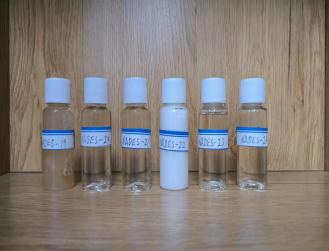
What if the key to unlocking nature's pharmacy lies not in harsh chemicals, but in a green, tailor-made solvent? This study reveals how a custom-designed natural deep eutectic solvent outperforms traditional extraction, pulling out more active compounds from a medicinal root.
For centuries, traditional medicine has relied on extracting beneficial compounds from plants, but the methods have often been inefficient, costly, and even flammable. Now, scientists are turning to a new class of green solvents called Natural Deep Eutectic Solvents (NADES) to do the job better. In a recent study, researchers designed a set of NADES specifically to extract two key groups of active compounds—salvianolic acid B and tanshinones—from the roots of Salvia miltiorrhiza, a plant widely used in Chinese medicine.
The team synthesized 24 different NADES and screened them for stability, narrowing the field to 14 candidates. They then tested these against traditional ethanol extraction. The standout performer was NADES-15, a combination of choline chloride and anhydrous citric acid in a 2:1 ratio. This solvent not only extracted a higher total yield of the target compounds but also pulled out a greater diversity of secondary metabolites, as confirmed by UHPLC-MS/MS analysis.
Specifically, the NADES-15 extract contained 31 identified compounds, including all nine target steroidal saponins (lily saponins A–I), whereas the ethanol extract yielded only 17 compounds and six saponins. This demonstrates that NADES can be fine-tuned to achieve selective and efficient extraction, offering a greener and more effective alternative to conventional methods.
The implications are significant for the pharmaceutical and nutraceutical industries, which constantly seek sustainable ways to obtain high-value natural products. By rationally designing NADES, we can not only improve extraction efficiency but also uncover a richer chemical profile from medicinal plants, potentially leading to new therapeutic discoveries.
Key Points
- 24 NADES synthesized, 14 selected for extraction tests
- NADES-15 (choline chloride:citric acid 2:1) best performer
- 31 compounds identified vs 17 with ethanol extraction
Comments
No comments yet — be the first.