The Future of Green Chemistry: Evolution and Recent Trends in Deep Eutectic Solvents Research
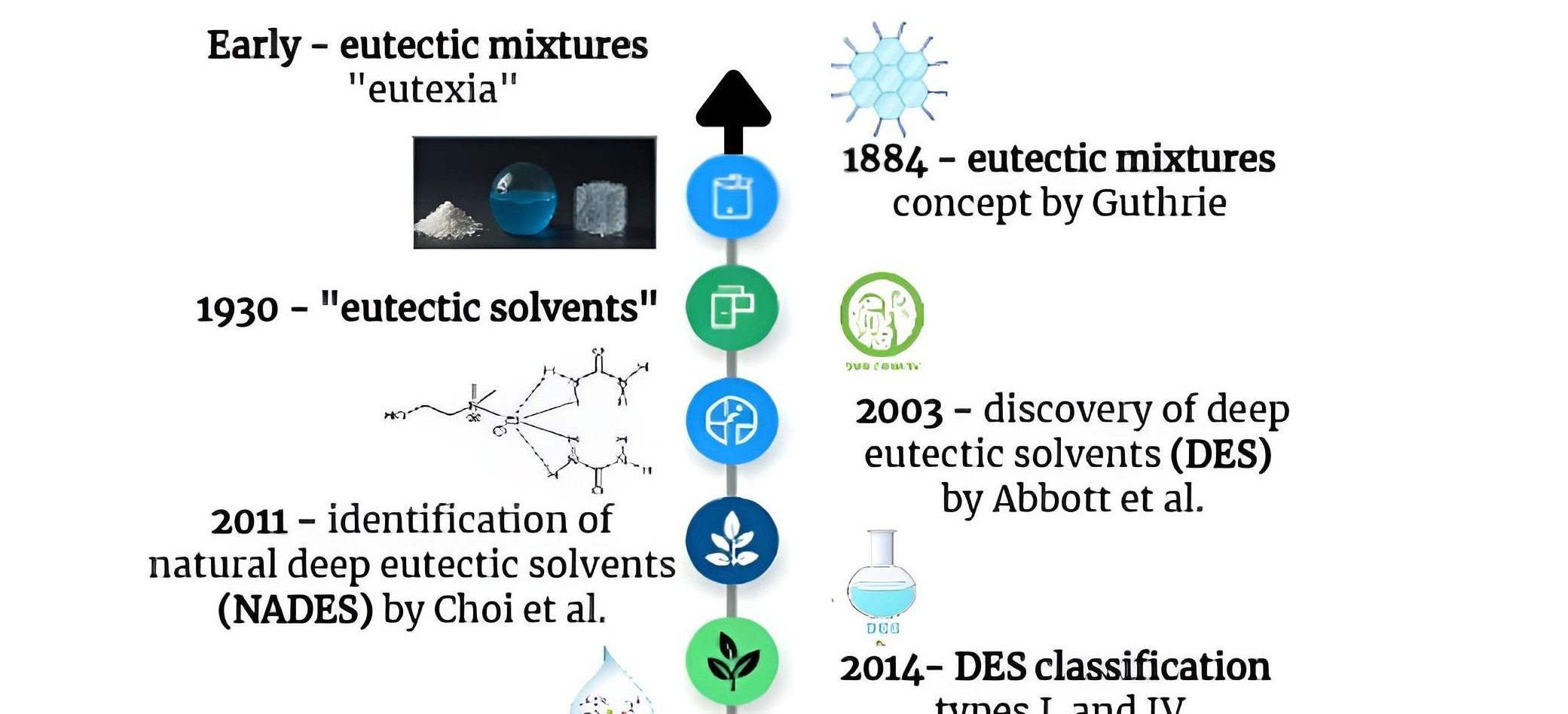
What if the future of green chemistry is hiding in a simple handshake between molecules? Deep eutectic solvents are turning that handshake into a revolution.
Deep eutectic solvents are not your ordinary liquids. They form when a hydrogen bond acceptor and a donor lock together in a tight molecular embrace, creating a solvent that is both sustainable and chemically tunable. This versatility has already placed them in ten key applied areas, from green extraction of bioactive compounds to CO2 capture, electrochemistry, and catalytic media.
But the story doesn't stop there. Researchers are now pushing into bold new frontiers: dynamic covalent chemistry, templates for advanced photocatalytic nanomaterials, and even artificial organelles for bioremediation. Thermoacoustic deep eutectic solvents are being explored for smart drug delivery, while their role as multifunctional interfaces for 2D materials opens doors to next-gen tech.
The future, however, lies in scale. Process engineering and computational chemistry are steering these solvents from lab curiosities to industrial reality. As they become a central pillar of the circular economy, deep eutectic solvents are proving that green chemistry is not just a trend—it's a transformation.
Key Points
- Sustainable solvents formed by strong hydrogen bonding.
- Ten applied areas: extraction, CO2 capture, electrochemistry, catalysis.
- Scaling up via process engineering and computational chemistry.
Comments
No comments yet — be the first.