Tomato Processing By-Products as a Sustainable Source of Lycopene and Other Bioactive Compounds for Animal Nutrition: A Circular-Economy Perspective
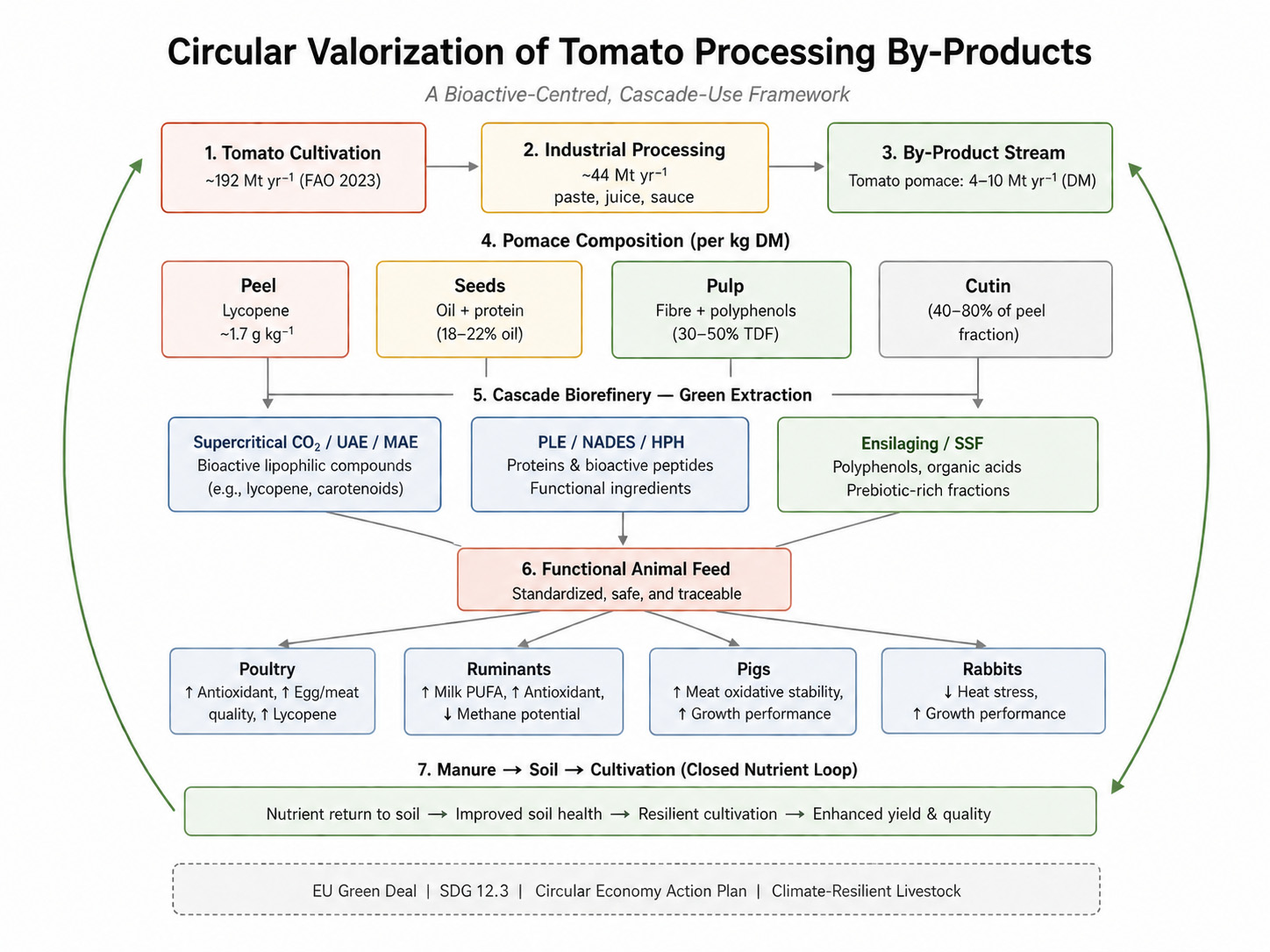
Every year, millions of tonnes of tomato pomace—seeds, skin, and pulp—are tossed aside, yet this 'waste' hides a treasure trove of health-boosting compounds. What if we could turn it into a superfood for farm animals?
In animal trials, tomato pomace shows promise. Broilers fed 5–10% pomace or 30–400 mg/kg purified lycopene improved antioxidant status and coped better with heat stress. Dairy ruminants given ensiled pomace at 10–40% maintained milk yield while boosting milk polyunsaturated fatty acids. Finishing pigs and rabbits saw better tissue oxidative stability, and heat-stressed rabbits even grew better. The main research gaps? Standardized bioactive reporting and clearer inclusion limits.
Key Points
- Tomato pomace: 4.3–10.2 million tonnes/year, rich in lycopene.
- Green extraction recovers up to 91% peel lycopene.
- Improves antioxidant status in broilers, dairy, pigs, rabbits.
Was this helpful?
Comments
No comments yet — be the first.