Ultrasound-Assisted Extraction of Methylxanthines from Cocoa Bean Shells Using Glycerol–Urea Natural Deep Eutectic Solvent (NADES): Optimization and Greenness Assessment
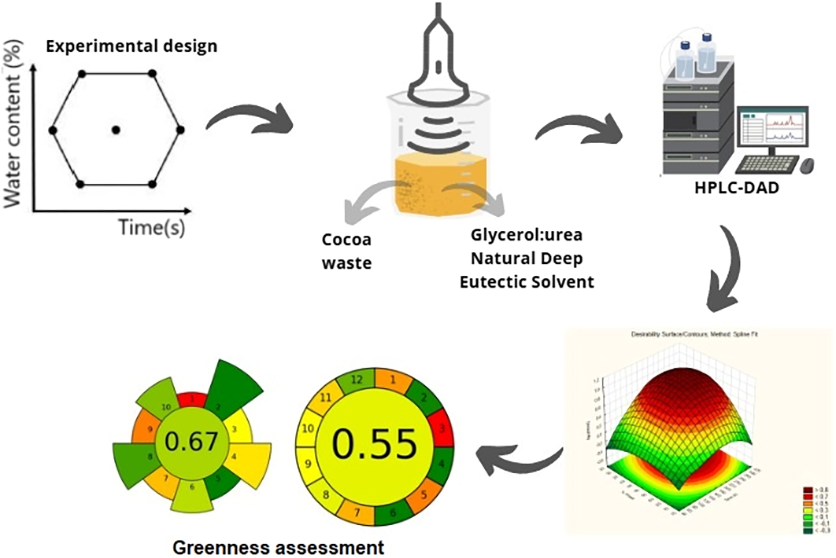
Cocoa bean shells, often discarded as waste, hide a treasure of bioactive compounds—and a new green method unlocks them using a simple blend of glycerol and urea, guided by sound waves.
Imagine turning cocoa bean shells—the waste from chocolate production—into a source of valuable methylxanthines like theobromine and caffeine. Researchers have done just that, using a natural deep eutectic solvent (NADES) made from glycerol and urea, a combo that is cheap, food-relevant, and reusable. They optimized the process with a Doehlert design, testing sonication times from 60 to 300 seconds and water content from 30% to 70% by volume. The sweet spot was 45.5% water and 4 minutes of ultrasound, yielding 29.18 mg of theobromine and 2.46 mg of caffeine per gram of dry shell, plus a hefty dose of phenolics and antioxidant power. The method scored high on greenness (AGREE = 0.55, AGREEprep = 0.67), proving it's kind to the planet. With short sonication and moderate temperatures, this approach is ready for scaling up, offering a sustainable path to turn cocoa waste into nutraceutical ingredients.
Key Points
- Ultrasound-assisted NADES extraction recovers theobromine and caffeine from cocoa shells.
- Optimized: 45.5% water, 4 min sonication, high yields and antioxidant activity.
- Green assessment shows low environmental impact, supporting circular economy.
Comments
No comments yet — be the first.