Ultrasound-assisted extraction of phenolic compounds from blueberry leaves using natural deep eutectic solvents (NADES) for the valorization of agrifood wastes
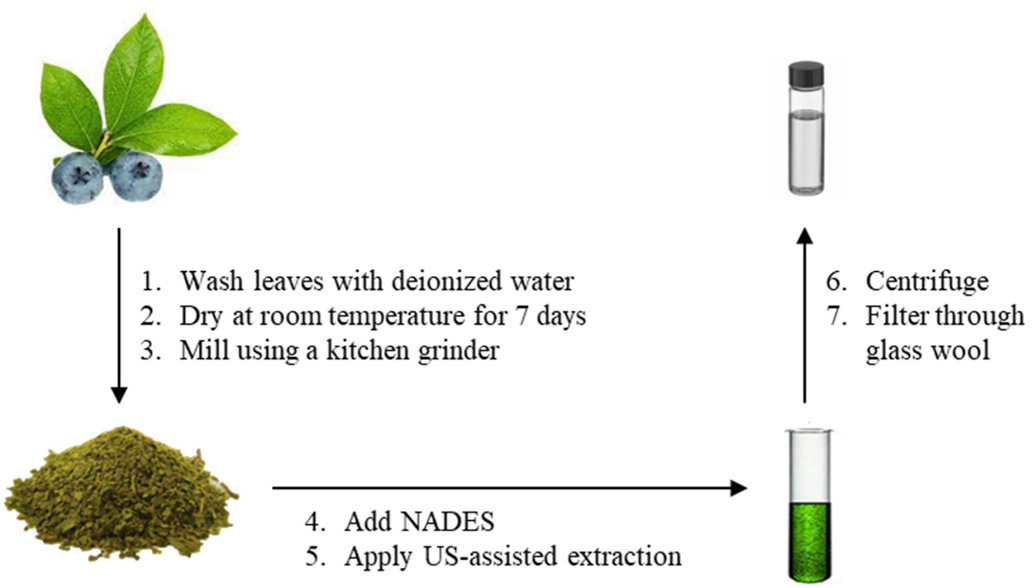
What if the secret to turning agricultural waste into high-value antioxidants lies in a clever blend of nature and sound waves? Researchers are transforming discarded blueberry leaves into valuable resources using innovative green solvents.
The food industry is on a constant hunt for novel green solvents to recover bioactive compounds from agricultural leftovers. To tackle this, a team of researchers developed an ultrasound-assisted method to extract phenolic compounds from blueberry leaves. By screening multiple natural deep eutectic solvents, they found standout performers: a mix of lactic acid, sodium acetate, and water, alongside a combination of choline chloride and oxalic acid.
Using a Box–Behnken experimental design, the team dialed in the optimal extraction conditions. They applied sonication for 45 minutes at 65 °C, using precise solvent-to-sample ratios of 15 for the lactic-based solvent and 75 for the choline-based system.
The results speak for themselves. Compared to conventional organic solvents, the lactic acid and choline-based NADES showed vastly superior performance, delivering up to 2.2-fold greater efficacy in recovering phenolic compounds and up to 2.8-fold greater efficacy for antioxidant compounds. Chromatographic characterization confirmed that the lactic-based solvent successfully unlocked a wide array of hydroxycinnamic acids and flavonol derivatives.
Key Points
- Ultrasound-assisted extraction of blueberry leaves using NADES
- Superior recovery compared to conventional organic solvents
- Optimized via Box–Behnken design for maximum yield
Comments
No comments yet — be the first.