Ultrasound-Assisted Extraction of Total Saponins from Aralia taibaiensis: Process Optimization, Phytochemical Characterization, and Mechanism of α-Glucosidase Inhibition
What if the key to better blood sugar control was hidden in a mountain plant, waiting for a sonic boom to set it free?
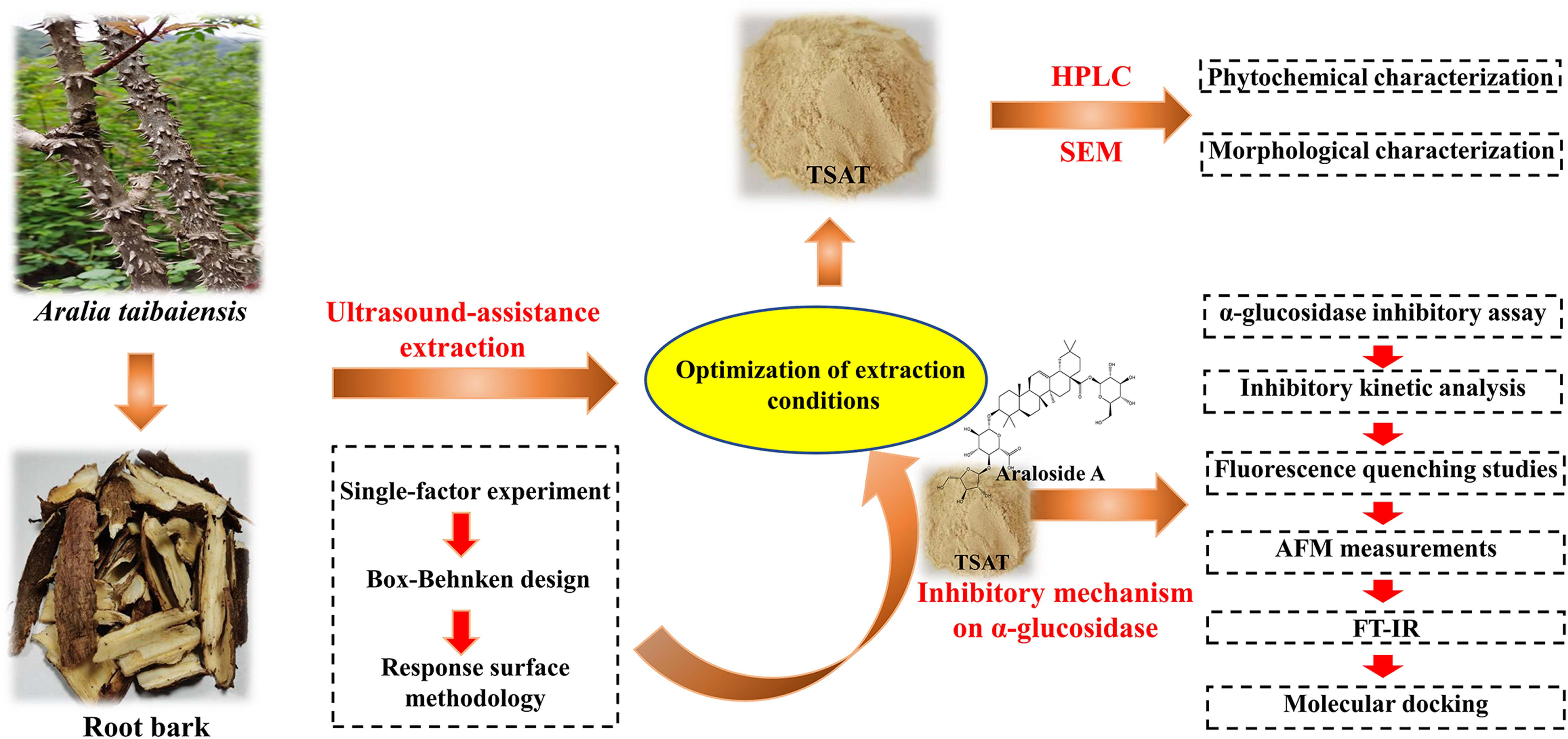
Deep in the Qinba Mountains of China, a plant called Aralia taibaiensis guards a treasure: saponins, natural compounds with potential anti-diabetic power. But extracting them is tricky. Enter ultrasound-assisted extraction (UAE), a technique that uses sound waves to create cavitation bubbles in liquid. When these bubbles collapse, they unleash shock waves that shatter plant tissue, boosting extraction efficiency. Yet, UAE has limits—ultrasonic attenuation can leave 'dead zones' in larger tanks, so optimization is key. Researchers turned to the Box-Behnken design (BBD), a statistical tool that maps the sweet spot of extraction conditions. They found the best yield of total saponins (TSAT) and then dug deeper into how these saponins work. Using enzyme kinetics, fluorescence quenching, AFM, FT-IR, and molecular docking, they revealed that TSAT inhibits α-glucosidase, an enzyme that breaks down carbs into glucose. By blocking it, TSAT could slow sugar absorption—a promising avenue for diabetes management. This study not only optimizes extraction but also illuminates the molecular dance between plant compounds and human enzymes, paving the way for new therapeutic insights.
Key Points
- Ultrasound-assisted extraction optimized for total saponins from Aralia taibaiensis.
- TSAT inhibits α-glucosidase, slowing carbohydrate breakdown and glucose absorption.
- Mechanism revealed via enzyme kinetics, fluorescence quenching, AFM, FT-IR, and docking.
Comments
No comments yet — be the first.