Ultrasound-assisted extraction optimization of proanthocyanidins from kiwi (Actinidia chinensis) leaves and evaluation of its antioxidant activity
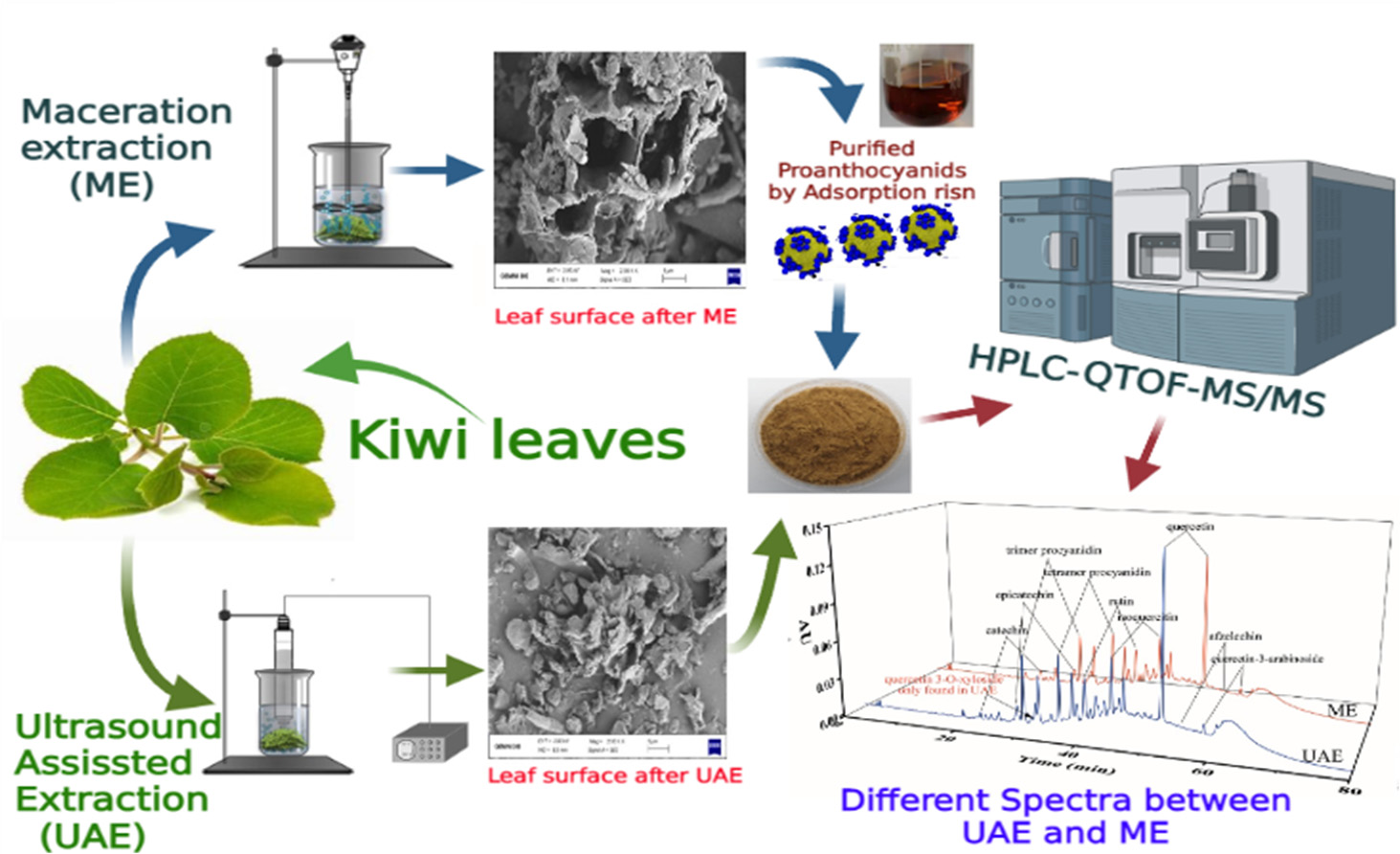
What if the secret to unlocking powerful antioxidants lies in a gentle ultrasonic buzz? Kiwi leaves, often discarded, hide a treasure trove of proanthocyanidins—and sound waves might be the key to freeing them.
Forget harsh chemicals and high heat. A new study shows that ultrasound—the same technology used in medical imaging—can efficiently extract proanthocyanidins (PAs) from kiwi leaves, a byproduct that usually ends up as waste. These compounds are known for their antioxidant prowess, but getting them out has always been a challenge. The researchers optimized the process using a series of experiments and response surface methodology, testing four key factors: ultrasonic amplitude, solvent-to-solid ratio, temperature, and time. Their sweet spot? A 40% ultrasound amplitude, a 30 mL/g dry weight solvent-to-solid ratio, and 70°C for just 15 minutes. Under these conditions, the extraction yield was maximized, and the purified kiwi leaf PAs (PKLPs) showed significant radical scavenging and cellular antioxidant activity. The team also analyzed the chemical composition using advanced mass spectrometry and confirmed the extracts were non-toxic to cells. This green, efficient method could transform how we harness phytochemicals for drug discovery and food science, turning a discarded leaf into a valuable resource.
Key Points
- Ultrasound optimizes proanthocyanidin extraction from kiwi leaves.
- Optimal: 40% amplitude, 30 mL/g, 70°C, 15 min.
- Extracts show significant antioxidant and cellular activity.
Comments
No comments yet — be the first.