Unlocking the potential of bio-based solvents for sustainable triterpenoid extraction: a case study on betulinic acid from Tetracera scandens (L.) Merr
Imagine a leaf that hides a powerful compound, but traditional extraction methods barely scratch its surface. Now, a green solvent—lactic acid and choline chloride—could unlock it, boosting yields beyond what ethanol ever achieved.
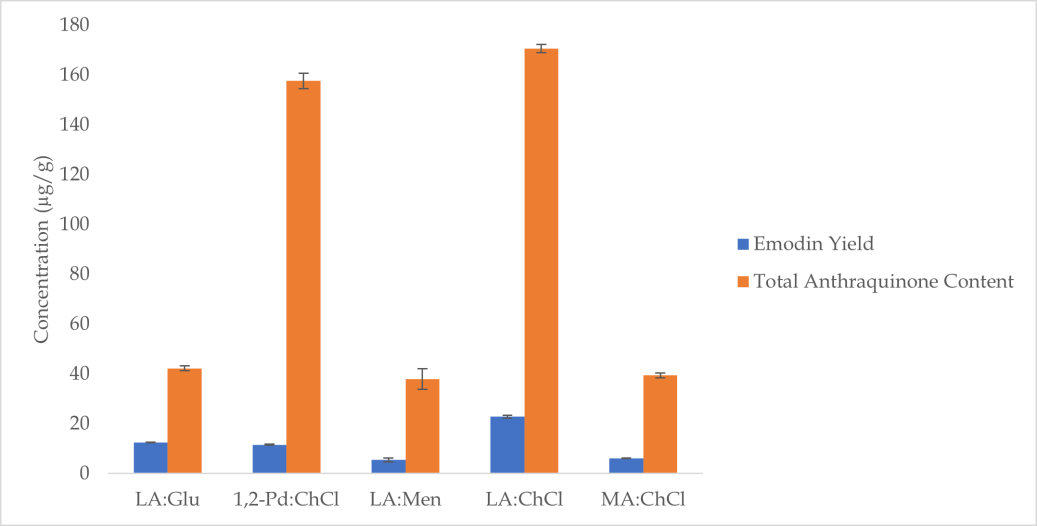
In the quest for sustainable chemistry, researchers turned to a tropical leaf, Cassia alata, known for its bioactive compound emodin. But conventional extraction often yields too little of this valuable anthraquinone. Enter deep eutectic solvents (DES)—a class of green solvents that are cheap, biodegradable, and tunable. After screening several combinations, a 2:1 molar mix of lactic acid and choline chloride emerged as the champion.
To squeeze out maximum efficiency, the team used response surface methodology with a Box-Behnken design. The sweet spot: 53°C, 19 minutes, and a solid-to-solvent ratio of 1:20 g/mL. Under these conditions, the total anthraquinone content peaked, and the emodin yield surpassed that of traditional ethanol extraction.
But they didn't stop there. A partial method validation using LC-UV ensured reliable quantification. With an isocratic mobile phase of 2% acetic acid:methanol (30:70), a flow rate of 0.8 mL/min, detection at 288 nm, and a C-18 column, the method proved robust.
The takeaway? This DES is not just an alternative—it's a more effective and efficient solvent for extracting emodin from Cassia alata, paving the way for greener, higher-yield processes in natural product chemistry.
Key Points
- Lactic acid:choline chloride (2:1) boosts emodin yield.
- Optimal extraction: 53°C, 19 min, 1:20 g/mL.
- DES outperforms ethanol, validated by LC-UV.
Comments
No comments yet — be the first.