Upgrading hazelnut skins: Green extraction of polyphenols from lab to semi-industrial scale
Hazelnut skins, usually tossed aside as waste, hide a treasure trove of bioactive compounds—and scientists just found a green way to unlock them at industrial scale.
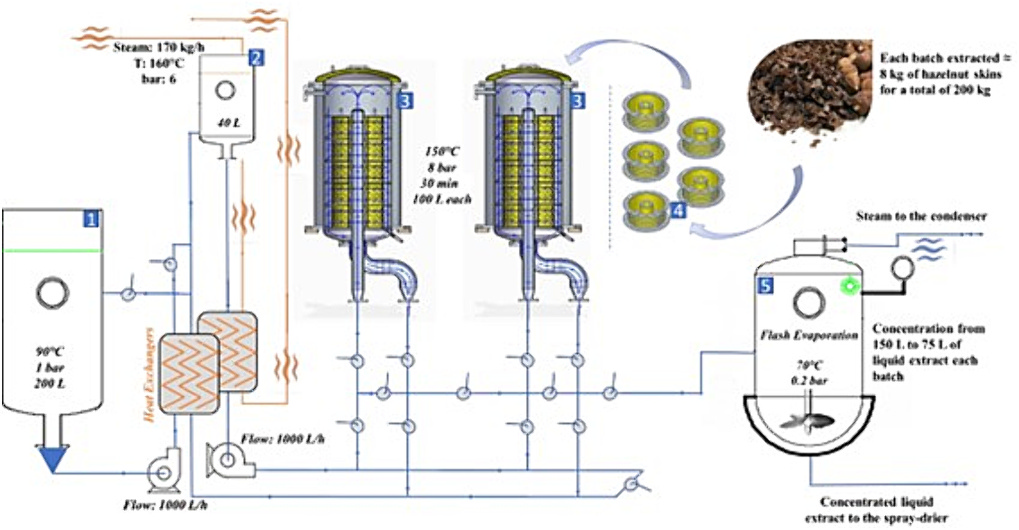
Every year, tons of hazelnut skins end up as waste. But this by-product is far from useless—it's packed with phenolic compounds that could enrich animal feed and even fight pathogens. The challenge? Extracting them efficiently without harming the environment. Enter subcritical water extraction (SWE), a green technique that uses water under high pressure and temperature to pull out valuable molecules. In a lab-scale study, four different batches of hazelnut skins showed significant variability, yet all yielded polyphenolic profiles and antioxidant activity that rivaled traditional reflux maceration. The real test came when the team scaled up to a semi-industrial plant processing 8 kg of material. They optimized downstream processes, including spray-drying without excipients, and maintained both concentration and bioactivity. The resulting extracts showed antibacterial effects against animal- and food-borne pathogens, hinting at a future where hazelnut waste becomes a sustainable ingredient in animal farming. This isn't just waste management—it's a smarter, greener way to farm.
Key Points
- Subcritical water extraction yields polyphenols from hazelnut skins.
- Semi-industrial scale processes 8 kg, retaining bioactivity.
- Extracts show antibacterial activity against animal and food pathogens.
Comments
No comments yet — be the first.