Valorization of seabuckthorn pomace to obtain bioactive carotenoids: An innovative approach of using green extraction techniques (ultrasonic and microwave-assisted extractions) synergized with green solvents (edible oils)
What if food waste could be transformed into brilliant natural pigments using nothing more than sound waves, microwaves, and everyday cooking oils? Researchers are turning discarded seabuckthorn pomace into a goldmine of health-boosting compounds.
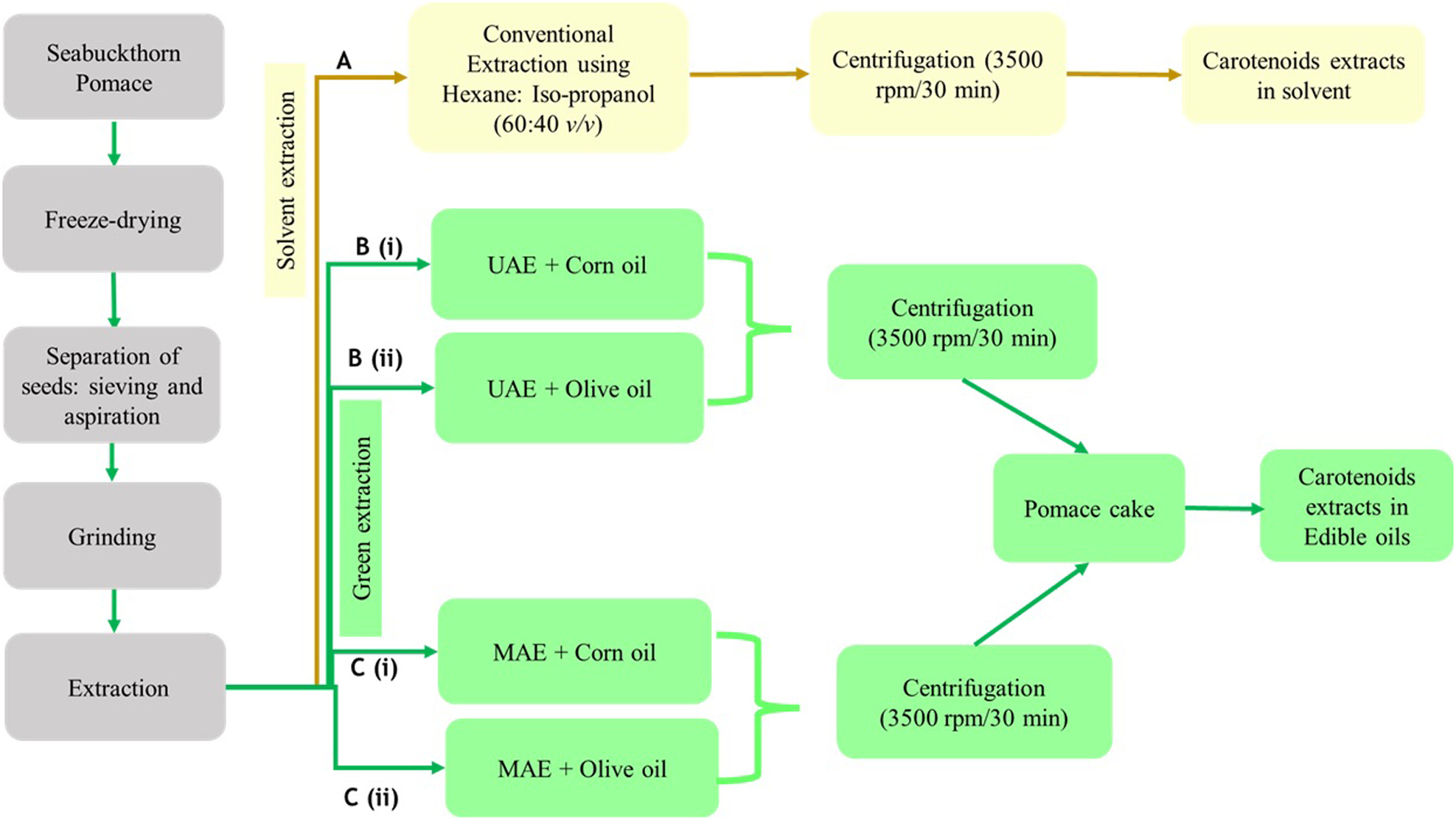
Modern industries rely heavily on synthetic, petroleum-based colourants that pose risks to human and environmental health. To solve this, a green refinery approach is turning its attention to seabuckthorn pomace—a byproduct packed with health-promoting bioactive compounds. By pairing eco-friendly edible oils, such as corn and olive oils, with advanced extraction technologies like ultrasound- and microwave-assisted extractions, scientists are safely pulling out valuable natural pigments.
Laboratory results show that total carotenoid content in these extracts ranges between 26.91 and 34.35 milligrams per 100 grams. Specifically, high-performance liquid chromatography reveals that ultrasound-assisted extraction combined with olive oil yields the highest amounts of major carotenoids, reaching 87.0 milligrams per liter for lycopene and 18.7 milligrams per liter for beta-carotene.
Beyond just color, these extracts pack a serious biochemical punch. They display a powerful antioxidant capacity, with DPPH free radical inhibition ranging from roughly 92 to 94 percent, alongside an impressive total phenolic content. These promising findings strongly encourage the industrial adoption of green extraction technologies to meet the growing global demand for natural pigments in food applications.
Key Points
- Green extraction using ultrasound and microwaves
- Edible oils act as safe green solvents
- High antioxidant capacity and carotenoid yield
Comments
No comments yet — be the first.